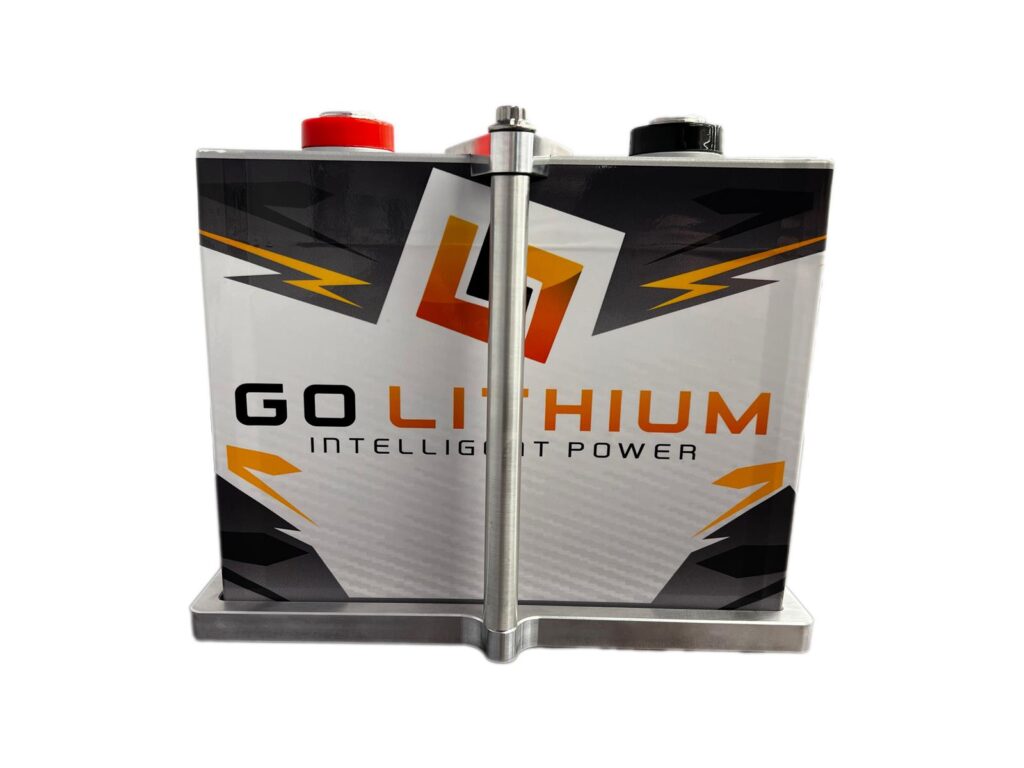

Why Not All Lithium Batteries Are Created Equal — and How Go Lithium has been Raising the Bar For a decade
Why all Lithium Batteries aren’t Created Equal, and How Go Lithium has been Raising the Bar For a decade? Most race cars ran large, heavy lead Acid and AGM batteries that “just worked.” They were forgiving and durable but woefully inadequate in a modern racing environment.
Racers are always in search of a performance advantage and the most forward thinking teams began switching to lithium batteries. The results were impressive. Removing 30 to 40 pounds instantly and doubling or even tripling the capacity of their old lead acid counterparts…But with that shift came a wave of questions, concerns, and a few very high-profile fires.
The Real Reason Lithium Fires HappenYou’ve seen the pit videos: smoke roaring out of a trunk, flames hot enough to melt aluminum, crew guys scrambling with extinguishers. When a lithium battery fails, temperatures can spike to over 2,000°F, and the fire doesn’t behave like anything from an AGM.
But here’s the part most racers don’t know:

Most lithium battery fires in racing come from the car, not the battery.
They’re caused by:
-
Undersized wiring
-
Bad or missing grounds
-
Overcharging
-
Wrong charger
-
Cheap imported lithium cells
-
No real BMS (Battery Management System)
AJ from GO Lithium told us one of the biggest problems he sees:
“Racers want to go lightweight on the battery AND lightweight on the wiring.”
Many racers are trying to run 4-gauge wire on a 16V lithium setup.
That might be fine for AGM — not lithium.
AJ’s recommendation?
“Start at 0-gauge. Don’t go smaller than 2-gauge. Ever.”
Lithium batteries deliver power instantly. If the cable can’t safely move that current, the heat finds a new path — and something melts. This is where some lithium batteries have fail-safes, and others do not.

AGM vs. Lithium: The Truth Behind the Switch
AGM batteries are tanks. They tolerate:
-
Overcharging
-
Heat
-
Vibration
-
Weak grounds
-
Cheap chargers
Lithium batteries do not.
They are lighter, more powerful, and hold voltage like a rock — but need an electrical system capable of handling the additional power. That means:
-
Correct wiring size
- A quality alternator and starter
-
properly matched lithium cells
-
A high quality and fully comprehensive batter. management system
-
Proper mounting
This is where the difference between “race-grade lithium” and “powersports lithium” becomes massive.
GO Lithium’s Take: Building Them the Right Way Matters
During our interview, AJ emphasized one thing repeatedly:
“We not only engineer, but hand-build every battery. We control everything.”
Most lithium batteries sold for racing are mass-produced overseas for pennies with:
-
Cylindrical “AA-style” cells soldered together
-
Spray-foam (flammable) in the case
-
Utilize the cheapest BMS system available
-
No cell matching
-
No comprehensive bench testing
-
No real world track testing
Go Lithium takes the opposite approach:
-
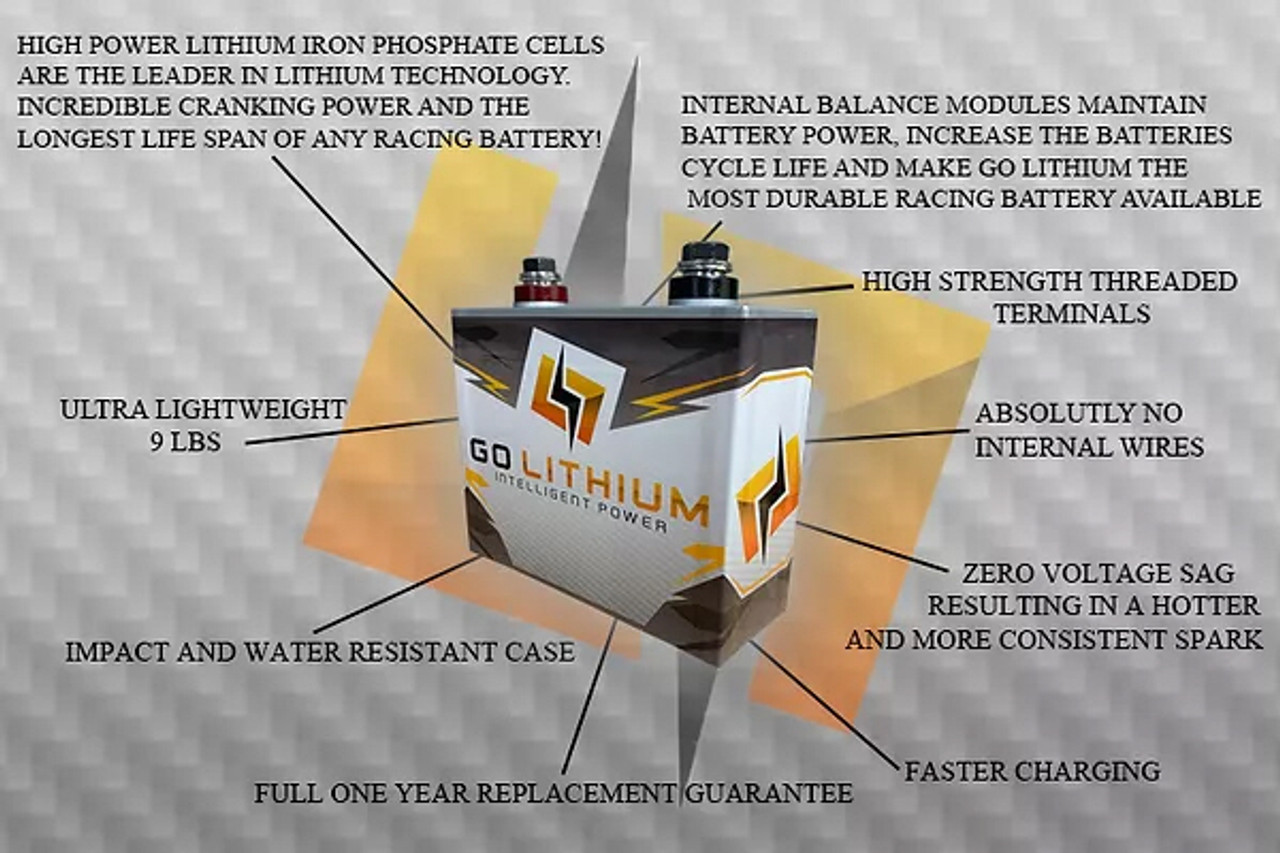
The type approved by the UN to be in peoples houses for solar power.
- They UN test their cells to insure they maintain the highest safety standards and extensively track test every design before it is offered for sale. Before buying a lithium battery, call the manufacturer and ask if their cells have been UN tested and approved.
-
Uses prismatic cells (rectangular blocks) that are then built into their own safety casings
-
They have also, which is totally unique in the industry, engineered out any internal cables. No wires or cables inside — everything is bolted, not soldered
-
Each cell has a “bust plate” like a blower in the event of a catastrophic event
-
Batteries can be rebuilt
- The 500+ AMP capable BMS seamlessly handles any overcharge, over-discharge, and cell balances automatically.
- Every battery is assembled and checked by hand in Minnesota
-
Every battery is assembled and checked by hand in the U.S.
This is the type of construction that allowed the NHRA Safety Safari to try — and fail — to get a GO Lithium battery to ignite during suppression testing.
That’s the kind of test result racers want to hear.
What Racers MUST Ask Before Buying ANY Lithium Battery
Whether choosing Go Lithium or another brand, racers need to ask:
HAS THE CELL BEEN UN TESTED AND APPROVED? Then move to next questions.
2. What type of cells are used?
Prismatic > cylindrical cells for motorsports use.
3. Does it have a real BMS?
Ask specifically:
-
Does it prevent overcharging?
-
Does it balance cells?
-
Does it shut down if something’s wrong?
4. What wire size is required?
If the company says 4-gauge…
Walk away.
5. What alternator voltage is safe?
Overcharging is the #1 killer of lithium batteries.
6. How should it be stored off-season?
Lithium does NOT like being drained to zero.
7. Does the company actually test their batteries?
Not lab testing — drag racing testing.

Racers Aren’t Wrong to Be Concerned — They’re Just Not Informed
Lithium batteries are not dangerous by nature.
They’re dangerous when:
-
Cheap cells are used
-
Inferior BMS systems fail
-
Incorrect chargers are plugged in
-
Racers run too-small wire
-
Alternators overcharge them
-
Or the battery is allowed to die repeatedly
When done correctly, lithium is just as safe as AGM — and far lighter.
When done incorrectly, it can become the hottest fire in the pits, unless you have a battery that has the right type of lithium and is properly built with fail-safes.
Final Thoughts: Lithium Is Safe… When You Pick the Right One
Racers are always chasing lighter and faster. Lithium batteries fit that mindset perfectly — but lithium requires more respect, more knowledge, and a better-quality product.
The takeaway for racers is simple:
All lithium batteries are not created equal.
Ask the right questions.
Choose the right wiring.
Buy from a company that builds them for motorsports
Whether you choose GO Lithium or any other brand, understanding the technology is the difference between dropping weight…
and dropping your guard.
Stop by booth#6013 at PRI to speak with GO-Lithium