
By Kline Whitley — DragCoverage

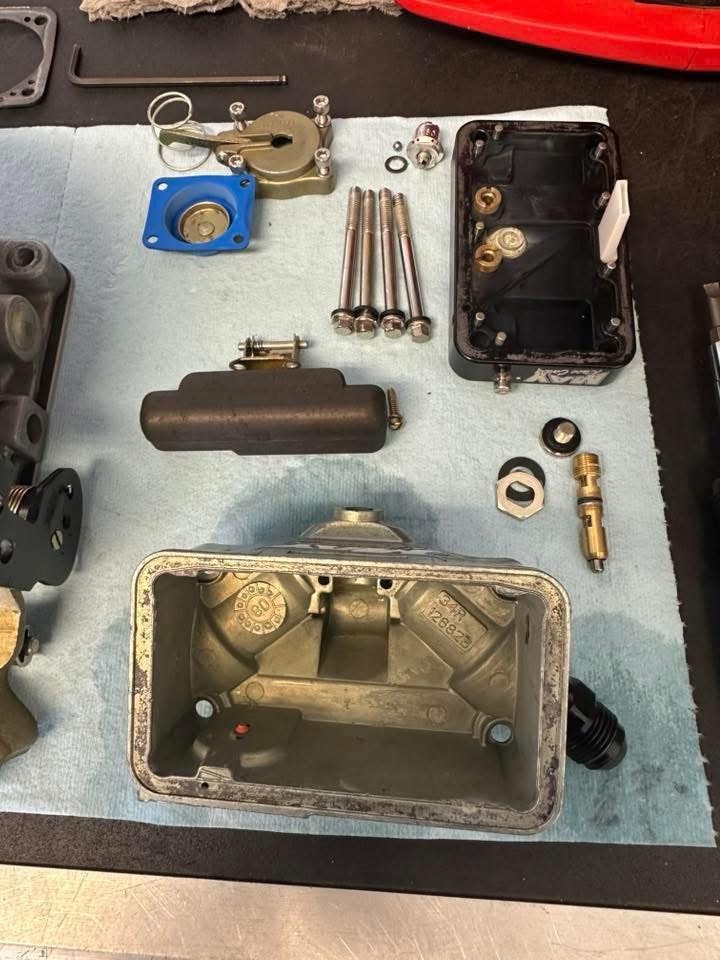
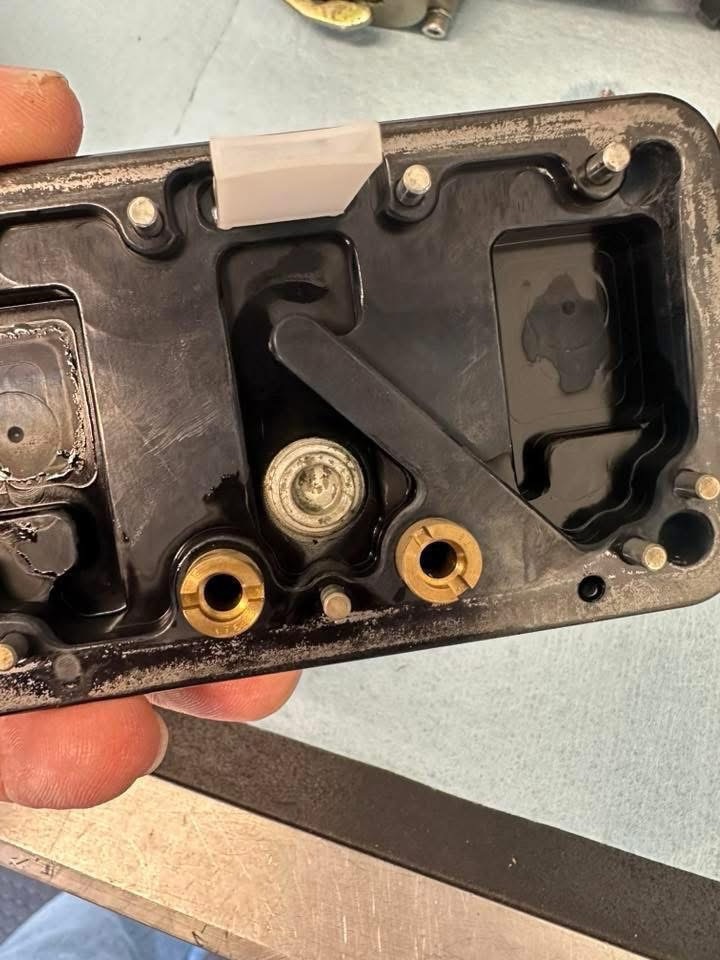
If you’ve run methanol long enough, you know the routine: after a hard day at the track you pop open the carb bowls or crack a vacuum catch can and find a nasty surprise — varnish, white powdered residue, or sludgy gunk that sticks injectors, glues needle-and-seat assemblies, and sends you hunting for a parts stash and a roll of emery cloth. It’s part of the methanol folklore: powerful, cheap, fast—but a little needy.
ChemSource Contact #: (336) 707-4271

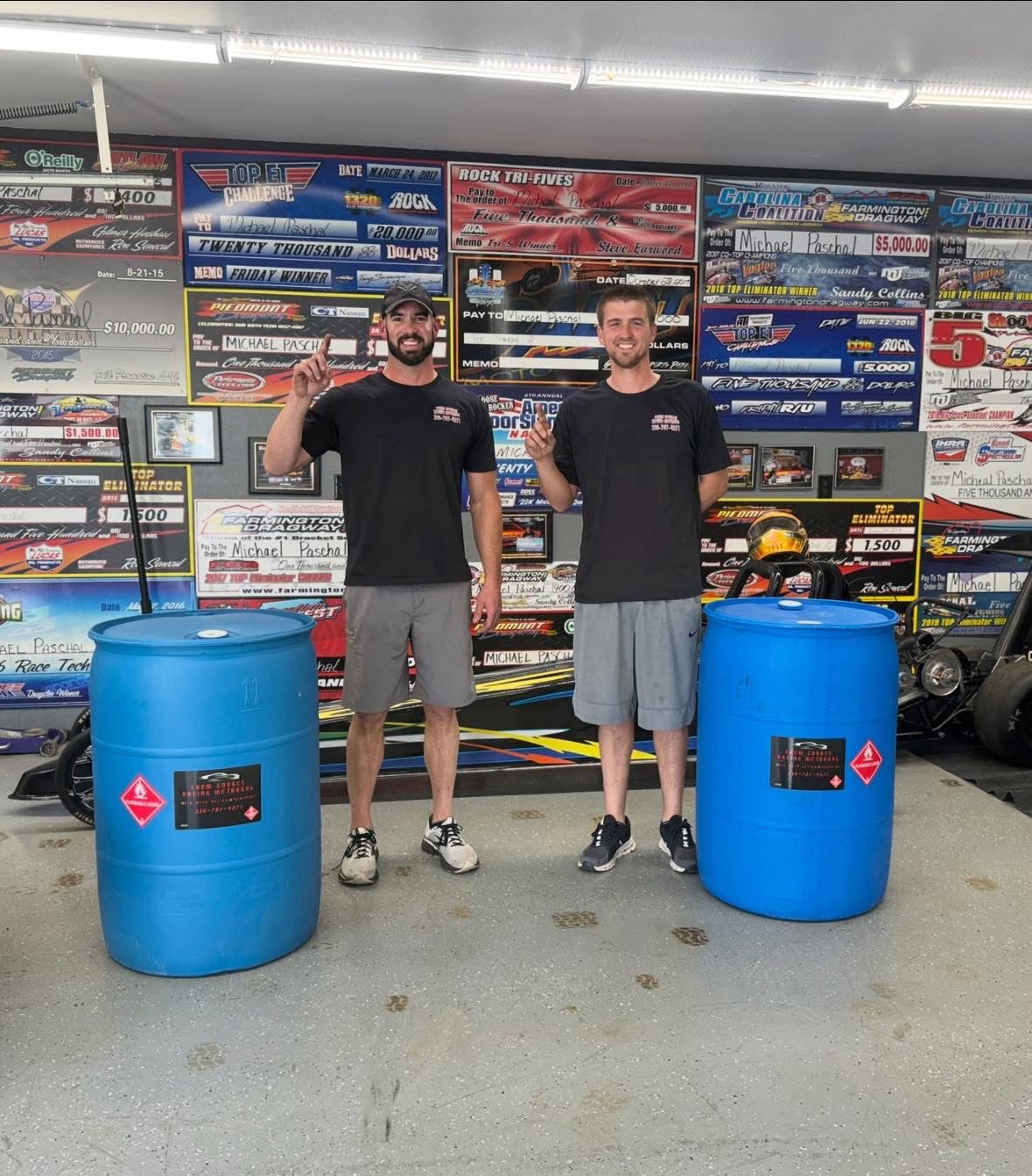
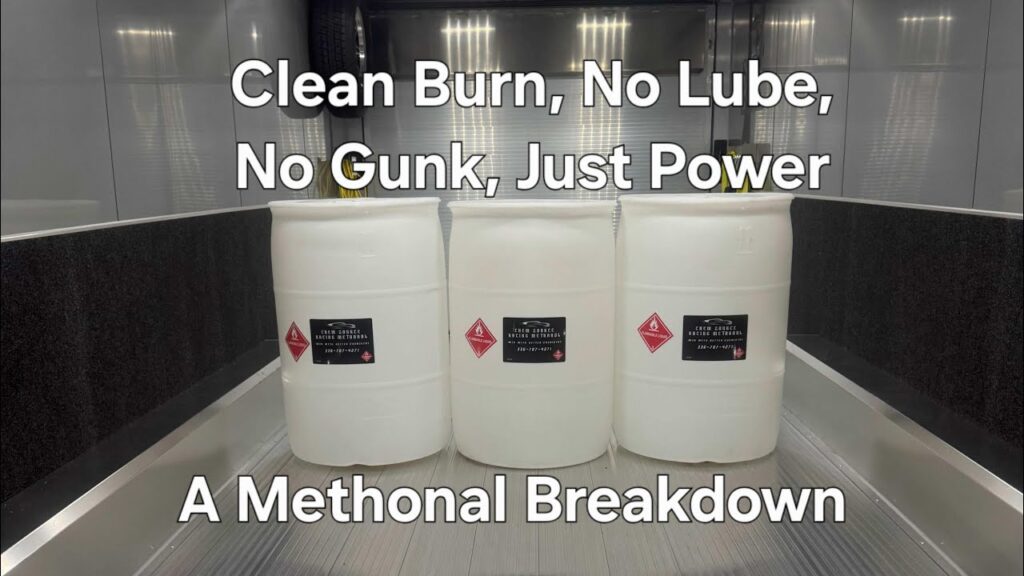
Meet Chris Mitchell of Chem Source Racing Methanol (also owner of Bel Air Car Care). A chemist who’s worked in the chemical business since 2010, Chris says the problem isn’t methanol itself — it’s what’s mixed into many commercial racing alcohols. He’s made a different product: “win with better chemistry,” he told me, and backed it with lab testing and real-world runs.
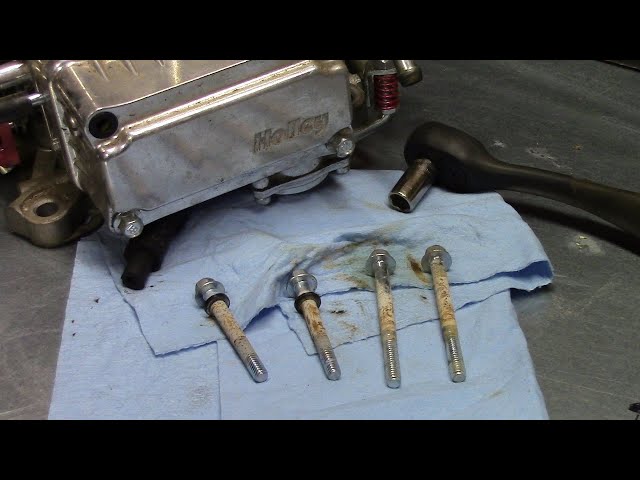
What’s actually clogging your fuel system?

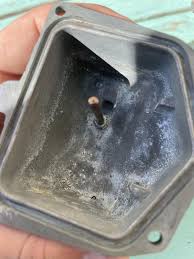
Racers commonly blame “alcohol” as if it were a single, stable substance. But methanol sold for racing can vary widely from batch to batch — especially when suppliers reclaim and reprocess used alcohol. That variability often shows up as elevated water content and other contaminants. Those impurities can leave white or chalky residues after evaporation and can cause deposits that stick in bowls, clog injectors, or bind needle-and-seat assemblies. Chris tells me that this white residue is due to a containment picked up from the original use of methanol (such as cleaner). It means the Methanol has been resourced, and is not in its pure original form. Community reports and racer forums have long described these sticky, white residues and the sticking needle problems that follow. yellowbullet.com+1
There’s also a regulatory angle: the EPA and related agencies have guidance and case memos about reclaimed solvents and when reclaimed product is treated as a product vs. a waste stream. Reclaimed methanol that is returned to commerce under those rules may not be as clean as virgin, laboratory-grade methanol. (A 1985 RCRA memo describes reclaimed methanol being handled as product-like when it’s 99.5% pure, illustrating the regulatory complexity around reclaimed solvents.) rcrapublic.epa.gov
Why water matters more than you might think
Methanol is extremely hygroscopic — it mixes with water readily. That hidden water is the villain Chris calls out. Water in fuel does three things that matter to racers:
• It promotes oxidation and corrosion inside fuel bowls and fuel-system components.
• It reduces valve-train and upper-cylinder lubricity, which teams traditionally offset with “top lube” additives.
• It contributes to the white, powdery residues and variable performance you see from run to run.
Top lube products exist precisely because methanol (and other alcohol fuels) lack lubricity and can be corrosive in the presence of water. These additives are formulated to blend with fuel and coat the upper end to prevent bore wash, valve-seat degradation, and related wear. Teams using variable-quality methanol and running in humid or multi-heat events often rely on top lube to keep things alive between runs. powerpluslubricants.com+1
Chris told me he’s seen batches of other methanols test in the double digits as a percentage of water — numbers that will create the exact issues teams complain about. His product, by contrast, consistently measures less than 0.01% water, which explains why it neither leaves the same residues nor requires top-lube treatment, he says.
The safety and performance baseline
Pure methanol is highly flammable and burns with an almost invisible flame; the typical flash point quoted for methanol is in the low-50s °F (around 51–54°F depending on test/ SDS), which is why handling and storage are safety-critical. (Top-lube additives have much higher flash points — often well above 400°F — and won’t burn; those additives can also change how the fuel behaves energetically and thermally). Spectrum Chemical+1
Beyond safety, the practical benefit is consistency. Teams that switch to a consistently dry, clean methanol can tune more precisely because they aren’t chasing water-driven performance swings. If your fuel sometimes contains significant water and sometimes only trace moisture, the air/fuel behavior, ignition character, and even how much you pull from a vacuum catch can will change from session to session.
Real track-life differences
I asked Chris about catch cans — the little windows into what’s happening in your crankcase and fuel system. Many methanol users have a ritual: after each run they crack open the catch can or drain bowl and pull off ounces of fluid and gunk. Chris says he doesn’t see that with his product. Because there’s negligible water and fewer contaminants to separate out, catch cans weren’t filling with syrupy, cloudy fluid after a run. In short: less winter storage drama, less post-season rebuild work, and less time spent rebuilding bowls and unclogging injectors.
Chris is confident enough that he leaves bowls full of his methanol over winter and reports they come out clean and crank right up — a powerful anecdote for teams who lose time winterizing or constantly lube/flush systems.
The bottom-line economics
Chemistry that reduces maintenance has a dollar value beyond the cost per drum. Chris’s base pricing (as quoted to me) is straightforward: about $200 per drum for small purchases (19 drums or less) and $180 per drum for 20+ drums. That’s before shipping, and Chris noted local distributors to reduce freight for some buyers. Factor in the elimination of top-lube purchases, fewer rebuilt parts, less downtime, and more consistent tuning — and the cost equation starts to tilt toward savings, especially for serious teams or shops. (Shipping and local distribution options may change final cost.) — call Chris to get exact shipping and local distributor pricing.
What to look for when buying methanol
If you’re shopping around, here are practical takeaways and questions to ask suppliers:
• Ask for a water-content spec (and lab confirmation). Trace water (below 0.1%) is desirable; multi-percent water is a red flag.
• Ask about product source — virgin vs. reclaimed. Reclaimed product may be legal and economical, but can carry impurity risk depending on the quality of reclamation. rcrapublic.epa.gov
• Ask about batch-to-batch consistency and whether the supplier provides certificates of analysis (COAs).
• Ask whether the product requires top lube. If the supplier recommends top lube as standard, ask why — could be water content or other impurities. powerpluslubricants.com

Chem Source Racing Methanol — the quick take
Chris Mitchell’s pitch is simple: consistency, cleanliness, and lower maintenance. He says his methanol is manufactured to be dry (less than 0.01% water) and pure, leaving virtually no residue and eliminating the routine top-lube step that many teams consider mandatory. For teams tired of draining bowls, unclogging injectors, or lugging bottles of top lube to the trailer, that’s a powerful proposition.
How to order: Call Chris Mitchell at 336-707-4271 and he’ll put you in touch with a local distributor or arrange shipping. Base price is $200 per drum (1–19 drums) and $180 per drum for 20+ drums (shipping varies).
Final thought
Methanol’s power is unquestioned in many racing classes — but the stories about sticky bowls and inconsistent performance aren’t just lore. They’re symptoms of variable water content and impurities. If you want to spend more time dialing a tune and less time rebuilding needles and seats, it’s worth asking your fuel supplier for lab numbers — and if you’re shopping for a new supplier, give Chris a call. As he put it bluntly: “win with better chemistry.”