
In drag racing, competitors are always searching for consistency. Yet even the best-prepared cars and crew chiefs can be undone by the one opponent they can’t control: weather. For bracket racers, index competitors, and grudge racers alike, atmospheric conditions fundamentally influence how much horsepower your engine produces, how well your car hooks off the line, and ultimately what your expected ET will be.
At major bracket events, where racers may wait days between runs, knowing how weather changes will affect your performance isn’t just helpful—it’s essential. A morning with cool, stable conditions can turn into a hot, low-pressure afternoon right around the time you finally get in the lanes. Temperature. Barometric pressure. Humidity. These aren’t abstract meteorological terms—they are tuning variables that change your engine’s effective air charge and your ET potential by measurable amounts.
Weather plays such a frustration that racers have set out to create combinations less affected by weather swings. Not all combinations are the same, and there is no one size fits all for how weather will affect someones combination.

The Core Weather Variables That Matter
1. Temperature
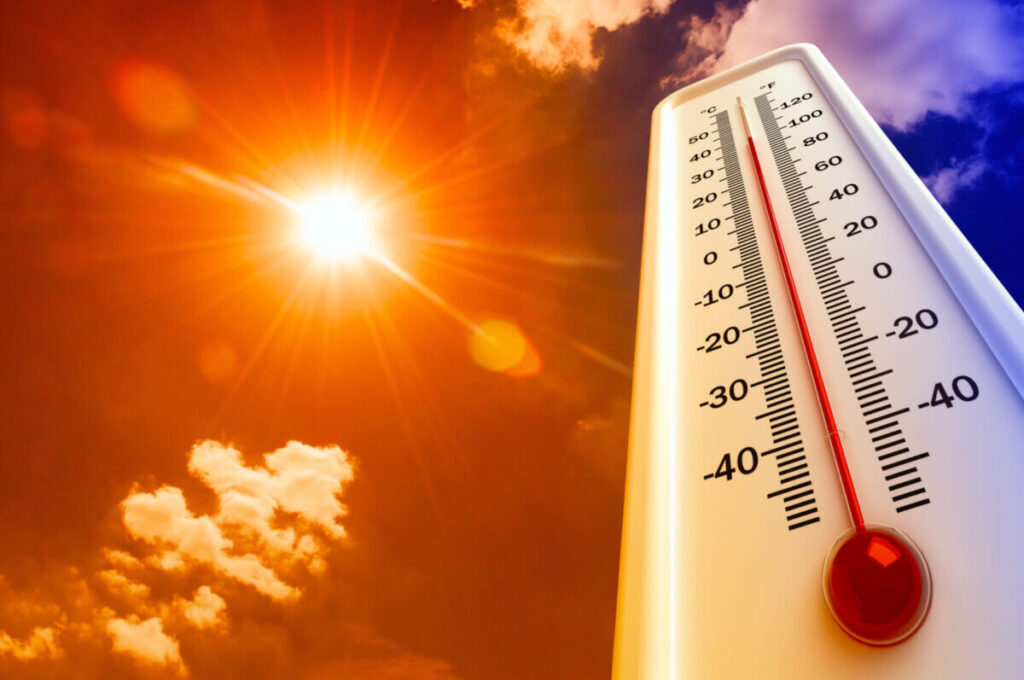
Most racers already monitor temperature, and for good reason: air density decreases as temperature rises. Less dense air means fewer oxygen molecules per intake stroke, which translates directly into lower power output.
A practical rule of thumb:
For every 10°F rise in air temperature, a naturally aspirated engine typically loses about 1% of its power. That could mean a shift of approximately 0.01-0.02 seconds on ET for each 10°F jump depending on your class and power level. dragracecalculator.com+1
Of course we all strive to build combinations that minimize this affect. One racers combination may see no difference with temperature swing, while another racer has significant change. Think 12.90 junior dragster to 4.40 dragster. The 12.90 junior may not like the 10 degree change in weather that causes it to swing drastically in ET, while the 4.40 dragster is only effected a few thousandths.
For example:
-
Morning at 60°F → denser air, stronger combustion.
-
Afternoon at 90°F → ~3% less air density → similar percentage drop in horsepower → ET changes could vary a few thousandths to several hundredths depending on the combination.
Even modest temperature swings throughout a race day matter.
2. Barometric Pressure (Barometer)
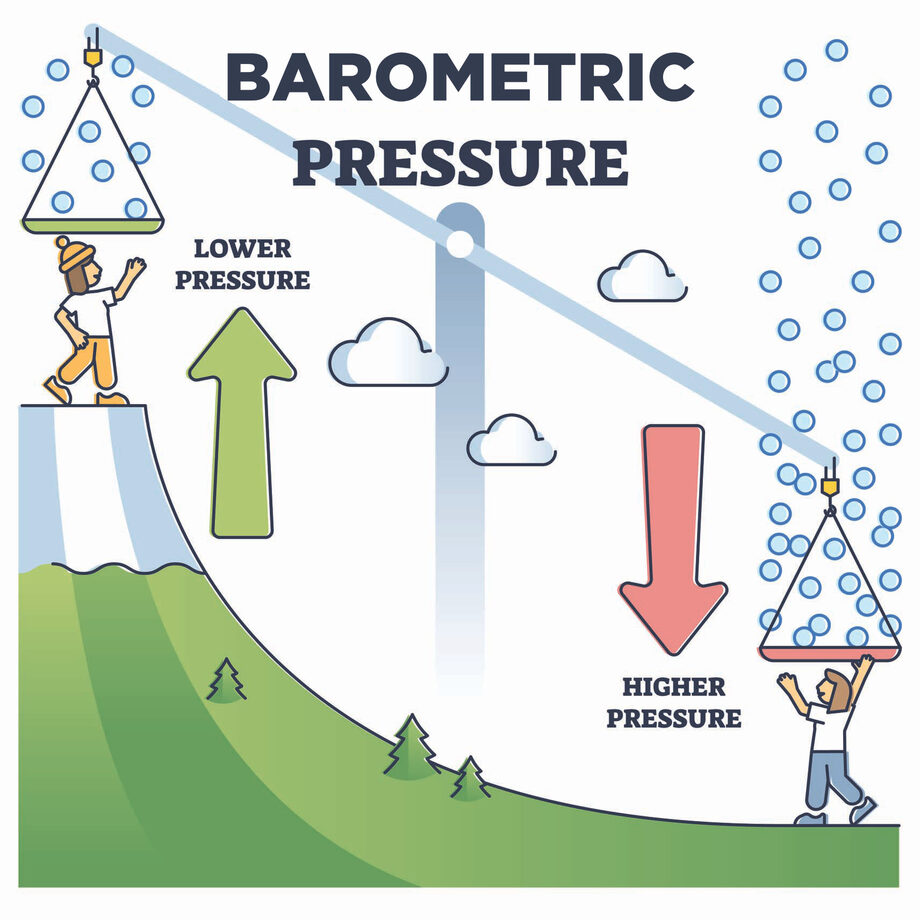
Barometric pressure tells you how compressed the air column above you is. Higher barometric pressure means more molecules of air (and oxygen) are available—good for power. Lower barometer, common before storms, means thinner air.
A working rule:
Every 0.10 inHg drop in barometric pressure can slow your ET by roughly 0.01 seconds. Peyton Racing LLC
Barometric swings happen all the time. A stable, sunny high-pressure day might sit above 30.10 inHg; a hot afternoon thunderstorm front might drop that to 29.50 inHg or lower—nearly a 0.60 inHg swing. At that magnitude, you could be looking at 0.06 seconds of ET change due to pressure alone, independent of temperature changes*
3. Humidity
Humidity is less intuitive because wet air weighs less than dry air. Water vapor displaces oxygen molecules, so high humidity actually reduces air density. Unlike temperature and barometric pressure, humidity’s effect is smaller, but over long ET runs—even a few thousandths matter. While many find that humidity changes do not affect their combination, it may affect the neighbors care significantly more depending on their combination.
Rule of thumb from racing weather data:
-
High humidity (e.g., water grains above ~120) can add 0.05–0.15 seconds to ET in sensitive motors (such as a small junior dragster motor). Peyton Racing LLC
It’s common to see big event weather swing humidity from morning lows near 30–40% up into the 70–90% range during afternoons or after rainstorms. That alone may contribute to slower ETs regardless of everything else.
not to mention humidity putting moisture on the starting line.
The Single Best Predictor: Density Altitude
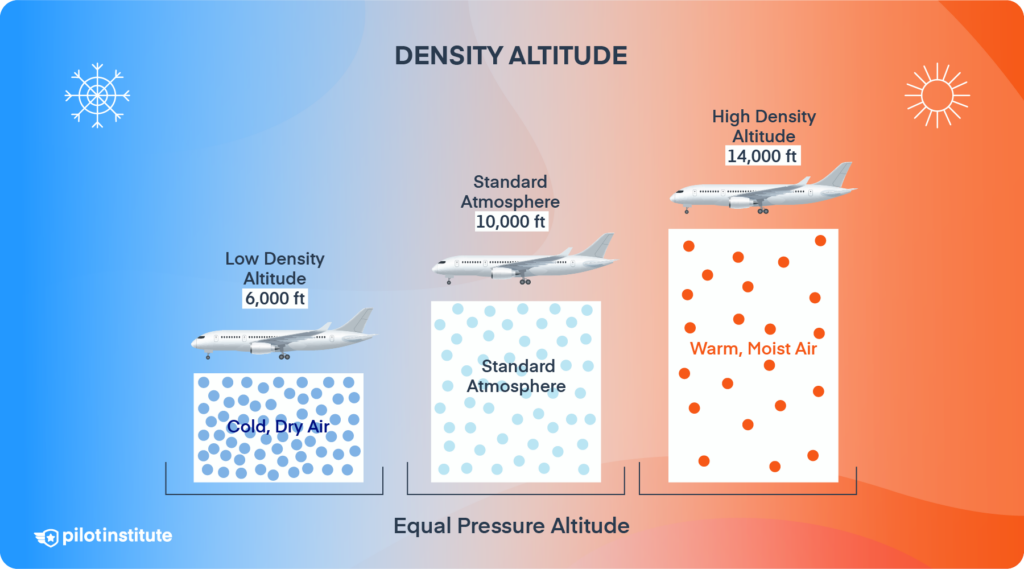
Rather than wading through individual weather factors, most teams track density altitude (DA), which compresses temperature, humidity, and barometric pressure into one effective number expressed in feet.
Why density altitude matters:
At high density altitude, the air feels like it’s at a high elevation—even if you’re at sea level. Thin air = less oxygen = less power. Wikipedia
Approximate effects:
-
Every 1,000-ft increase in density altitude tends to slow ET by ~0.02 in a “big car” and as much as 0.15 in a slow junior dragster
As an example:
-
A day with a DA of 300 ft might correlate to an ET of ~7.90 in a given car.
-
A shift to 2,300 ft DA (due to heat and humidity) could push expected ET to ~8.10–8.15—even with everything else unchanged. Peyton Racing LLC
That’s roughly a .20–.25 second swing just from the air conditions.
Many racers now carry portable weather stations to calculate it live. Seasoned bracket racers correlate DA with their historical runs so they can predict how their car will behave rather than simply reacting.
What This Means for Your Dial-In
Most modern weather tuning software (e.g., iFamily Racing, Don Higgins Crew Chief Pro) takes your actual ETs and weather conditions and uses algorithms to learn how your car responds to weather swings. These tools help refine your predicted ET and dial-in for changing conditions throughout race day.
Here’s how racers typically see the impacts:
Cool, high-pressure morning:
-
Low density altitude
-
Tightest ETs and fastest runs
-
Narrower dial-in windows
Hot, humid afternoon with lower barometer:
-
Higher density altitude
-
Significant ET slow-downs
-
Dial-in must be adjusted upward (or racing delayed)
Many competitive bracket cars can repeat laps within a few thousandths of a second given consistent weather. When the weather shifts, that repeatability disappears unless you adjust for it. dragracecalculator.com
How to Make Weather Your Advantage
-
Monitor and log conditions per run (temp, baro, humidity, DA).
-
Build your own weather vs. ET charts.
-
Use prediction software to dial in smarter, not harder.
-
Anticipate weather-front arrivals; sometimes waiting a few hours can make your next pass predictable.
Weather isn’t just background noise at drag events—it is a primary competitor you must beat if you plan to win rounds. Understanding it lets you anticipate your car’s behavior rather than guessing, and at the level where wins are decided by thousandths of a second, that knowledge is power.