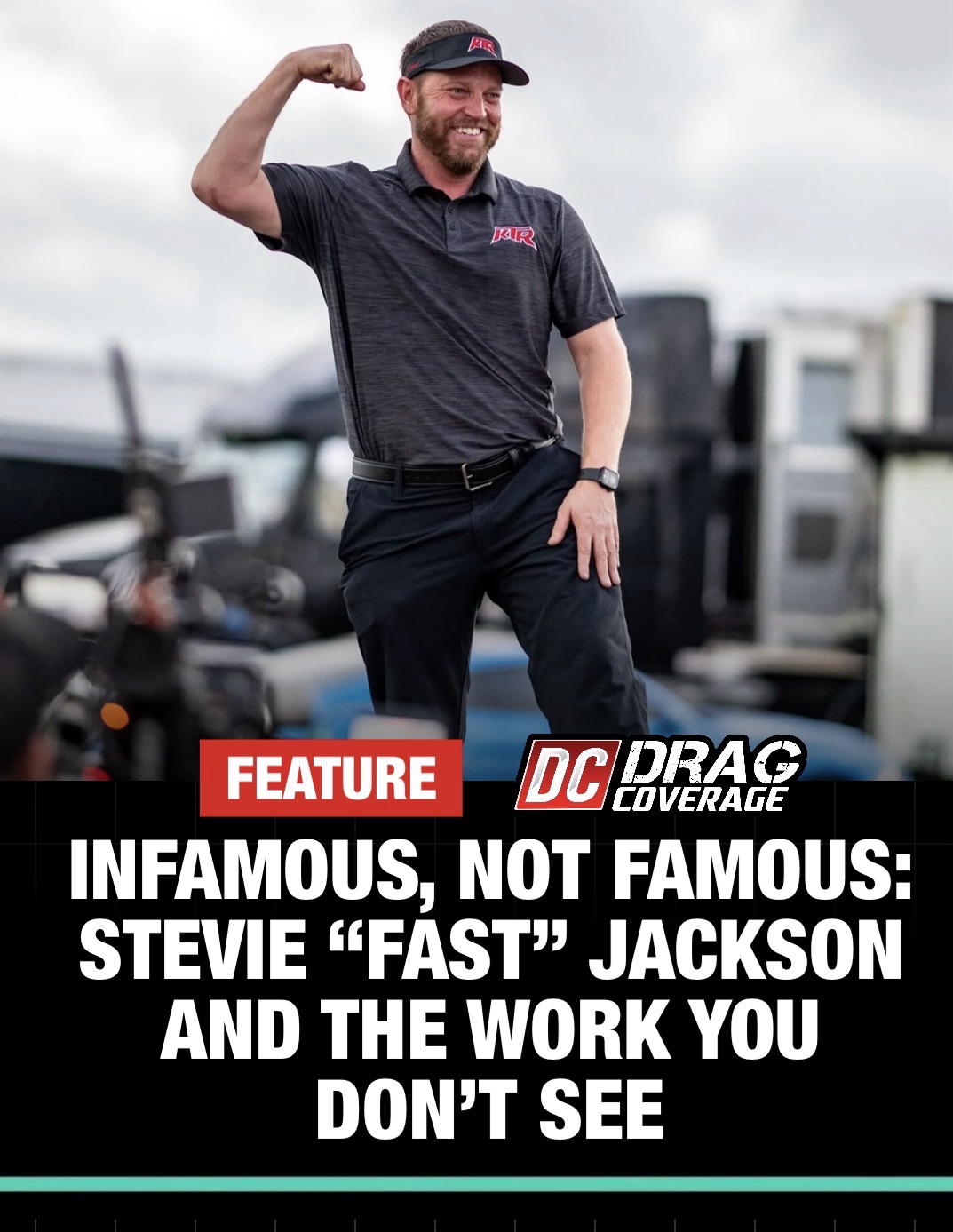
At the track, it looks like a moment.
A 3.5X-second pass.
211+ mph.
Win light on.
Helmet off.

But Steve Jackson told DragCoverage the truth that separates highlight reels from championships:
Great moments don’t happen when you watch them happen.
They happen months earlier — in a shop, under fluorescent lights, with the same people showing up early and staying late, chasing gains so small most teams would quit looking.

“We Don’t Go to the Race to Race.”
When Jackson left the Drag Illustrated World Series of Pro Mod last year, it wasn’t just a runner-up finish that sat heavy.
A mechanical failure cost him in the final. And Steve doesn’t “move on” from losses — he metabolizes them.
“I hate losing more than I like winning.”
That sentence explains the winter.
What followed wasn’t talk. It wasn’t social media hype. It wasn’t sponsor spin.
It was work.
Relentless work.
The 100-Pull Weeks
Fans see the car. They see the parachutes, the header flames, the scoreboard.
What they don’t see is the program.
At Killin’ Time Racing, racing isn’t an accessory. It’s a system — built the same way you build engines: methodically, aggressively, and without excuses.
One hundred dyno pulls in a week.
That’s not “tuning.” That’s a campaign.
Fuel, parts, labor, heat cycles, wear, and the kind of financial burn rate most people can’t even comprehend — all to extract what the current Pro Mod landscape demands: microscopic advantage.
Because the days of hunting hundredths are gone.
“We’re scrounging for a couple thousandths,” Steve said.
He laid it out: at Snowbirds, he qualified No. 16 and made the field by 0.009 seconds. In a world where the top 32 are separated by around a hundredth, “pretty good” is another word for “going home.”
That’s why the target isn’t 30 horsepower anymore.
It’s five. Six.
This week — by Friday — he said they’d already found six horsepower over the previous week. That doesn’t sound like much until you realize what it represents: the willingness to stack tiny gains until “immeasurable” becomes undeniable.
Power is king — and KTR’s new SF1 engine package is never off the clock.
“I’m on the dyno every single day,” he said. “When I hang this phone up, I’m going to get on the dyno again.”
Perfecting the Total Package
What’s changed isn’t just power. It’s the insistence on perfection across the whole equation:
-
power
-
chassis setup
-
tire and gearing strategy
-
converter choices
-
early numbers (60-foot)
-
and the hardest part of the entire puzzle:
the driver
Steve doesn’t romanticize it. He’s blunt about it.
“It doesn’t matter how good you race, how much power you have, or how good your crew chief is… if you can’t go up there and get that double-O light when you’ve got to have it, you’re not winning these events.”
The Driver Work: 100 Hits a Day, Every Day
Here’s the part most people miss — because it doesn’t make for flashy footage.
Steve has been treating driving like a discipline again, not a talent.
“90% of driving a race car is mental,” he told DragCoverage. “Maybe 95.”
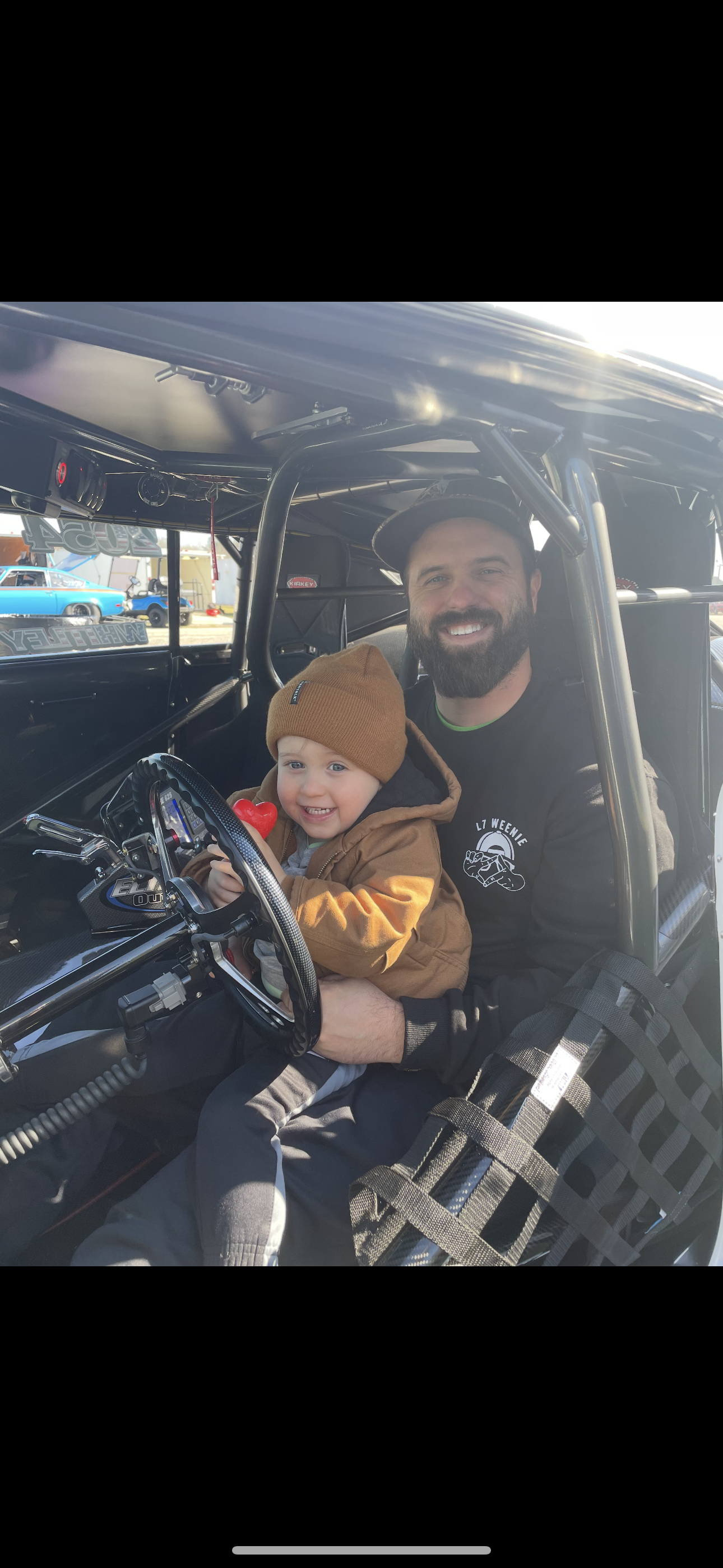
Post–World Series of Pro Mod, KTR built a full-size competition practice tree in the shop — not a toy, not an app, not a casual warmup. A real setup, with a complete console and steering wheel in front of it “just like you’re sitting in the car.”
And then he did what Steve does:
“I hit that thing a hundred times a day every single day.”
Not to prove he can cut a light — he already knows that. He does it to identify what causes a bad one.
Because the enemy isn’t reaction time. It’s mental clutter.
He’s learned when he’s vulnerable: come off a heated customer moment, a meeting, a disruptive day — and the tree shows it. That’s the data.
He can even quantify the drift: he told DragCoverage his reaction time slows about .02 from 6 a.m. to 6 p.m., consistently.
And his mindset is sniper-simple:
“Aim small, miss small.”
He’s aiming for .002. Because when you aim at “pretty good,” your miss becomes ugly. When you aim at elite, your miss is still survivable.
Staging: Inch-Perfect in a 4,000-HP Car
Then there’s the part that separates serious pros from people who just mash buttons.
Staging.
“It’s always important,” Steve said, “but never before like it is now.”
He’s methodical, shallow, precise — to the point he’ll blank the bulb. He joked that he used to think he was “slow,” until he realized other drivers were staging like they were driving a truck into the beams.
Now the field is so tight that everyone is forced to stage correctly — and as that’s happened, his reaction time has moved from mid-pack to the front.
His crew chief Jeff Pierce tells him the same thing every run:
“Make sure you get all of it.”
Every thousandth. Every inch. Everything the car can give.
And Steve put the absurdity into perspective:
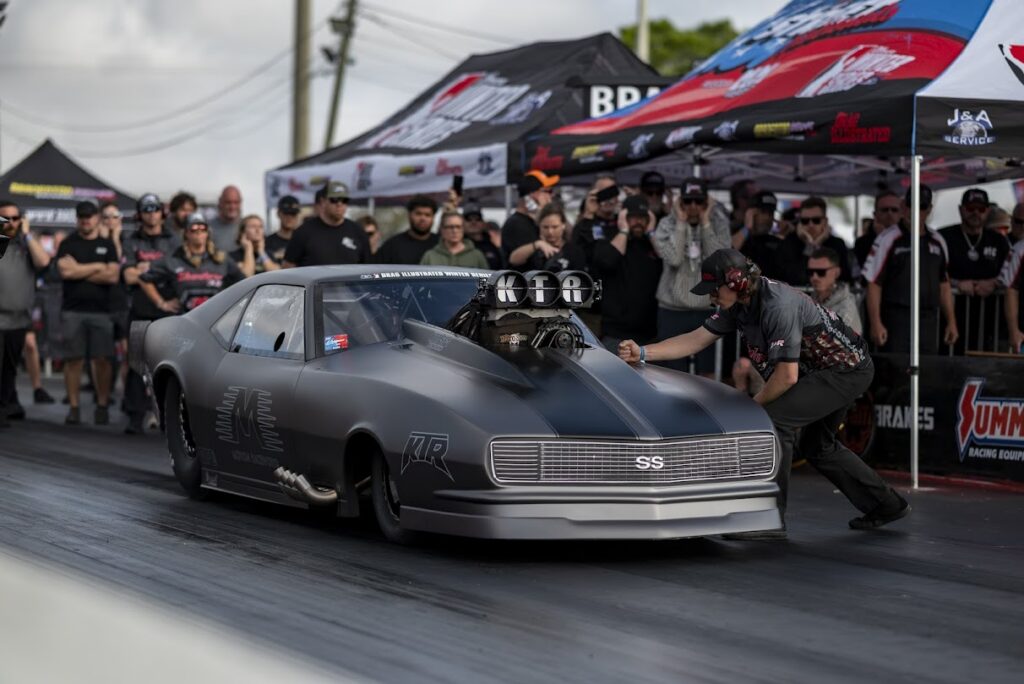
These cars are 20 feet long, 4,000 horsepower, huge tires… and they’re talking about moving it less than an inch.
“If I let off the brake pedal… it’ll run 60 miles an hour in the 1/8th,” he said. “It really takes finesse to stage these things.”
That’s the part fans don’t see — the quiet precision before the violence.
Bradenton Was the Proof
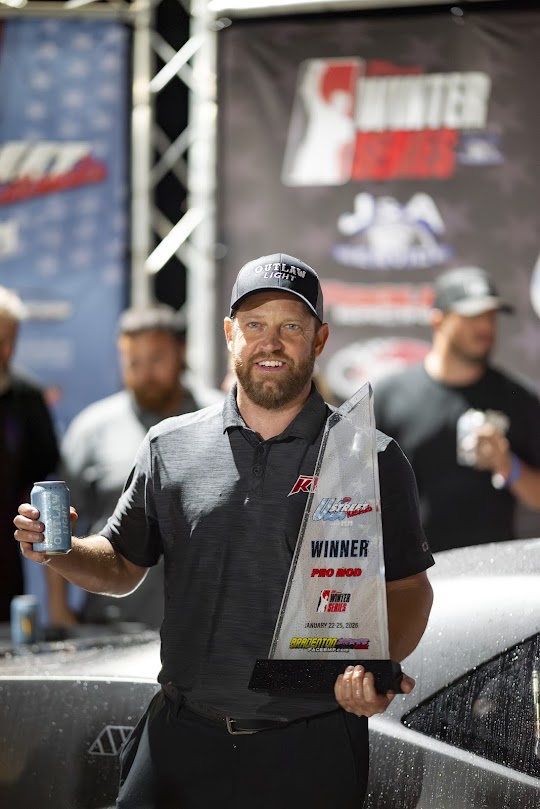
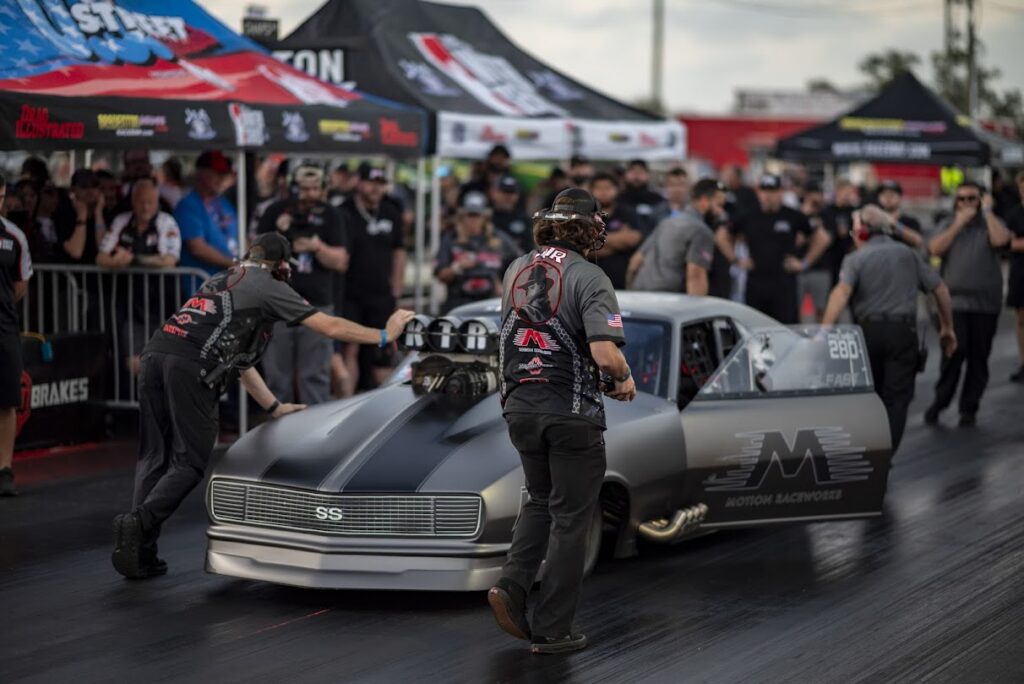
At the U.S. Street Nationals at Bradenton Motorsports Park, every qualifier ran in the 3.50s.
Every one.
That’s not just fast — that’s a pressure cooker. The margins weren’t tenths or hundredths.
They were thousandths.
And Steve didn’t roll in hopeful.
He rolled in finished.
No thrashing in the pits.
No last-minute engine builds.
No checklist chaos.
Service the car. Review data. Execute.
Because the race had already been won — in the dyno room, in the shop, and on a practice tree getting hit a hundred times a day.
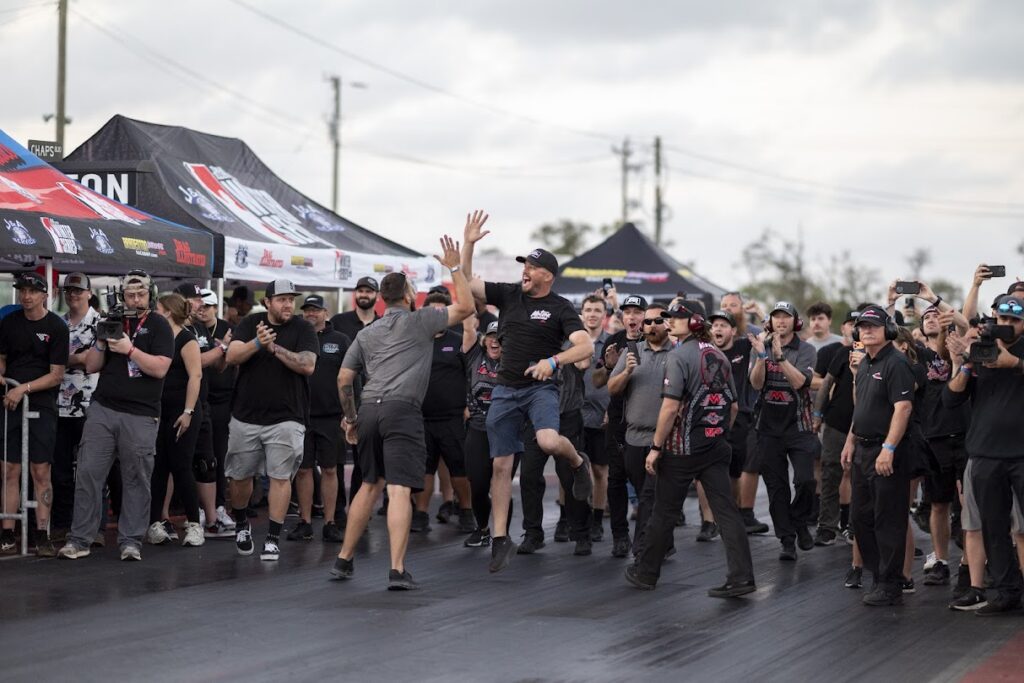
And when the win light came on, it wasn’t a surprise inside that camp.
It was confirmation.
The Season Nobody Talks About
Here’s what makes it hit harder:
He didn’t win a race in 2025.
Not one.
KTR won everywhere. Customers won. Records fell.
But Steve didn’t.
And he told DragCoverage something that should make 2026 sound like a warning shot:
“There’s only been two seasons in my entire career that I did not win a race. Both of those seasons were followed by a world record in every class I competed in — and a world championship in every sanctioning body I entered.”
He’s hoping 2026 becomes the third time.
Based on the work? That doesn’t sound like hope.
That sounds like precedent.
The People Behind It: Doug Cook, and a Shop That Rows the Boat
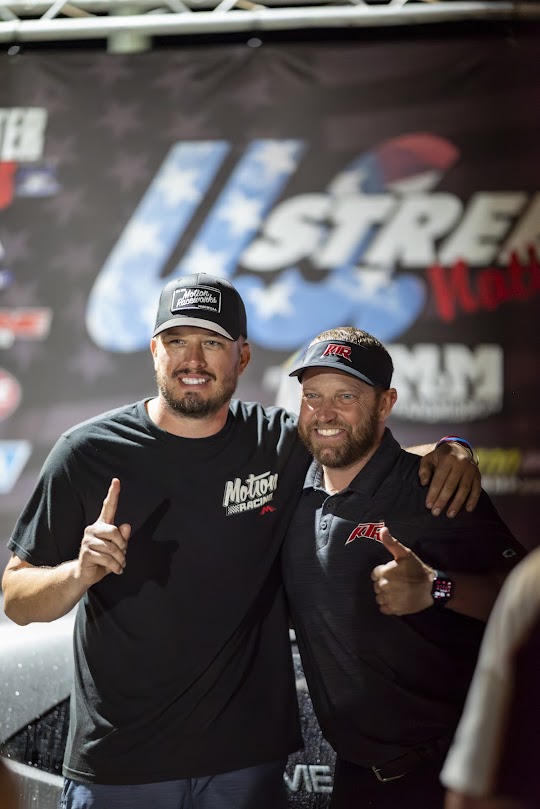
Steve also made one thing crystal clear: you don’t get “this version” of Stevie Fast without Doug Cook and Motion Raceworks.
“Doug Cook brought me back… not only in drag racing, but in business,” he said. “He pushed me off the cliff of competing again.”
And he handed you a quote that belongs in bold in the story:
“A violent plan executed today is better than a perfect plan executed tomorrow.”
That’s not just a line — it’s the operating system.
He credits KTR’s staff the same way: 17 employees, and “every single one of them rows the boat.”
They pave the road.
The team just gets to walk down it.
Infamous? Maybe.
When told he’s becoming “famous,” Steve laughed.
“I’m not famous at all. I’m infamous.”
Maybe that’s true.
But if infamy is built on refusing to be outworked…
on stacking five-horsepower weeks like brickwork…
on hitting a tree a hundred times a day to master the mental side…
on staging inch-perfect in a 4,000-horsepower car…
Then infamous fits just fine.
Because Bradenton wasn’t a moment.
It was a receipt.