

For a certain generation of Southern racers, weekends had a rhythm.
Saturday meant loading up, chasing a payout somewhere close, and seeing who showed up with something to prove. But Sunday—Sunday was different. Sunday was the day you pointed the rig toward Phenix City.
In the 1990s, you could hear the saying without anyone really saying it: race somewhere on Saturday… then go to Phenix City on Sunday. It was a destination. A routine. A place that felt like part of the regional schedule even when you weren’t holding a schedule in your hand.

That tradition has deep roots. The facility traces back to the early 1960s, when the strip opened as Phenix City Dragstrip on April 2, 1961, following repaving work earlier that spring. And decades later, it’s still what it’s always been at its core: a dragstrip built on community, repetition, and the idea that racing is something you show up for.
But now, the track is stepping into a new chapter—one that blends nostalgia with a very modern push for infrastructure, professionalism, and a bigger, cleaner, more consistent race-day experience.

A Family Track, A Passing Torch
The modern era of the property took shape in February 1999, when the Chambers family purchased the drag strip—first as racers who wanted a place to race, then as stewards of a facility that meant something to a lot of people.
On November 3, Scott Chambers’ father passed away, and Scott officially became the sole owner of Phenix City Dragstrip. It’s a heavy date, and Scott doesn’t treat it lightly. But it also marks a transition point: 2026 becomes his first full season as sole owner, and the mission is clear—restore the facility, raise the standard, and bring the track back to the level its reputation demands.
“It’s a family owned and operated business,” Chambers said. “We look for great things this year—and many years to come.”
“Fastest Track in the South” Isn’t a Slogan Here
Ask anyone who’s been around long enough, and they’ll tell you Phenix City has worn a reputation before—especially in the outlaw days—when people talked about it like it was the place where the track surface could handle the power.
Scott Chambers isn’t shy about what he wants that reputation to become again.
“We was known for many, many, many years… to be the fastest track in the south,” he said. “We are going to be the fastest track back in the south… Whatever it takes and however it takes.”
That “whatever it takes” is now showing up in tangible upgrades—some visible the moment you pull in, some you feel the first time a car goes down the groove.
The Rebuild: Timing, Scoreboards, Surface, Sound
If you haven’t been to Phenix City recently, you’re going to notice the changes quickly.
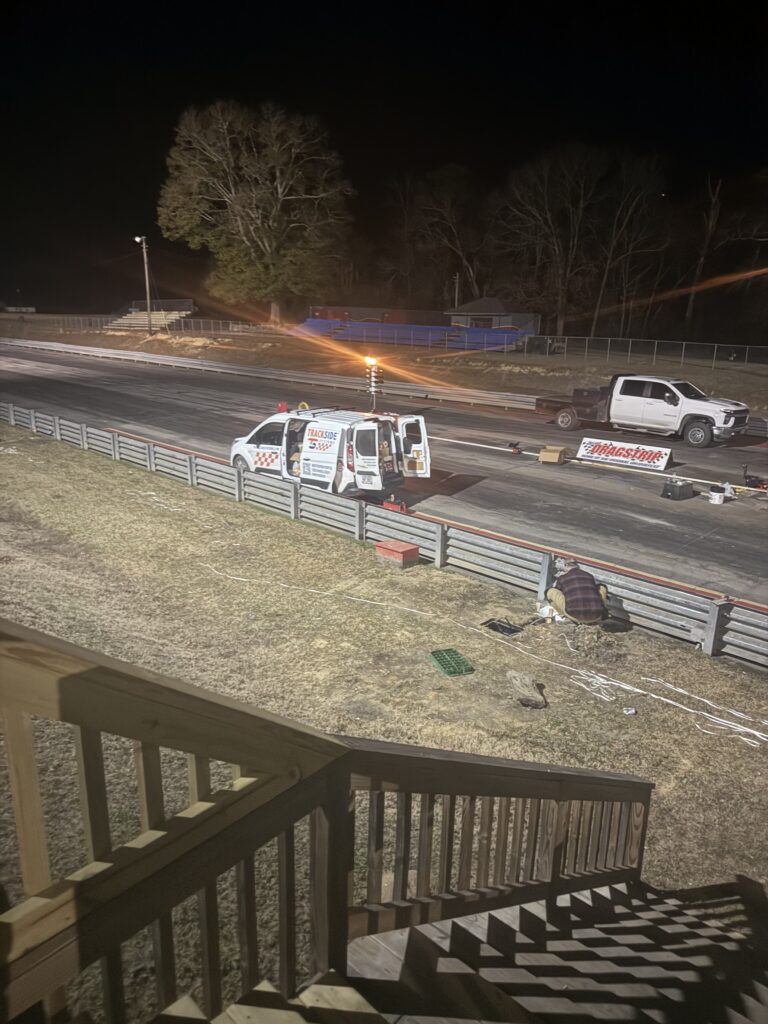
The headline is technology. The track has installed a brand-new Accutime timing system, paired with fiber-based operation—which Chambers says is the first implementation of its kind for the company.
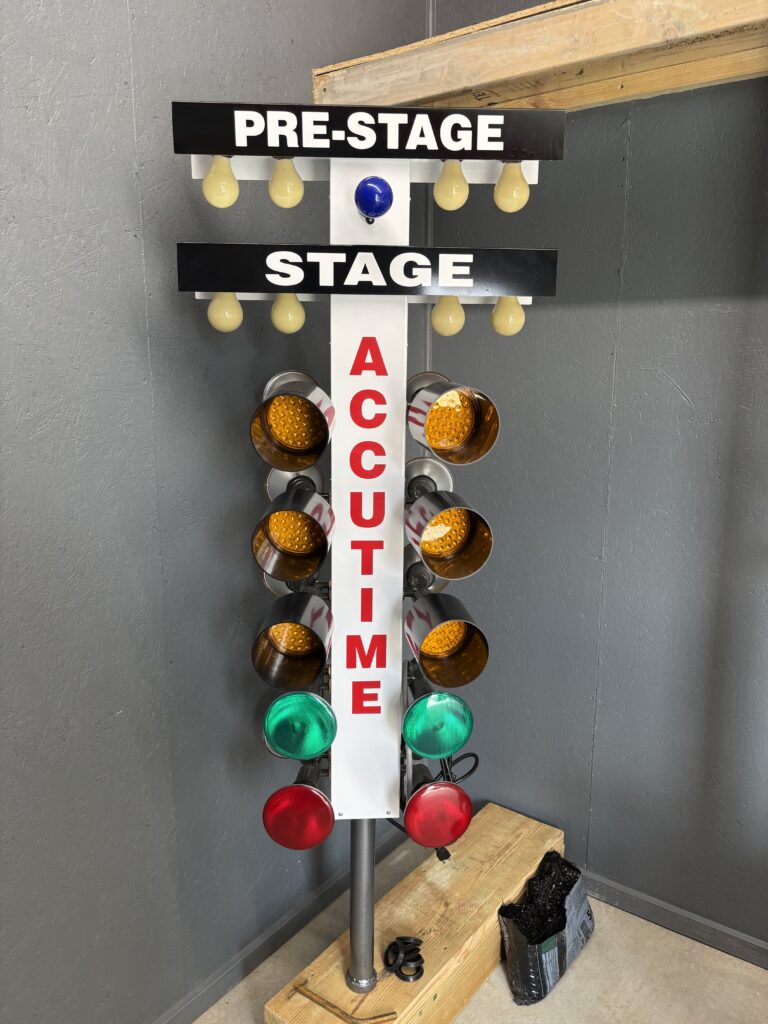
Along with it comes state-of-the-art LED scoreboards, modernized to match the new system, and built to improve visibility and reliability.
Then there’s the part racers care about most: the surface.
During the winter, the facility brought in Kurt Johnson of Total Venue Concepts to grind the racing surface and address flaws—work that’s all about consistency, bite, and confidence when you’re trying to turn on win lights. And more asphalt work is planned as the weather warms, including reseal coating and striping.
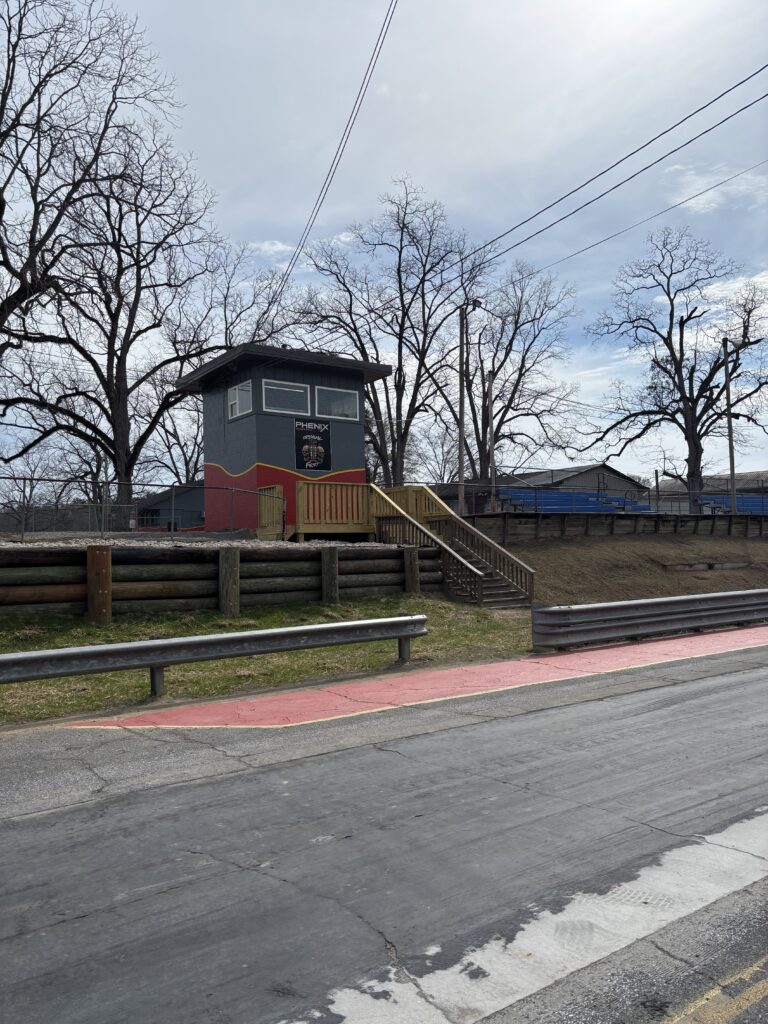
The upgrades aren’t limited to the strip itself. Chambers says every building on the property has been reworked in some way—painted, roofed, reconfigured—with more improvements planned on concessions and restrooms.
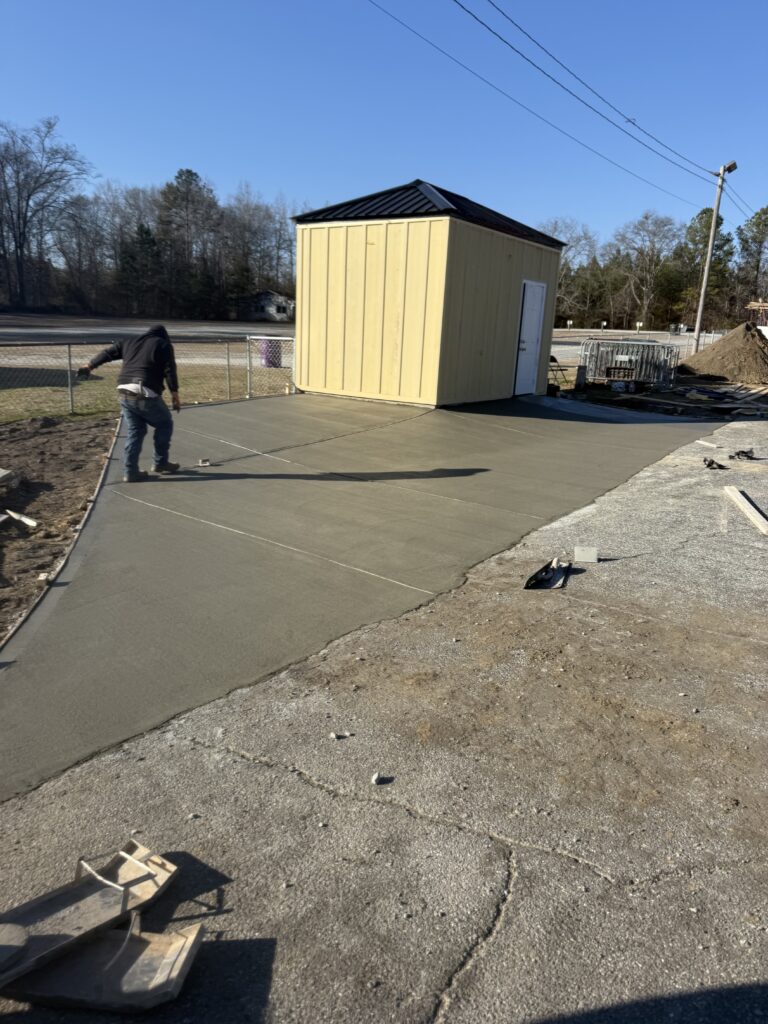
And the small thing that matters more than people admit: you can hear what’s going on now. A new PA/sound system is in place so racers aren’t guessing, spectators aren’t confused, and the track feels organized again.
Phenix City also remains a true dragstrip facility—an 1/8-mile venue that continues to draw racers looking for heads-up action and bracket competition in a tight, high-energy format.
Saturdays in Phenix City? That’s a Big Shift
For years, the identity was almost inseparable from the schedule: Phenix City on Sundays. That was the tradition.
Not anymore.
In a move driven by racer input—and a family commitment to Sundays—Phenix City is shifting to Saturday racing for the first time in the track’s modern memory.
“For as far as I know, the first time in history,” Chambers said. “We will be racing on Saturdays instead of Sundays… It was per the request of the racers.”
That change is going to feel strange at first for racers who grew up on the old rhythm. But it also signals something important: this track is listening to racers—and building a schedule designed to grow.

What They’re Racing: Dirty 530, 550/650, and More
Phenix City isn’t rebuilding quietly. The schedule is being paired with programs meant to bring cars, bring crowds, and bring momentum.
Dirty 530 is one of the biggest storylines. It’s being positioned as a no-excuses, guaranteed-money program:
-
Guaranteed $4,500 payout
-
$3,500 to win, $750 runner-up, $125 semis
-
$200 buy-in
-
No car minimum
Alongside that is the 550/650 points series, built to reward consistency—and stacked with real year-end prizes:
550 Points Championship (Year-End)
-
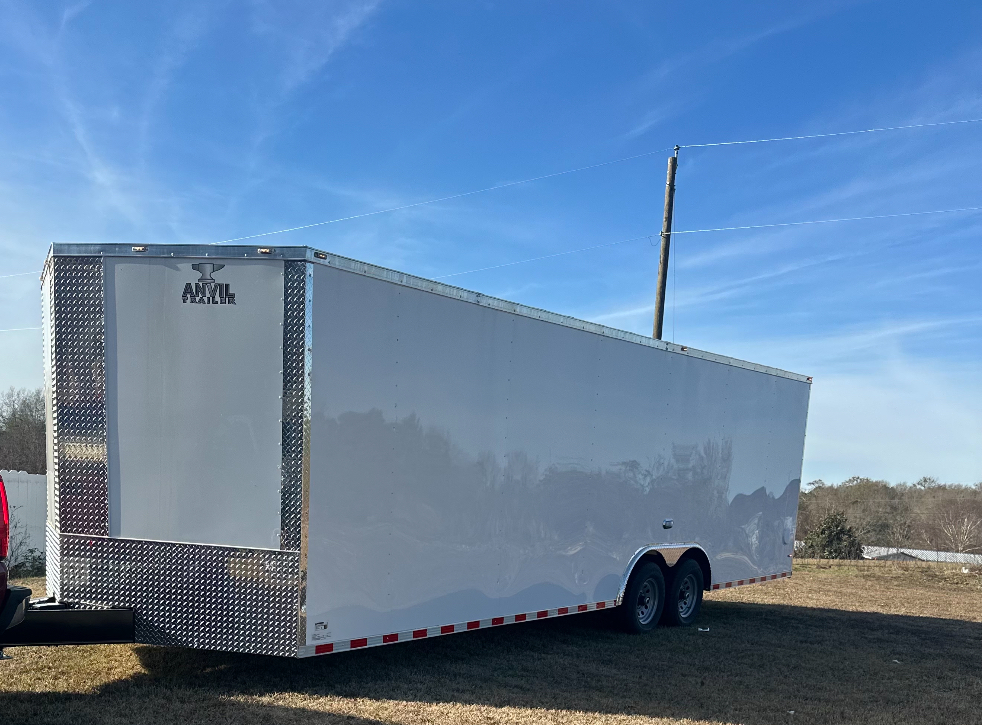
$2,500 cash + brand-new enclosed Anvil trailer
-
Runner-up: $1,000 + PTC converter
-
Third: SpeedTech nitrous plate system + $250
-
Fourth: $250
650 Points Championship (Year-End)
-
$2,000 to win
-
$750 runner-up
-
Semis: $200 each
There’s also more on tap: Pro Mod dates in the works, Quick 8-style programs, grudge racing activity, and a commitment to track prep with experienced personnel back in the mix.
And for racers who show up needing supplies? Phenix City is making sure it can serve as a real race-day hub: VP Racing Fuel and nitrous are available onsite.
A Different Standard: Clean, Professional, and Serious
A rebuild isn’t just asphalt and electronics. It’s culture.
Part of what Scott Chambers and his team emphasize is professionalism—particularly on the starting line and around race operations. The track is making it clear: this isn’t going to be loose or sloppy.
It’s the kind of thing that doesn’t show up in a flyer—but it changes how a facility feels.
The Next Generation: Wesley Chambers
Every track story eventually becomes a people story. And for Phenix City, the future has a name: Wesley Chambers.
Wesley is coming up as a young driver, with new equipment on the way and a lot of belief behind him. Scott doesn’t hide it—this isn’t just a season, it’s a longer plan.
“This track will belong to him as time progresses,” Chambers said.
The Same Place—Built New Again
Phenix City has always been a place where racers show up, line up, and settle things the old-fashioned way.
What’s changing is everything around that moment.
The track that used to be the Sunday destination is stepping into a new era—new systems, new surface work, new programs, a new schedule, and a renewed promise that the facility will match what racers bring to the starting line.
Nostalgia matters here. But so does momentum.
And if the rebuild keeps moving the way Scott Chambers says it will, the South may be talking about Phenix City the way it used to—only this time, with a scoreboard you can read from anywhere and a groove you can trust when it counts.