
Few adjustments in drag racing are as simple—or as powerful—as tire pressure.
It takes only seconds to change, requires no tools beyond a gauge, and costs nothing. Yet a change as small as half a pound of air can completely transform how a car behaves on the starting line.
Despite its simplicity, tire pressure is often misunderstood. Many racers treat it as a fixed number rather than a tuning tool. In reality, tire pressure directly controls how the slick interacts with the racetrack during the most important moment of the run—the launch.

And that interaction determines whether the car hooks, spins, or shakes the tires.
How Drag Slicks Actually Work
A drag slick does not behave like a normal street tire.

Street tires rely on tread patterns and relatively stiff sidewalls to maintain stability and grip through corners. Drag slicks are built with flexible sidewalls designed to absorb the violent hit of a drag racing launch.
When the car leaves the starting line, several things happen almost instantly:
-
The drivetrain applies torque to the tire.
-
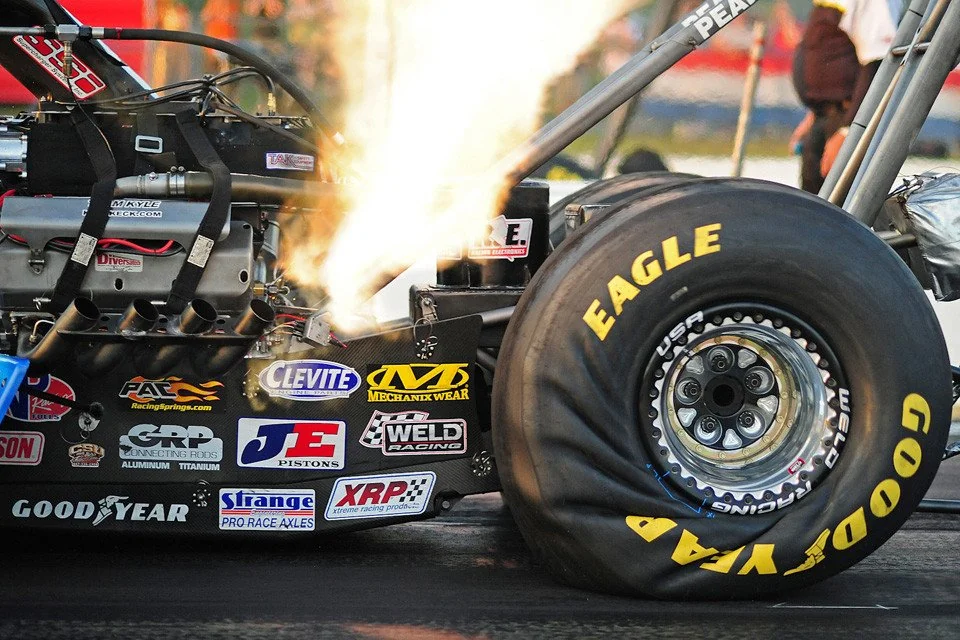
The sidewall wrinkles and compresses.
-
The tire briefly distorts and “grows” in diameter.
-
The contact patch enlarges against the racetrack.
This wrinkling action acts like a shock absorber between the drivetrain and the track surface. Instead of the tire instantly spinning, the sidewall temporarily stores energy and releases it more smoothly.
This is why you often see slow-motion footage of drag cars leaving the line with the slicks visibly wrinkled and distorted.
The tire is literally absorbing the hit of thousands of horsepower.
Tire pressure controls how easily the tire can perform this job.
What Lower Tire Pressure Does
Lower tire pressure allows the sidewall to wrinkle more easily.
With less air pressure inside the tire, the sidewall becomes more flexible and can absorb more of the initial shock from the launch. This usually results in:
• A larger contact patch
• More tire wrinkle
• Greater ability to absorb power
• Increased traction on marginal tracks
This is why racers often lower tire pressure when they encounter spin on the starting line or when racing on a track with limited preparation.
A softer tire allows the car to apply power more gradually to the track.
However, this extra flexibility also introduces potential problems.
The Risks of Too Little Pressure
If tire pressure is reduced too far, the sidewall can become unstable. Energy that is stored must be released. The quicker the energy is stored (lower tire pressure) the quicker the energy may be released.
Instead of absorbing the hit smoothly, the tire may compress and rebound repeatedly. This oscillation creates one of the most dreaded sensations in drag racing:
Tire shake.
Drivers often describe tire shake as feeling like the car is running over rumble strips or driving across railroad ties. In reality, the tire is rapidly grabbing and releasing the racetrack multiple times per second.
When this happens, the tire is essentially bouncing between traction and slip.
Not only is this extremely uncomfortable for the driver, it can also be damaging. Severe tire shake has been known to damage:
• Driveshafts
• Converters
• Rear-end components
• Transmission internals
• Suspension components
Because of this, racers must be careful when lowering tire pressure. More wrinkle can help traction—but too much wrinkle can create instability.
What Higher Tire Pressure Does
Increasing tire pressure stiffens the tire.
With more air pressure inside the slick, the sidewall becomes more rigid and resists deformation. This reduces the amount of wrinkle and limits how much the tire can absorb the hit.
Higher pressure typically results in:
• Less sidewall distortion
• Faster tire reaction
• A slightly smaller contact patch
• More direct transfer of power
On well-prepared tracks with strong traction, a slightly stiffer tire can sometimes improve consistency. The tire reacts quicker and the car leaves more crisply.
But just like low pressure has limits, high pressure does too.
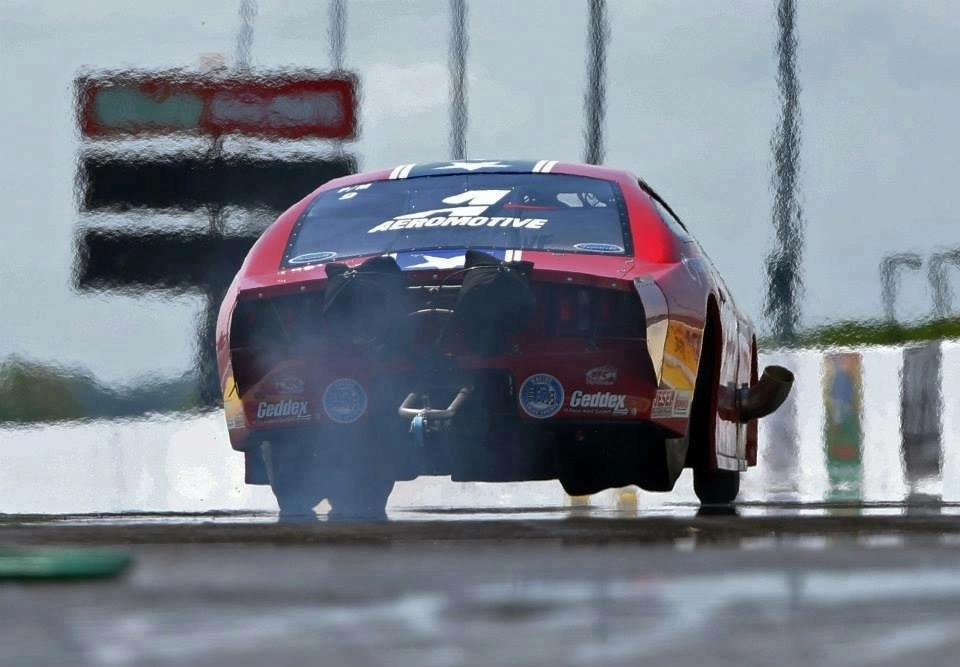
If the tire becomes too stiff, it can no longer absorb the hit of the launch. Instead of wrinkling and grabbing the track, the tire may simply spin.
When this happens, the contact patch becomes smaller and the tire loses grip.
Why Small Adjustments Matter
One of the most surprising aspects of tire pressure tuning is how sensitive it is.
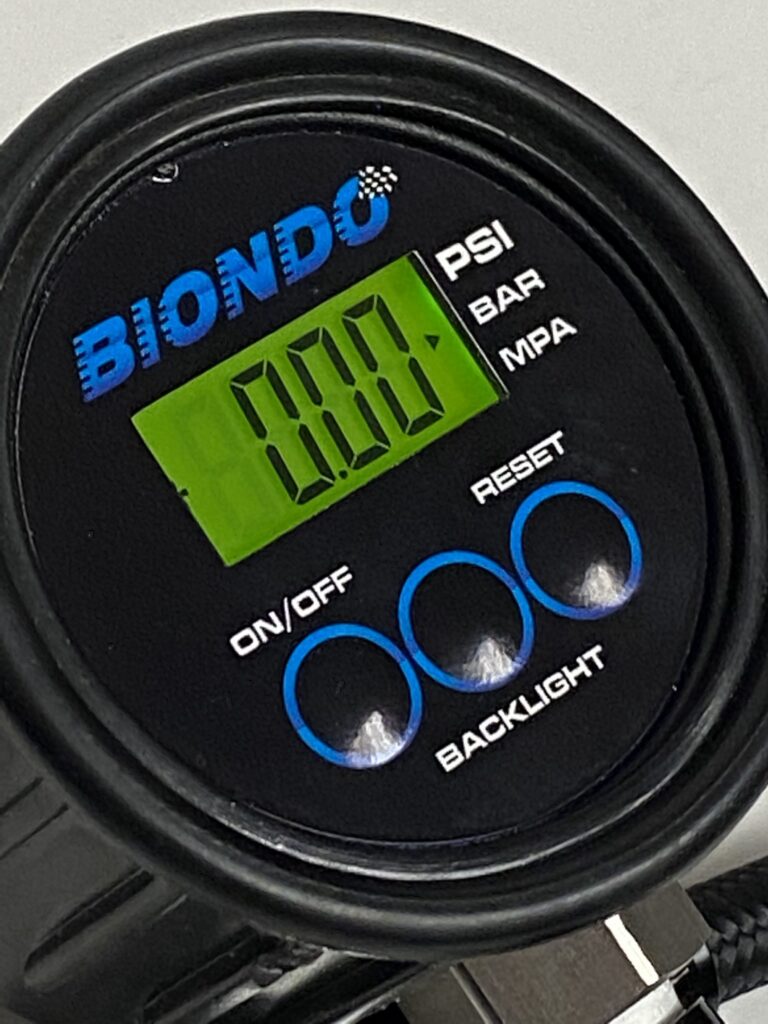
A change of just 0.x psi can noticeably affect how the car behaves.
This happens because small pressure changes significantly alter how easily the sidewall can deform under load. Even slight differences in wrinkle can change how the tire loads and unloads during the launch.
That’s why experienced racers rarely make large changes. Instead, they adjust pressure gradually while carefully watching:
• 60-foot times
• tire shake tendencies
• launch feel
• consistency from pass to pass
The goal is to find the pressure where the tire absorbs the hit smoothly without becoming unstable. Remember, energy that is stored must be released, and the tire is storing energy. Shocks help offset this.
Track Conditions Matter
Different tracks often require different tire pressures.
A well-prepared track may have so much traction that racers can run slightly higher pressure for improved consistency.
Meanwhile, a marginal track might require softer tire pressure to help the car hook.
Tire Age: The Overlooked Problem
Another factor that often confuses racers is tire age.
Drag slicks slowly lose performance as they accumulate runs. Over time:
• the rubber hardens
• the sidewall changes
• the tire loses its ability to absorb/hold the hit
When this happens, racers may begin chasing traction problems with suspension changes—adjusting shocks, bars, or springs—when the real issue is simply worn tires.
Common signs that slicks may be past their competitive life include:
• Increasing tire shake
• declining 60-foot consistency
• difficulty hooking on good tracks
• visible hardening or cracking in the rubber
Sometimes the best “tuning adjustment” a racer can make is simply installing a fresh set of slicks.
Logging Data Pays Off
Many experienced racers keep detailed records of:
• tire pressure
• track conditions
• weather
• 60-foot times
• tire age
Over time, patterns begin to emerge.
Certain tracks may consistently prefer slightly lower pressure. Others may reward a stiffer tire. Temperature and track prep can also influence what works best.
By studying these patterns, racers can often arrive at a competitive tire pressure much faster.
The Takeaway
Tire pressure might be the simplest adjustment on a drag car—but it is also one of the most influential.
It determines how the tire absorbs the hit, how much traction the car can generate, and how stable the tire remains during the launch.
The best racers don’t treat tire pressure as a fixed number.
They treat it as a tuning tool.
Because sometimes the difference between shaking the tires and making the perfect run is less than a single pound of air.