Most people in drag racing fall in love with it the same way.
They don’t start in a shop.
They don’t start with a welder in their hand.
They start in the dirt.

Pushing around toy cars. Drawing them. Imagining what they could be long before they ever understand how they actually work.
That’s where Austin Flemming started too.
Before the fabrication, before the late nights at Jerry Bickel Race Cars, before building parts for some of the fastest cars in the world—he was just a kid who could draw. And not just draw… draw well enough that people would actually pay him for it.
It was his grandfather, Joe McDermott, who saw something in that.
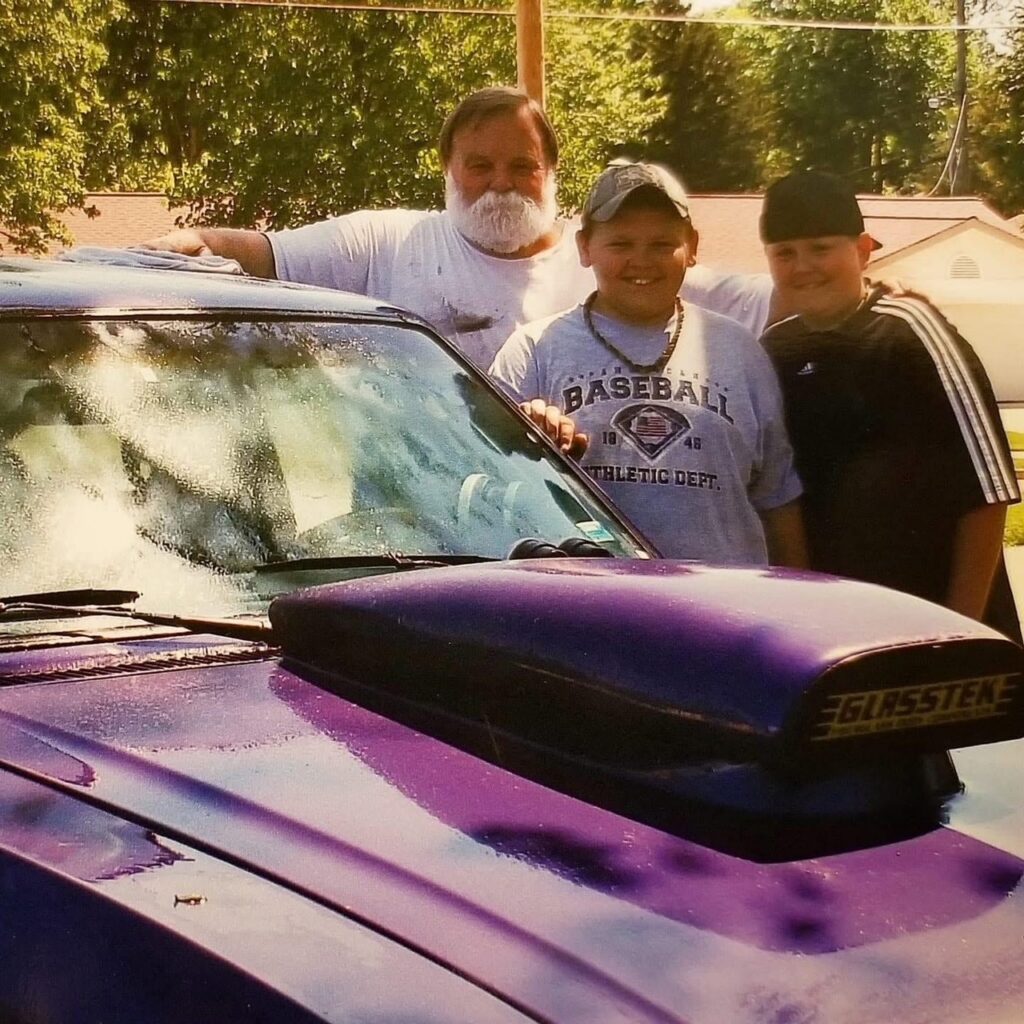
The kind of person who doesn’t just tell a kid “that’s cool,” but pushes them a little further. Tells them to keep going. Tells them it could be something.
That matters more than people realize.
Because years later, when Flemming walked into Bickel’s shop for the first time, he didn’t walk in as “a builder.” He walked in running a laser.
That was it.
No spotlight. No big introduction. Just another guy learning how to do his job.
But five years has a way of changing things if you actually care.
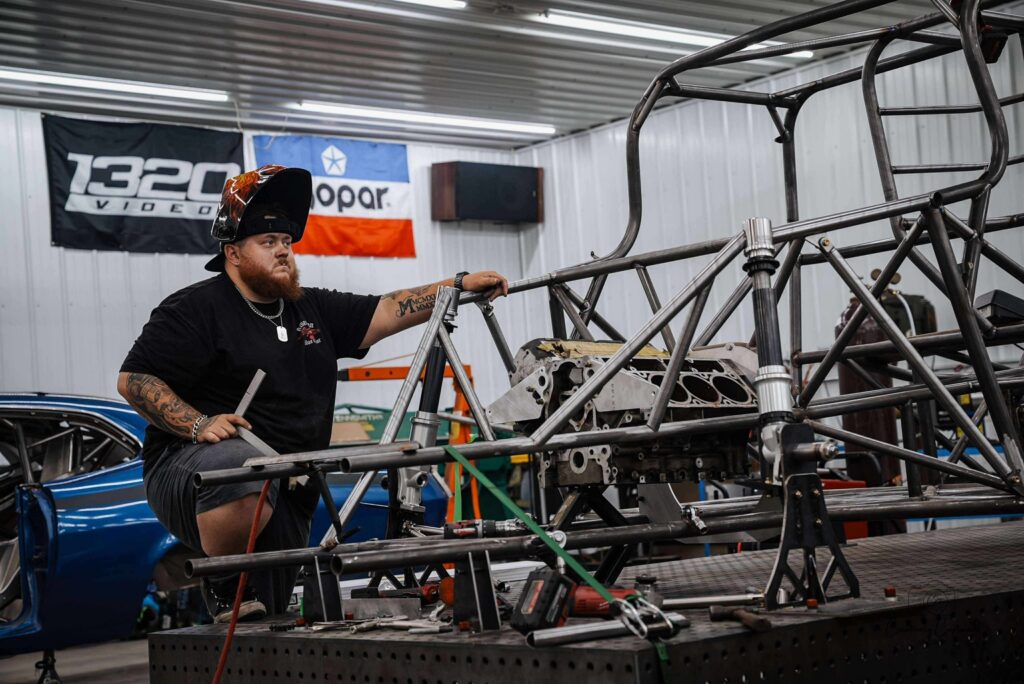
Now he builds every driveshaft that comes through the shop. Works on one-off pieces—things like titanium rear-end components that most racers will never even see, much less understand. Floats between fabrication, problem solving, whatever needs to get done.
“Honestly, I just do a little bit of everything,” he said.
And that’s not a throwaway line. In a place like Bickel, that means something.
The shop itself is changing too. New ownership in the last year has shifted the way things operate—less siloed, less “this is your one job,” and more cross-training. More people learning more parts of the process.
There was a time when Flemming was the only one who could run the laser.
Not anymore.
That evolution—both his and the shop’s—sits right in the middle of something every industry deals with: the tension between old school and new school.
He didn’t dodge that.
“The older guys being stuck in their ways… that’s a blessing and a curse. But the younger guys wanting to change everything is too.”
There’s truth in that. The kind you only get from being in the middle of it.
But then he said something that cuts through all of it:
“You can’t teach someone to love this.”
That’s the line.
You can teach someone to weld.
You can teach someone to measure.
You can teach someone to follow a process.
You can’t teach them to care.
And that’s what separates the ones who stay from the ones who don’t.
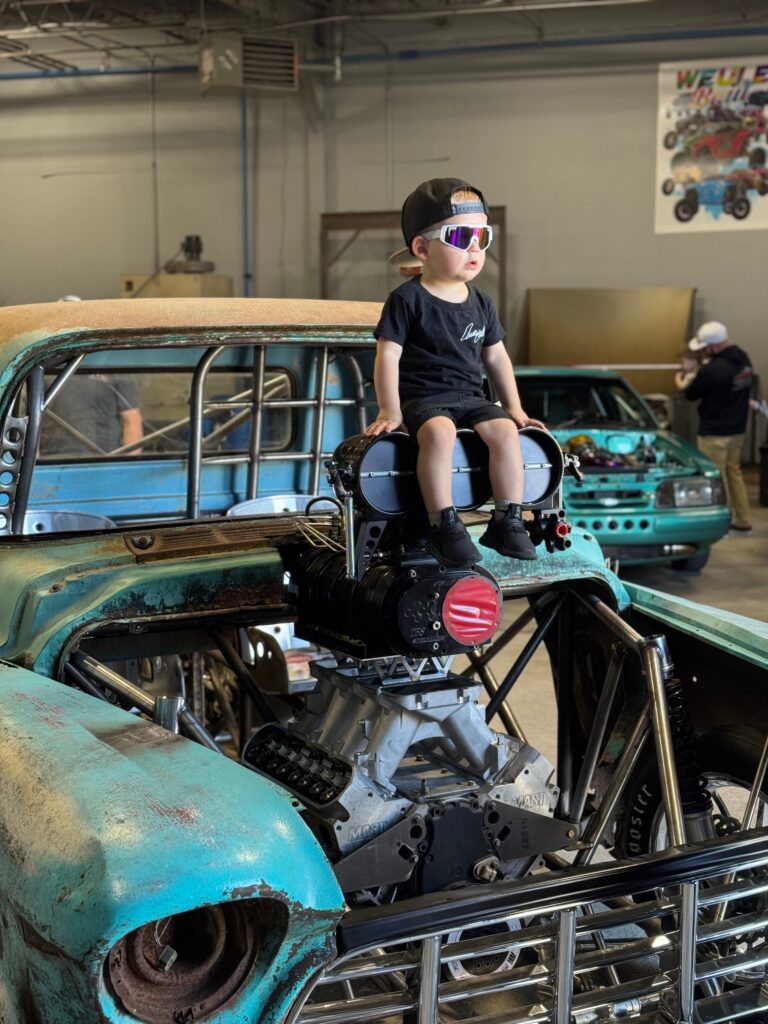
The truck tells the rest of the story. “BlueCollar56”
A 1956 Chevy pickup. The kind of vehicle that, for most people, is either a high-dollar showpiece or something too far gone to bother with.
He paid $275 for it.
It was headed to the scrapyard.
That should tell you everything you need to know about where it started.
“I’ve always been a stick shift truck guy,” he said. “And I’ve always loved the tri-five trucks.”
But this wasn’t a “dream build” in the Instagram sense. There was no blank check. No perfect plan laid out from day one.
There was a budget. A blue-collar job. And a decision to build something anyway.
So that’s what he did.
A blown combination—because, in his words, “you just can’t beat the look.” A stick shift, because that’s what he’s always been drawn to. And a build that wasn’t focused on being perfect, but on being real.
Functional.
Thought out.
Personal.
When he talks about the truck, he doesn’t talk about horsepower numbers or ETs first. He talks about how it comes apart.
The bed lifts off with four pins. Everything is designed so it can be worked on. Accessed. Fixed.
That’s not something you think about unless you’re the one who’s going to be under it.
And maybe more importantly—unless you’ve spent enough time in a shop to know what matters.
He said if he built it again tomorrow, he wouldn’t really change much.
Not because it’s perfect.
But because he took his time making decisions as he went.
That’s a builder’s answer.
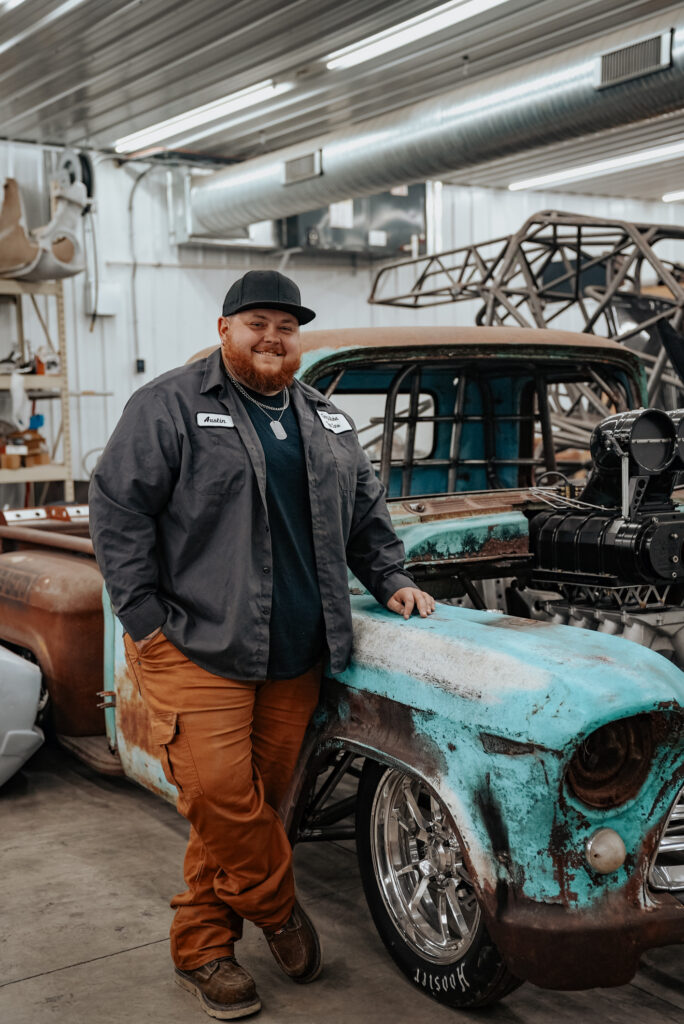
But the part that sticks with you isn’t the shop.
And it’s not the truck.
It’s what happens after.
He already knows where he’s going the first time he drives it for real.
Not to a track.
Not to a show.
To his grandfather’s grave, the same place it went on a trailer the first time it left the shop.
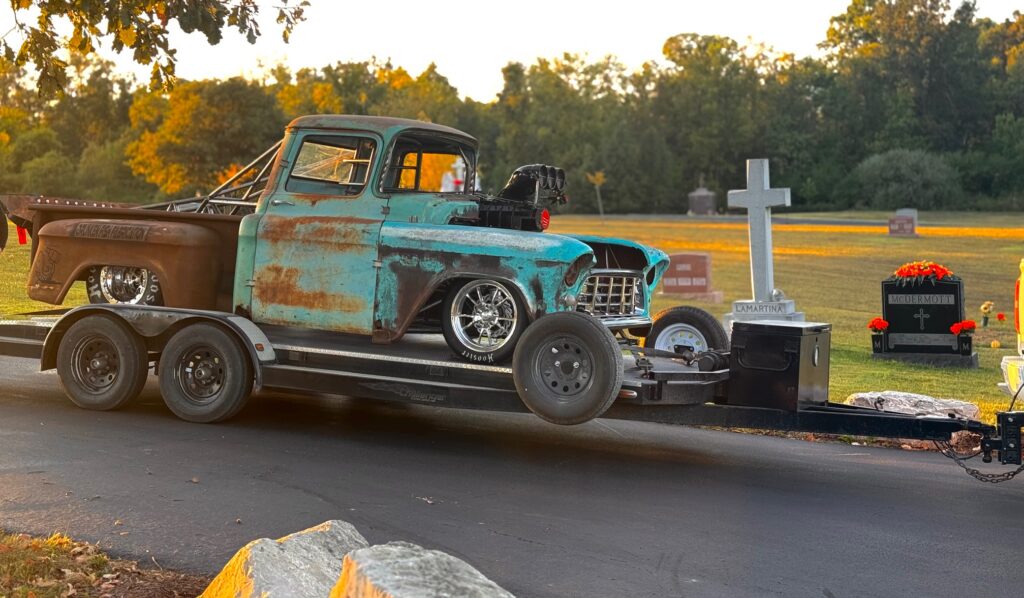
“The first place I’ll go… is to him.”
There’s a pause there when he talks about it. You can feel it, even through a phone.
“I just wish I could pick up the phone and talk to him.”
That’s the part of this sport people don’t always put into words.
We talk about horsepower.
We talk about chassis.
We talk about who won and who lost.
But underneath all of it, there’s something else.
Cars are how a lot of us remember people.
How we stay connected to them.
How we carry something forward.
For Flemming, that truck isn’t just something he built.
It’s proof that what his grandfather saw in him was real.
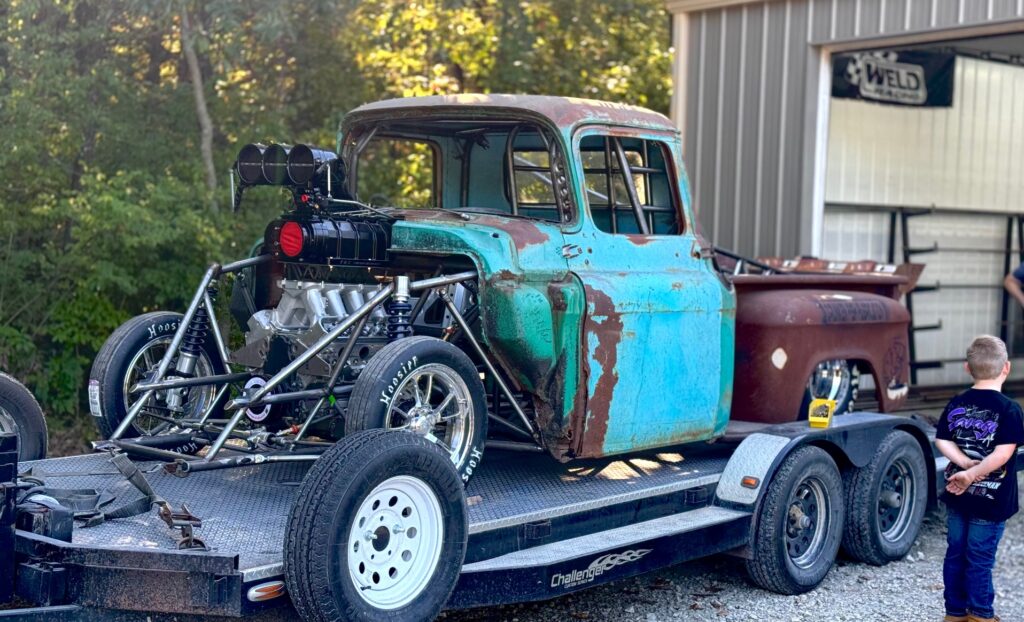
Somewhere along the way, the kid playing in the dirt and drawing cars in his free time became the guy building parts for some of the fastest cars in the world at Jerry Bickel Race Cars.
And now he’s building one for himself.
Not to impress anyone.
Not to chase a number.
But to finish something that started a long time ago.
His goal this year is to have it at the PRI Show.
If you see it there, you’ll probably notice the blower first. Maybe the stance. Maybe the details.
But if you know the story, you’ll see something else.
A kid.
A grandfather.
And everything that happened in between.
Austin wants to thank his sponsors and those who have helped him along the way
Drunken Fish Fabrication -Kyle Weintraut
Dynamic Racing Headers -Craig Sheffield
Innovative Fab – Tyler Koester
King Coatings – Sean Eckman
Jerry Bickel Rae Cars
Cameron Johnson Race Cars
Poppy’s Patina
CVF Racing – Sam Seyfert
Michigan Motorsports – Dalton Shearer
Holley – Alex Stivaletti/Donny Cummins
Monster Clutch Company – Jason Worlitz
XS Power- Jed Emert
Stroud Safety – John Gentry
BeCool Radiators – Justin Larocque
RaceTech Titanium – Devin Milkovich
Tick Performance – Alex Barriga-Calvario
Frankenstein Engine Dynamics – Nash Hestily
Manton Race Products – Trevor Manton
The Driveshaft Shop – Lee Mejia