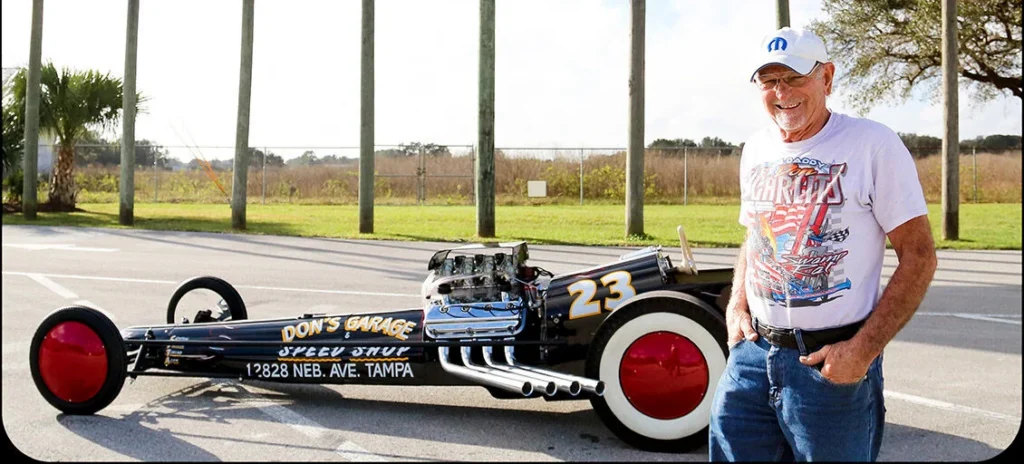
At the NHRA Southern Nationals in Adel, Georgia, I had the opportunity to spend a few minutes speaking with one of the most important figures drag racing has ever known: “Big Daddy” Don Garlits.
Calling Garlits a legend almost feels too small. He is one of the true godfathers of drag racing. The records, championships, inventions, safety innovations, Swamp Rat machines, and the first truly successful rear-engine Top Fuel dragster all speak for themselves. NHRA has credited him with 17 season championships, 144 national event wins, and the No. 1 spot on its Top 50 Racers list in 2000.
But this conversation was not about elapsed time, horsepower, or history.

Because when you see Don Garlits in person, something else stands out immediately.
He is 94 years old.
And he does not look, move, or carry himself like most people would imagine a 94-year-old man would. He looks decades younger. He is sharp. He is engaged. He is present. Not “good for his age.” Just impressive.

So when I had the chance to speak with him, I did not ask him about the rear-engine dragster, the records, the Smithsonian, or any of the stories he has probably told a thousand times. I asked him something different.
“How have you stayed in such good physical and mental shape?”
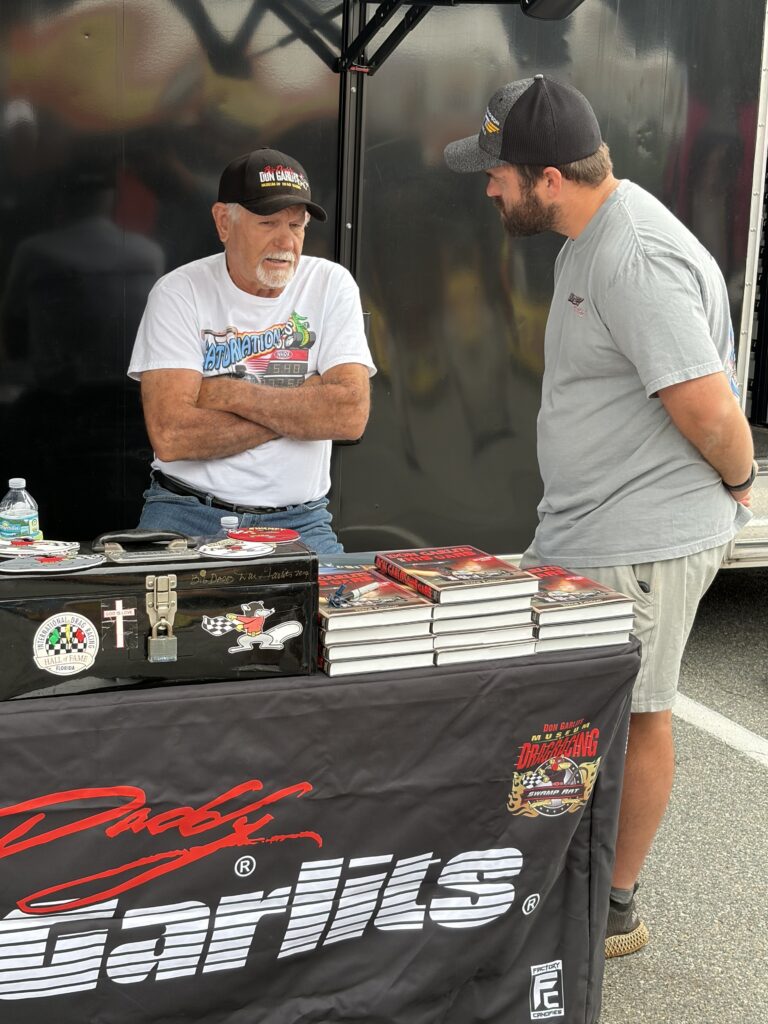
He seemed genuinely happy to answer.
Of course, he started with the obvious: you have to take care of yourself. No alcohol. No drugs. Keep your body right.
But that was not the part he emphasized the most.
His biggest point was simple:
You have to keep working.
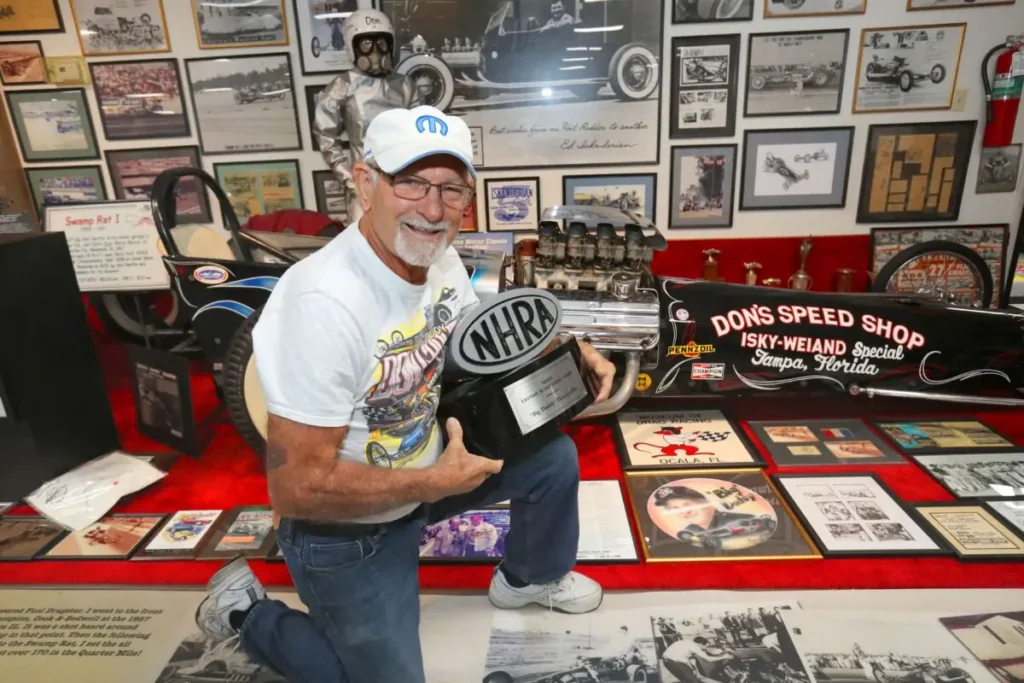
Garlits said he had friends who retired at 55, quit moving forward, and were all gone by 65. His point was not that everyone has to punch a clock forever. His point was that a person cannot simply stop. You cannot sit at the house with nothing to chase, nothing to build, and nothing to wake up for.
As he put it, if you sit at the house, that is where you will stay.
That line stuck with me.
Because coming from anyone else, it might sound like advice. Coming from Don Garlits, it sounds like a rule proven over 94 years.
He talked about the importance of having goals at every stage of life. Something to work toward. Something to complete. Something that keeps your mind reaching forward instead of folding inward.
And for mental sharpness, he said something I did not expect.
He talked about the value of reflecting on the past.
Garlits is currently working on an autobiography, and he described how the process forces him to pull memories forward that had been tucked away for years. In his mind, that kind of reflection opens parts of the brain that had almost been closed off. Remembering, organizing, writing, and revisiting the past becomes a form of mental exercise.
That makes sense when you consider who he is.
Garlits has lived enough drag racing history for multiple lifetimes. He was not simply part of the sport’s evolution — he helped design it. He was the first to exceed 200 and 250 mph, and his Swamp Rat XXX later helped push him beyond the 270-mph barrier before becoming part of the Smithsonian collection.
But even now, at 94, he is not only looking backward. He is still working, still thinking, still telling the story, still adding to the record.
Then he smiled and added one more thing.
Every man needs a good woman.
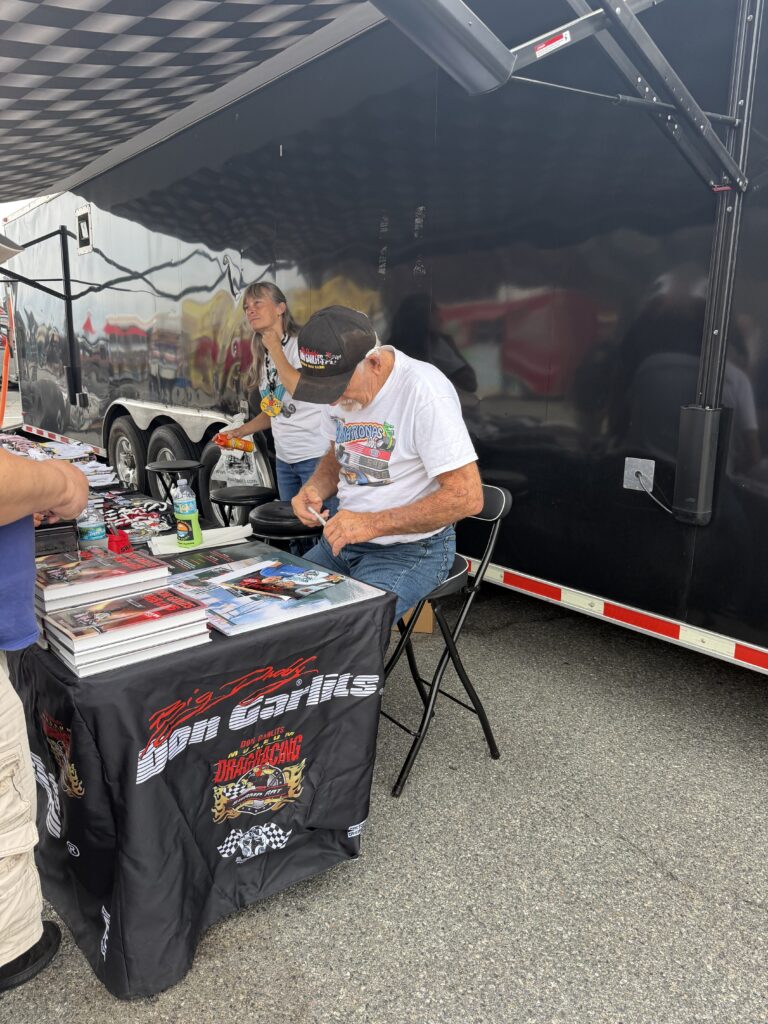
Garlits was married to Pat Garlits for nearly 61 years before she passed away in 2014. NHRA’s remembrance of Pat described her as his rock, his driving force, and someone whose presence was deeply woven into his life and career.
Garlits said that, in his experience, a man often does not last long after losing his wife unless he finds companionship again.
Is that an exact scientific rule? I do not know. But I am also not going to be the person who argues life advice with Don Garlits.
There is research behind the general idea, though. The “widowhood effect” is real, and studies have found that the death of a spouse is associated with increased mortality risk, particularly in the months following the loss.
After Pat’s passing, Garlits later remarried Lisa Crigar in 2015. He said plainly that he does not believe he would be in the health he is in today without that companionship.
That was the part of the conversation that made the whole thing feel bigger than drag racing.
Because here was Don Garlits — a man who changed Top Fuel forever, survived brutal crashes, built machines that became museum pieces, and helped drag racing become what it is — talking not about glory, but about purpose.
Keep working.
Keep remembering.
Keep chasing goals.
Keep someone beside you.
That was the lesson.
Drag racing owes Don Garlits more than any short article can explain. The records are permanent. The innovations changed the sport. The Swamp Rat name will always mean something.
But standing there in Adel, Georgia, speaking with him face to face, I saw another part of his legacy.
Don Garlits did not just spend his life building faster race cars.
He built a life that kept him moving.
And at 94 years old, “Big Daddy” is still showing the rest of us how it is done.