
In drag racing, everybody loves talking about horsepower.
Big cubic inches. Bigger turbos. More nitrous. More boost.
But here’s the uncomfortable truth:

If the tire is unhappy, none of that power matters.
That is where double adjustable struts and shocks come in. They are one of the most important tuning tools on a drag car — and also one of the most misunderstood.
A lot of racers treat shock adjustments like a safecracker in a movie:

“Two clicks here… one click there… maybe this fixes it.”
Sometimes it works.
Sometimes the car leaves like it got hit by lightning.
Sometimes it shakes the tire so hard you can see your future flash before your eyes.
The reality is that shocks are not magic. They are simply motion controllers. Their entire job is controlling how fast the suspension moves.
And once you understand that, suspension tuning suddenly becomes a lot less mysterious.
First: What Does a Shock Actually Do?
First: What Does a Shock Actually Do?
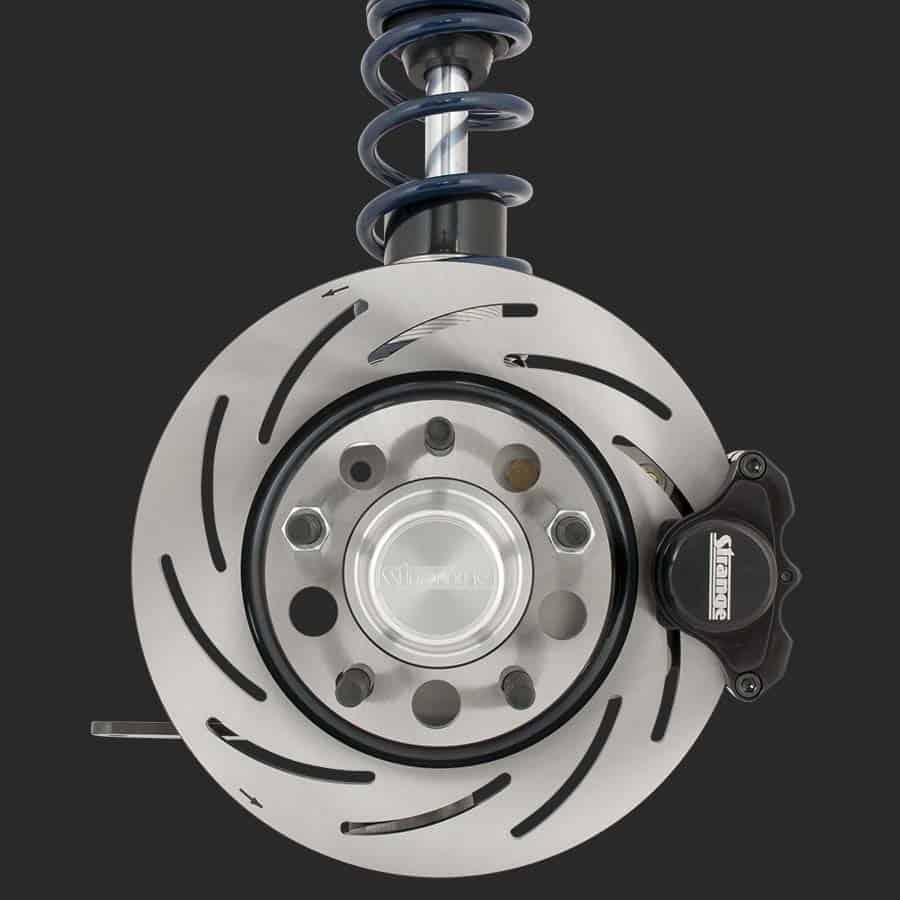
A shock does not hold the car up.
The spring does that.
The shock controls the speed of movement.
Think of the spring as the mattress…
…and the shock as how quickly you are allowed to jump on it.
Without shocks, a race car would bounce down the racetrack like a basketball.
The shock’s job is to calm everything down and control how violently weight moves around the car.
What “Double Adjustable” Actually Means
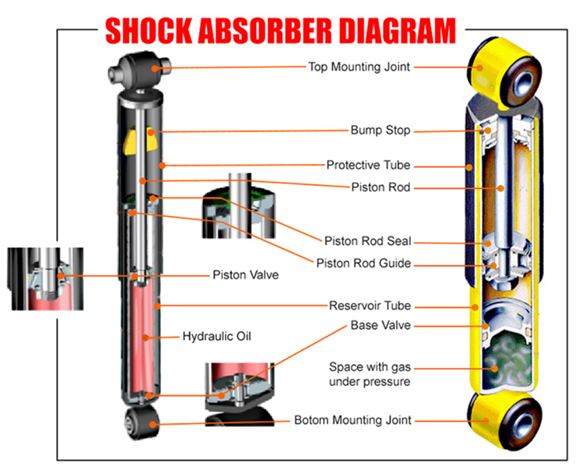
A double adjustable shock or strut lets you independently tune:
- Compression (bump)
- Rebound (extension)
That means you can separately control:
- How fast the suspension compresses
- How fast the suspension extends
This is huge in drag racing because launch dynamics happen extremely fast.
Compression vs Rebound — The Easy Way to Understand It
Here is the simplest mental image possible:
Compression
Compression is resistance to the shock being squeezed together.
Imagine trying to slam a screen door shut against a hydraulic door closer.
That resistance is compression damping.
More compression = harder/slower to compress.
Less compression = easier/faster to compress.
Rebound
Rebound is resistance to the shock extending back outward.
Think of pulling a syringe apart underwater.
That slow extension feeling?
That is rebound damping.
More rebound = slower extension.
Less rebound = faster extension.
Why Front Struts Matter So Much
The front suspension is basically the “weight transfer manager.”
When the car launches, the front end rises.
That rise transfers weight to the rear tires.
More rear tire load = more traction.
But here’s where people get confused:
The goal is NOT to make the car wheelstand as high as possible.
The goal is to transfer weight efficiently and controllably.
A giant wheelstand looks cool on Facebook.
A controlled launch wins rounds.
Front Rebound: The Wheelstand Controller
Front rebound controls how quickly the nose rises.
Loose rebound:
- Front rises quickly
- Fast weight transfer
- Aggressive hit to tire
Tight rebound:
- Front rises slower
- Softer weight transfer
- Smoother tire loading
Think of it like dumping a bucket of water.
Dump it instantly:
- Big splash
- Violent hit
Pour it smoothly:
- Controlled load
The tire usually prefers the second option.
Front Compression: The Forgotten Adjustment
Front compression controls how quickly the nose settles back down.
Too loose:
- Front crashes down
- Tire unloads
- Car gets inconsistent
Too tight:
- Front hangs in the air forever
- Car becomes lazy
- Can upset balance downtrack
The suspension should look controlled — not like a fishing boat in rough water.
The Biggest Mistake Racers Make
Everybody wants to fix the shock settings first.
But sometimes the problem is actually the spring.
This is massive.
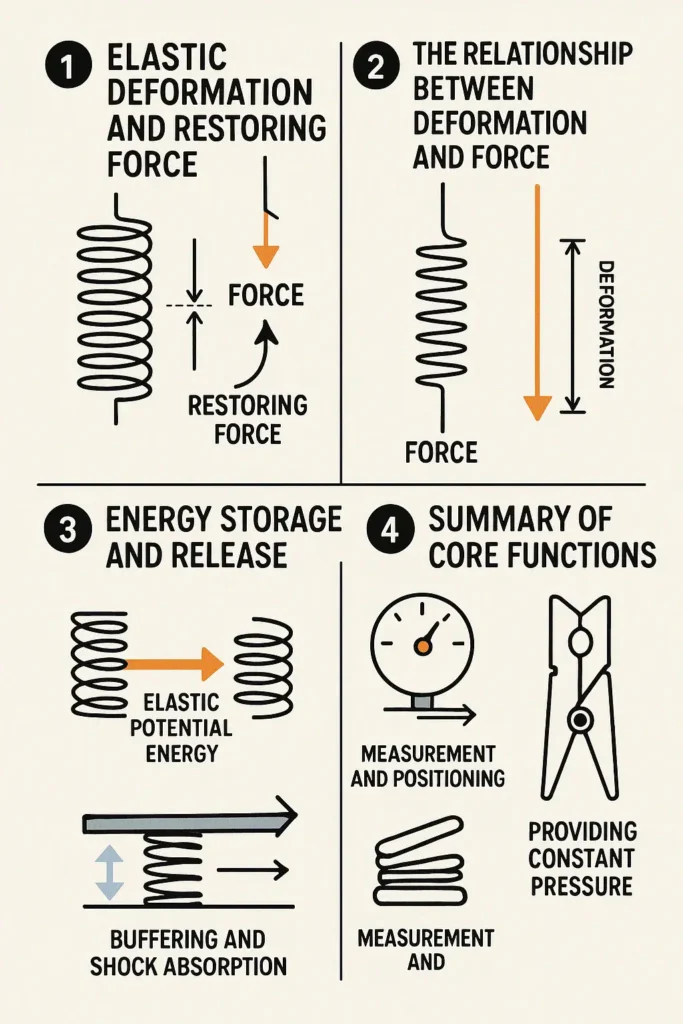
Because the spring and shock work together.
The spring determines:
- How much force exists
- How much weight movement potential exists
The shock determines:
- How quickly it happens
Spring Pressure Explained Like a Trampoline
Imagine two trampolines.
One is soft.
One is extremely stiff.
Even if both have identical shocks attached, they behave differently because the spring force itself is different.
Soft spring:
- Easier movement
- More travel
- More weight transfer
Stiff spring:
- Less movement
- Faster reaction
- Less stored energy
A lot of racers accidentally use springs that are WAY too stiff because they think stiff equals race car.
Then they wonder why the car spins.
The suspension cannot transfer weight if the springs barely move.
The “Band-Aid Shock Tuning” Problem
This happens constantly.
A car has:
- Wrong spring rate
- Bad instant center
- Poor tire pressure
- Bad converter match
Instead of fixing the actual issue…
…the racer starts turning knobs.
Twenty clicks later the car is worse than when it started.
Shocks are tuning tools — not miracle workers.
You cannot tune around a completely mismatched combination.
Another Huge Mistake: Changing Too Much
One click can matter.
Especially on high-end shocks.
A lot of racers:
- Change front rebound
- Rear rebound
- Tire pressure
- Launch RPM
- Wheelie bar
- Compression
…all at once.
Now they have absolutely no clue what fixed the car — or ruined it.
The best tuners in drag racing are methodical.
One change.
One result.
One data point.
Final Takeaway
Double adjustable shocks are not there to make the car “feel racey.”
They are there to control timing.
Because drag racing is really just controlled weight transfer.
The fastest cars are usually not the most violent.
They are the most controlled.
The suspension should work like a well-trained catcher receiving a 100 MPH fastball:
Not rigid.
Not floppy.
Just controlled enough to absorb the hit smoothly and keep everything stable.
That is what separates a car that has horsepower…
…from a car that actually uses it.