
There was a time when “making horsepower” meant a Saturday in the garage, greasy hands, and a Summit Racing catalog laying open on the workbench.
You saved up for headers. Maybe a camshaft. Maybe an intake manifold if you were really serious. Then came the dream upgrades: aluminum heads, bigger carburetors, maybe a stroker kit if the budget allowed.
Hot rodding has always been rooted in one simple question:

“How do I make this thing faster without going broke?”
That question built drag racing.
And right now, that question is changing the entire performance world.
Because whether old-school racers want to admit it or not… boost is taking over.
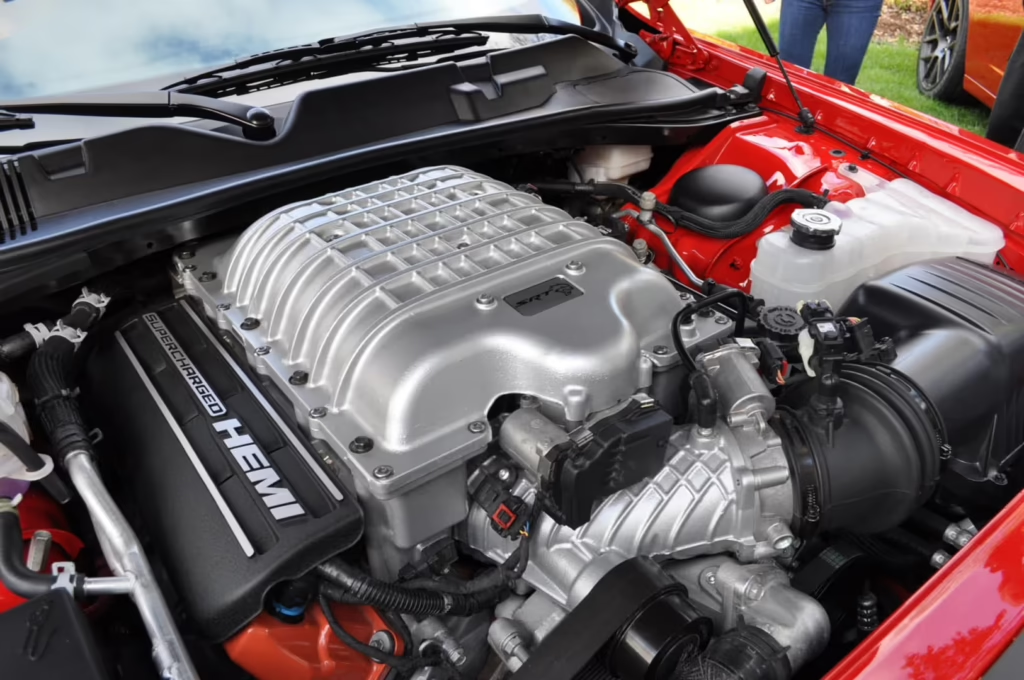
Turbochargers. Superchargers. ProChargers. Factory-blown engines. Junkyard turbo kits. Hellcat swaps. Twin-turbo Coyote combinations. It seems like everybody is forcing air into something.
And honestly? It makes perfect sense.
Horsepower Has Never Been Cheaper
Thirty years ago, making 1,000 horsepower was exotic territory.
Now you can buy a factory production car with air conditioning, heated seats, Bluetooth, and enough horsepower to terrify your grandparents.
Even weekend racers are figuring it out.
A mild 496 with a “baby blower” can outrun a naturally aspirated engine that costs twice as much to build.
That’s the part that is hard to ignore.
Building serious naturally aspirated horsepower is expensive. Really expensive.
To make big NA power, you need:
- Incredible cylinder heads
- Compression
- Camshaft development
- Intake development
- Valvetrain stability
- High RPM capability
- Precise tuning
- Expensive machine work
- High-end components everywhere
And after all of that?
You may still get outrun by a stock-bottom-end turbo LS with junkyard parts and Facebook Marketplace intercooler piping.
That reality is changing the sport.
The New Hot Rodding
The funny thing is… this is still hot rodding.
Some old-school guys look at boost like it somehow “doesn’t count.”
But adding power efficiently has ALWAYS been the heart of hot rodding.
Back in the day, a cold air intake on your daily driver felt revolutionary. Headers and exhaust were the gateway drug. Nitrous was the “cheap horsepower” king.
Today’s equivalent is boost.
People are buying turbo kits online for less money than a serious set of cylinder heads.
A factory Hellcat engine can support absurd horsepower with minor modifications.
Ford Coyotes love boost.
LS engines practically seem designed to survive abuse.
The average guy can now build combinations in his garage that would have been considered Pro Mod power levels decades ago.
That is wild when you really stop and think about it.
The Naturally Aspirated Problem
The issue for NA racers is simple:
Naturally aspirated combinations get exponentially more expensive as horsepower climbs.
Going from 500 to 700 horsepower naturally aspirated is manageable.
Going from 700 to 1,000 horsepower naturally aspirated starts requiring elite-level parts, machining, and engineering.
Meanwhile, boosted combinations often just turn the boost knob up.
That’s obviously oversimplified—boosted combinations still require fuel system upgrades, tuning knowledge, strong parts, and reliability management—but the cost-per-horsepower equation heavily favors power adders.
And racers notice that.
Even bracket racers.
Why spend $40,000 building a screaming naturally aspirated engine when a simpler boosted combination can go faster, and sometimes with less maintenance?
That last part surprises people.
The Maintenance Myth
A lot of people assume boosted combinations are less reliable.
Sometimes that is true.
But modern boosted combinations can actually live very comfortable lives.
A boosted engine may make huge power at lower RPM compared to a naturally aspirated engine trying to achieve the same number.
That matters.
RPM destroys parts.
Valvetrain parts hate RPM.
A naturally aspirated engine trying to make elite horsepower often has to spin to do it.
Meanwhile, a boosted engine can make comparable power while loafing along several thousand RPM lower.
That is one reason boosted street cars have become so attractive.
They drive well.
They idle well.
They can make vacuum.
They can be tame until you lean on them.
Then all hell breaks loose.
But NA Is Not Dead
Now before the comment section explodes…
No, naturally aspirated racing is not dead.
Not even close.
In fact, there is arguably MORE respect for naturally aspirated combinations than ever before.
Because racers understand how difficult it is.
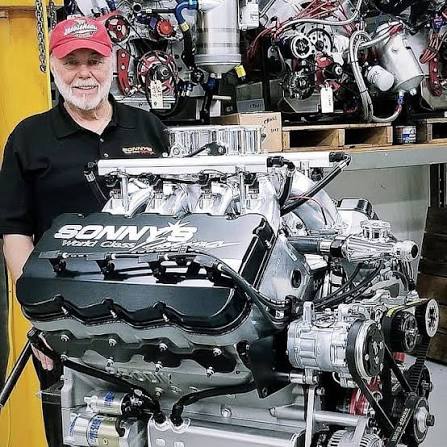
There is something deeply impressive about a naturally aspirated engine making huge power with nothing but airflow, compression, RPM, and engineering.
No blower helping.
No turbo multiplying airflow.
No nitrous bottle waiting to be sprayed.
Just pure mechanical efficiency.
That will always mean something.
Naturally aspirated racing also delivers a type of racing many fans still love:
- Instant throttle response
- Violent RPM
- Engine sound
- Simplicity
- Driver connection
- Mechanical purity
A high-RPM naturally aspirated engine sounds alive in a way few boosted combinations do.
That matters emotionally.
And drag racing has ALWAYS been emotional.
Maybe This Is Just Evolution
Maybe naturally aspirated racing is not dying.
Maybe it is simply becoming more specialized.
Because the truth is, hot rodding has always evolved toward whatever combination makes the most power for the least money.
Flatheads became small-blocks.
Carburetors became EFI.
Nitrous became mainstream.
Now boost is everywhere.
The garage-built spirit is still alive.
It just sounds different now.
Instead of hearing a lopey small-block through open headers, you might hear turbo flutter and a blowoff valve.
But the goal remains exactly the same as it was decades ago:
Build something faster than your buddies with the tools and money you have available.
That spirit will never die.