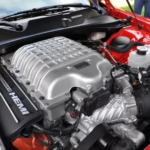


Nitrous oxide has probably created more affordable horsepower than anything in drag racing history.
For a relatively small amount of money, a racer can pick up 100, 200, even 500+ horsepower with the push of a button.

That is why racers love it.
But there is another side to nitrous that deserves far more attention:
It can also become incredibly dangerous when people get careless.

And unfortunately, many racers only learn about nitrous from the horsepower side—not the safety side.
Nitrous systems are often treated casually because they are so common. Bottles are laying in trailers. Lines are reused for years. Wiring gets “good enough.” People heat bottles with torches in the staging lanes like they are warming up leftovers.
Then everybody acts shocked when something catches on fire or explodes.
Nitrous is an amazing tool.
But it demands respect.
Nitrous Itself Is Not “Flammable”… But That Does Not Mean Safe
One of the biggest misconceptions in racing is:
“Nitrous isn’t flammable.”
Technically, nitrous oxide itself is not fuel.
But nitrous provides oxygen.
And oxygen is exactly what makes fires become violent.
A fuel fire without oxygen dies.
A nitrous-fed fire becomes a completely different animal.
That is why nitrous explosions and fires can escalate terrifyingly fast.

When you combine:
- Pressurized oxidizer
- Fuel
- Heat
- Electrical systems
- High cylinder pressures
…you have created a situation where mistakes become expensive very quickly.
Or deadly.
The Bottle Is Not Just a Bottle
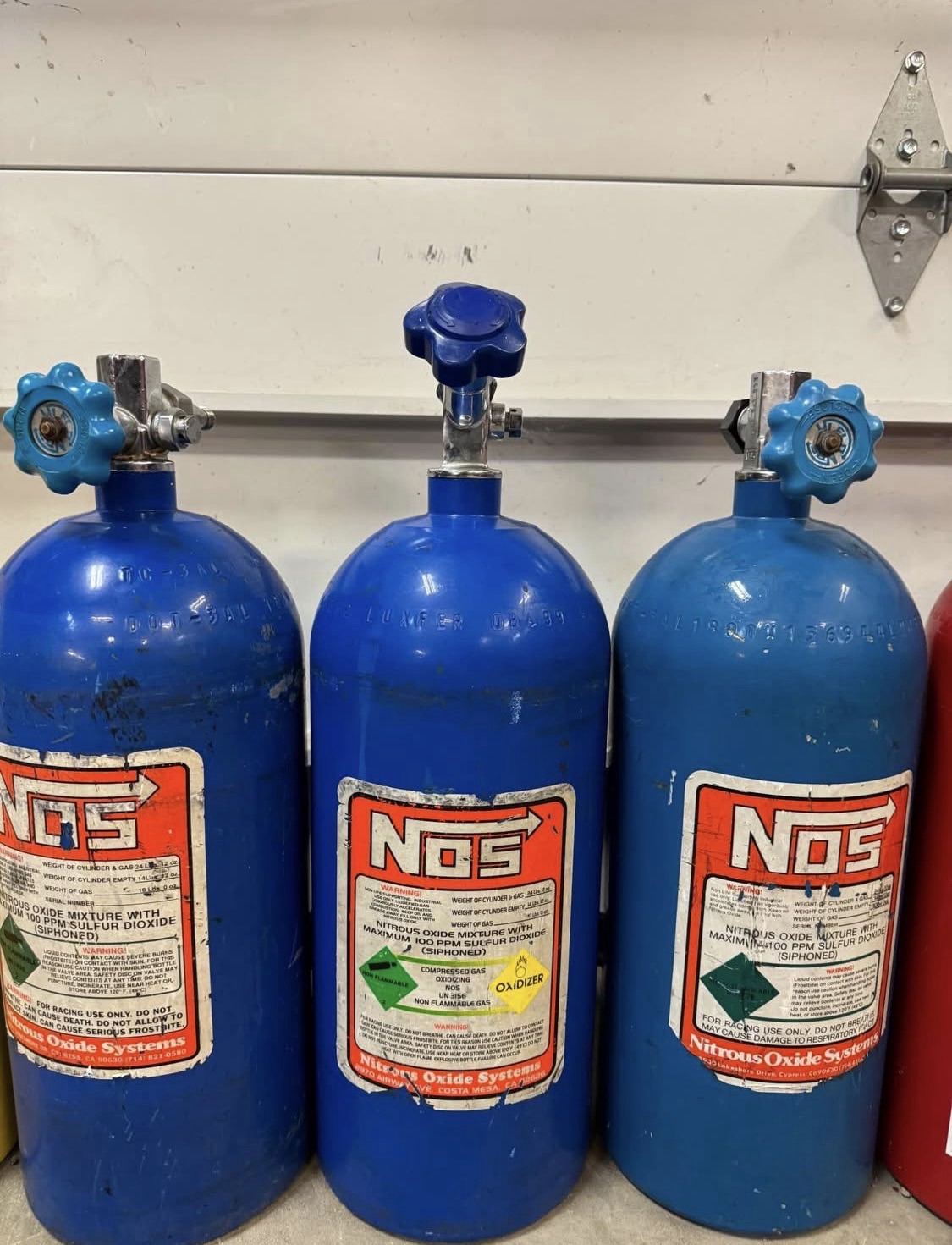
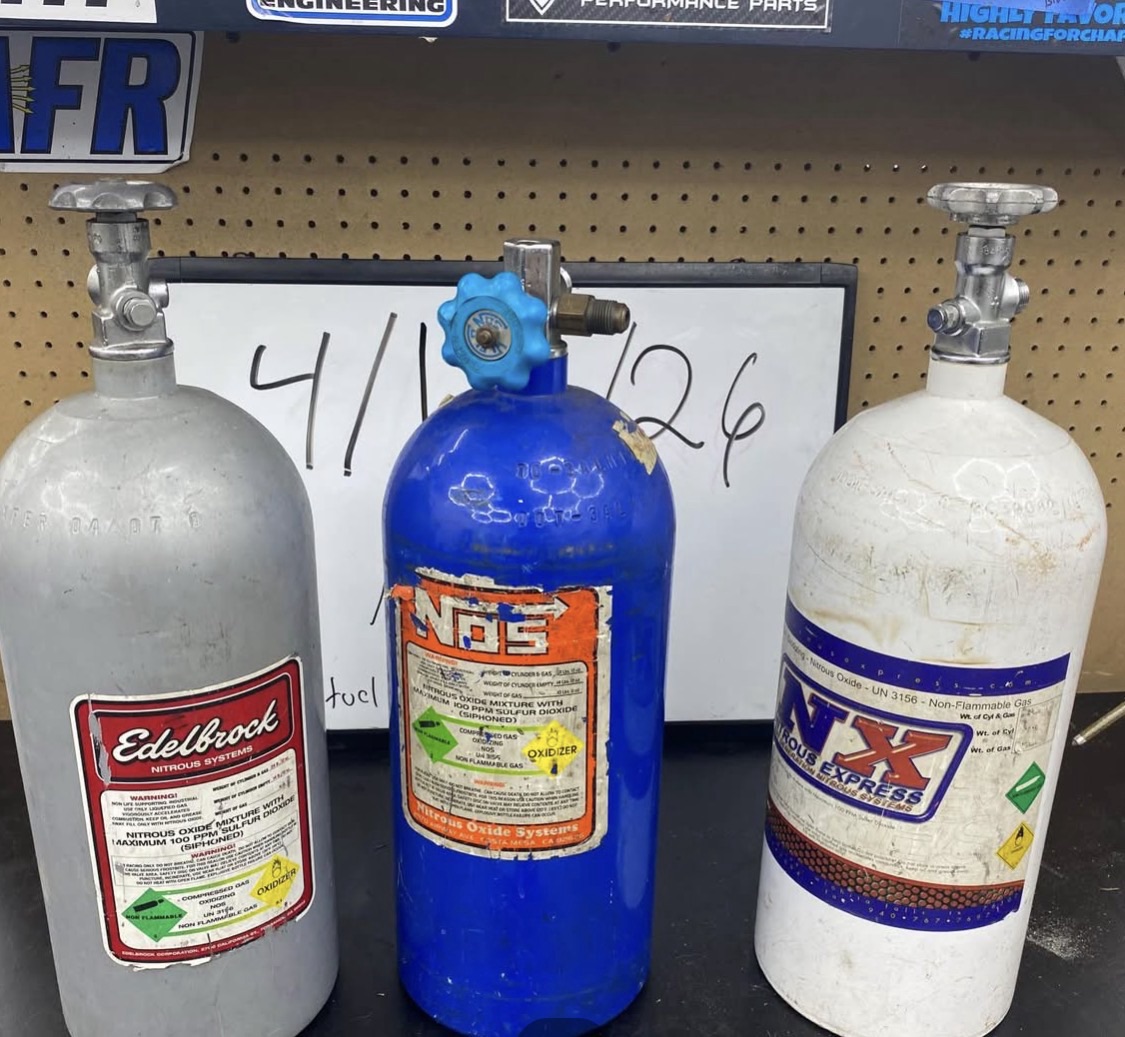
Many people forget what a nitrous bottle actually is:
A pressurized cylinder.
That pressure is no joke.
A nitrous bottle can exceed 1,000 PSI under normal operating conditions. Overheat it, and pressure climbs rapidly.
That is why bottle handling matters so much.
One racer was tragically killed after dropping a nitrous bottle equipped with a ball valve. The valve broke off, and the bottle became a missile. It struck him in the chest with fatal force.
That story alone should permanently change how people think about handling bottles.
A nitrous bottle is not something to toss around in the trailer.
It is not something to leave loose in the bed of a truck.
It is not something to casually lean against a toolbox.
A broken valve can turn the bottle into a rocket.
Proper Bottle Mounting Matters
Every nitrous bottle should be:
- Properly secured
- Mounted with approved brackets
- Protected from impact
- Positioned correctly for siphon tube orientation
- Inspected regularly
Loose bottles are incredibly dangerous in crashes or sudden stops.
And racers should periodically inspect:
- Bottle necks
- Valve threads
- Brackets
- Pressure relief devices
- Bottle dates and certifications
Damaged bottles or questionable valves are not worth gambling with.
Stop Using Blow Torches on Bottles
This one needs to be said loudly.
Using a torch to heat a nitrous bottle is one of the dumbest traditions still common in drag racing.
Yes, people still do it.
You see it all the time in staging lanes:
- Propane torches
- MAP gas torches
- Open flames directly against the bottle
The logic is simple:
“Heat raises pressure.”
That part is true.
But the risk is enormous.
Nitrous bottles should be heated with:
- Proper electric bottle warmers
- Pressure-controlled systems
- Bottle pressure gauges
Not open flames.
A torch creates uneven heating and can rapidly spike bottle pressure beyond safe limits.
The safety blowoff disk may rupture.
Or worse.
And honestly? Torches usually do not even heat the bottle evenly enough to help performance consistently anyway.
You are mostly just increasing danger.
Professional racers carefully manage bottle pressure because consistency matters.
Street-style torch heating is basically guessing with a flamethrower.
Nitrous Fires Usually Start Somewhere Else
Here is another misconception:
People think nitrous itself “causes” fires.
Most nitrous fires actually begin because of:
- Fuel leaks
- Improper plumbing
- Electrical shorts
- Solenoid failures
- Backfires
- Lean conditions
- Incorrect timing
Nitrous simply makes the fire far worse once it starts.
A tiny fuel leak that might normally smolder can instantly become catastrophic with oxygen enrichment.
That is why plumbing quality matters tremendously.
Cheap Fittings Become Expensive Fast
Nitrous systems should NEVER be assembled with questionable hardware-store plumbing parts.
Use:
- Proper AN fittings
- Quality braided lines
- Approved fuel hose
- Reliable relays and wiring
- Correct fusing
And inspect everything regularly.
Lines rub through.
Fittings loosen.
Solenoids wear out.
Electrical terminals corrode.
A tiny leak near heat or ignition sources can become a fireball quickly.
Wiring Matters More Than People Think
Many nitrous fires begin electrically.
Nitrous systems often involve:
- Arming switches
- Window switches
- Progressive controllers
- Bottle heaters
- Purge systems
- Multiple relays
- Fuel pumps
That means wiring quality matters.
Avoid:
- Loose crimp connectors
- Undersized wire
- Unfused circuits
- Wires routed near headers
- “Temporary” wiring that becomes permanent
Good wiring is not just about reliability.
It is about survival.
Lean Conditions Kill Engines Fast
Nitrous dramatically increases cylinder pressure.
That means tuning errors become violent very quickly.
A naturally aspirated engine may survive slightly lean conditions for a while.
A nitrous engine often will not.
Common causes of nitrous engine failures:
- Fuel pressure drop
- Clogged fuel jets
- Incorrect jetting
- Weak fuel pumps
- Timing too aggressive
- Spark plugs too hot
- Activating nitrous too early
This is why racers must monitor:
- Fuel pressure
- Bottle pressure
- AFR/lambda
- Spark plug condition
Reading spark plugs becomes critical with nitrous combinations.
The plugs tell the story before the engine explodes.
Safety Equipment Is Not Optional
If you spray nitrous, especially larger systems, safety gear matters.
That includes:
- Fire jacket or firesuit
- Gloves
- Proper racing shoes
- Helmet
- Neck restraint
- Fire extinguisher
- On-board fire suppression for serious cars
And yes, even street cars should carry extinguishers if nitrous is involved.
Engine fires happen incredibly fast.
By the time safety crews arrive, the damage is often already done.
Bottle Pressure Relief Tubes Matter
Many racers overlook this entirely.
If a nitrous bottle relief disk ruptures inside the car, the cabin can instantly fill with nitrous discharge.
That creates:
- Visibility issues
- Breathing concerns
- Extreme noise
- Potential oxygen displacement
Relief systems should vent outside the vehicle properly.
Especially in enclosed cars.
Respect the System
Nitrous has probably done more to democratize horsepower than any technology in racing.
It allows regular racers to compete far beyond what their budget would traditionally allow.
That is a beautiful thing.
But nitrous is not magic in a bottle.
It is a pressurized oxidizer system capable of:
- Huge power
- Huge cylinder pressure
- Huge heat
- Huge consequences
The racers who survive longest with nitrous are usually not the wildest ones.
They are the methodical ones.
The ones who:
- Inspect fittings
- Check plugs
- Verify timing
- Monitor pressure
- Maintain wiring
- Respect safety equipment
- Treat the bottle seriously
Horsepower is fun.
Going home safely matters more.