There are a lot of businesses in drag racing that start with horsepower. More cubic inches. More boost. More speed.
RaceHER Firesuits started with frustration.
Not because the cars did not fit.

Because the firesuits did not.
For Autumn DeRossett, drag racing has been part of life since she was 9 years old. Like many racers, she grew up at the racetrack. The smell of race fuel, late nights in the pits, long drives home after race weekends — it was all normal life. But as she got older and progressed deeper into racing, especially once she entered Super Comp competition, one problem continued to stand out.
Women’s firesuits simply did not fit women.
“The market was built around men,” DeRossett explained. “The standard firesuit fit was based around a man’s body type and proportions.”
For years, female racers largely accepted that reality. Oversized shoulders. Incorrect torso lengths. Poor fitment. Limited sizing. “Good enough” became the standard.
Autumn decided good enough was not good enough anymore.
What makes the story even more impressive is when she decided to do something about it.
She was only a sophomore in high school.
While most teenagers were focused on football games, dances, and prom nights, DeRossett was building a business plan. Eventually, the commitment became so serious that she made the difficult decision to homeschool herself in order to fully dedicate her time toward launching RaceHER Firesuits.
She sacrificed much of the traditional high school experience to chase something bigger.
That gamble is beginning to pay off.
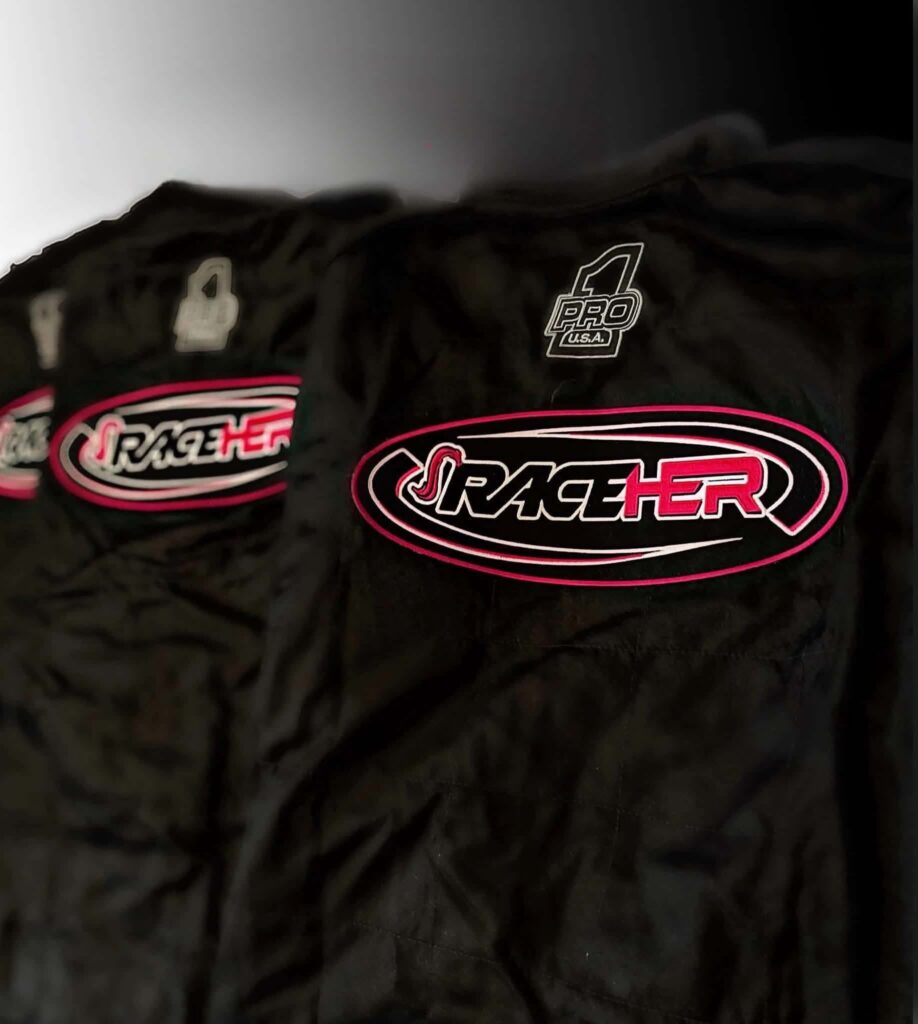
RaceHER Firesuits was created specifically with female racers in mind. Not just by shrinking men’s sizing charts, but by developing entirely different sewing patterns and fitment philosophies designed around women racers from the beginning.
“We created our own sewing patterns,” she said.
Today, RaceHER offers both off-the-shelf sizing options tailored toward women as well as fully custom-measured firesuits.
But for DeRossett, the business is about more than just measurements.
It is about representation.
It is about visibility.
It is about helping women feel like they belong in motorsports.
“RaceHER is owned by a woman, and I’m proud of that,” she said. “I want more women involved in the sport, and I want more women owning businesses in the sport.”
That mentality reflects something larger currently happening across drag racing and motorsports as a whole.
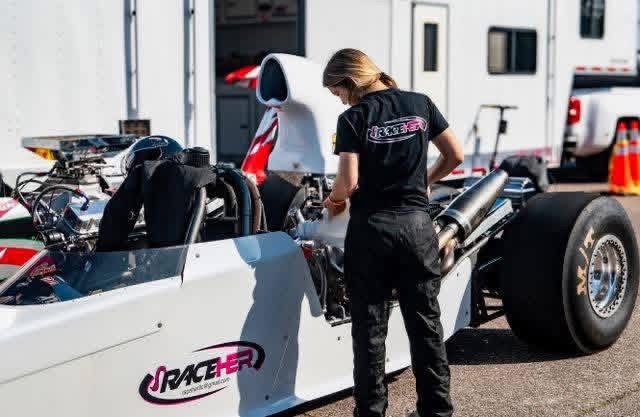
Women are not just participating anymore. They are winning races, building brands, managing teams, turning wrenches, operating businesses, and helping shape the future of the sport.
And perhaps most importantly — the sport is embracing it.
Drag racing has always been one of the most family-oriented forms of motorsports on the planet. Entire families spend weekends together at racetracks. Parents race alongside children. Husbands and wives race together. Generations share pit spaces. The growth of women within the sport feels less like a trend and more like a natural evolution of what drag racing has always represented at its core.
RaceHER’s rise feels connected directly to that momentum.
DeRossett’s work ethic also reflects the reality many small business owners in racing understand all too well.
This is not corporate America.
This is not venture capital money.
This is pure hustle.
While building RaceHER, she continues working as a waitress while also working in a mechanic shop. Racing and automotive culture are not just business opportunities for her — they are genuine passions.
“I’m a workaholic,” she admitted.
That authenticity matters.
It is also one reason racers appear to be connecting with the brand.
One of RaceHER’s ambassadors is racer Kendra Larson, who DeRossett repeatedly praised throughout the conversation.
“She’s the kindest person I’ve ever met,” Autumn said. “She’s genuine. She’s balancing racing, family, kids — everything. She’s exactly the kind of person that reminds me why I’m doing this.”
Larson currently wears RaceHER firesuits and represents the type of racer the company hopes to support moving forward.
As women continue gaining visibility throughout motorsports, businesses like RaceHER may become increasingly important — not simply because they offer products, but because they offer connection.
That connection is something DeRossett believes helps separate the company.
“I feel like I’m able to connect with my customers on a personal level,” she explained.
And perhaps that is the biggest takeaway from RaceHER Firesuits.
Behind the branding, stitching, and sizing charts is not a giant corporation.
It is a racer.
A young woman who saw a problem inside the sport she loved and decided to do something about it.
That is still the American dream.
And in many ways, it is exactly what drag racing has always been about.