There are people who talk about dreams, and then there are people who dismantle their lives for one.
Monique Ambruosi falls into the second category.
For years, the Australian racer, fabricator, marketer, and lifelong student of drag racing carried a dream that would not leave her alone. It followed her from the race shops of Australia to the starting line, from long road trips with her father to late nights building engines, from Junior Dragsters to Top Dragster, from PRI conversations to visa paperwork, and eventually across an ocean to the United States.

It was never just a casual thought. It was never simply, “Maybe one day.”
For Monique, becoming a professional racer was the thing she could not go a day without thinking about.
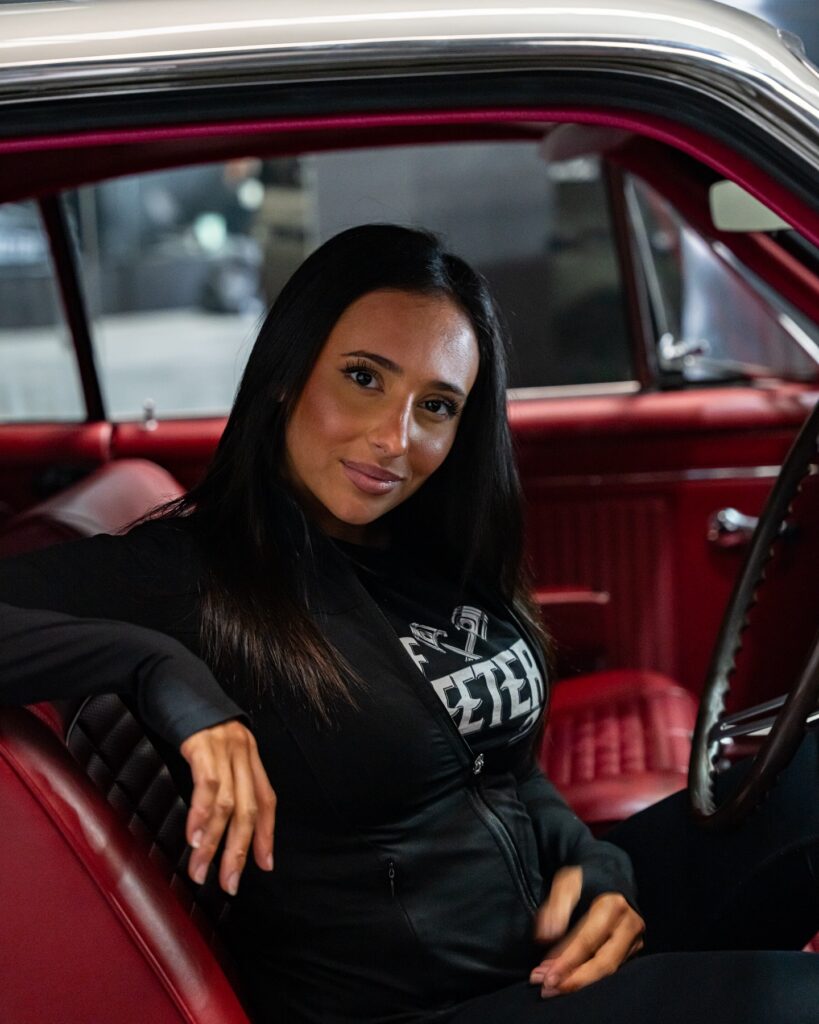

And eventually, she decided that if she did not give everything she had to chase it, she would regret it for the rest of her life.
“I knew if I didn’t take the leap, to move and pursue this career that has been a lifelong dream of mine, then I’d regret it forever,” Ambruosi said. “Leaving my family was hard, but not pursuing this dream would be harder.”
That sentence may be the simplest way to understand who Monique Ambruosi is, but would also not do it justice.
She is not in the United States because it was easy. She is not chasing professional drag racing because the path is guaranteed. She is not building businesses, taking driving opportunities, welding, marketing, networking, traveling, and fighting for seat time because someone handed her a perfect plan.
She is doing it because some dreams become too loud to ignore.
Built By the Sport
Monique did not find drag racing later in life. She was born into it, like many of us.
Her father raced a Top Alcohol Funny Car in Australia, and from the time she was young, the sport was not something she watched from the outside. It was something she lived inside.
The sound of engines, the smell of methanol, the rubber after a burnout, the rhythm of race weekends, the road trips, the work between rounds — those things became part of her.
She started working on her father’s race program as a young teenager. At first, she was a floater, helping with fuel, oil, and tires. Over time, she earned more responsibility. She worked on bottom-end inspections at the track, helped service cylinder heads back at the shop, and learned how to build engines through the family business.
She was never content to simply stand back and watch.
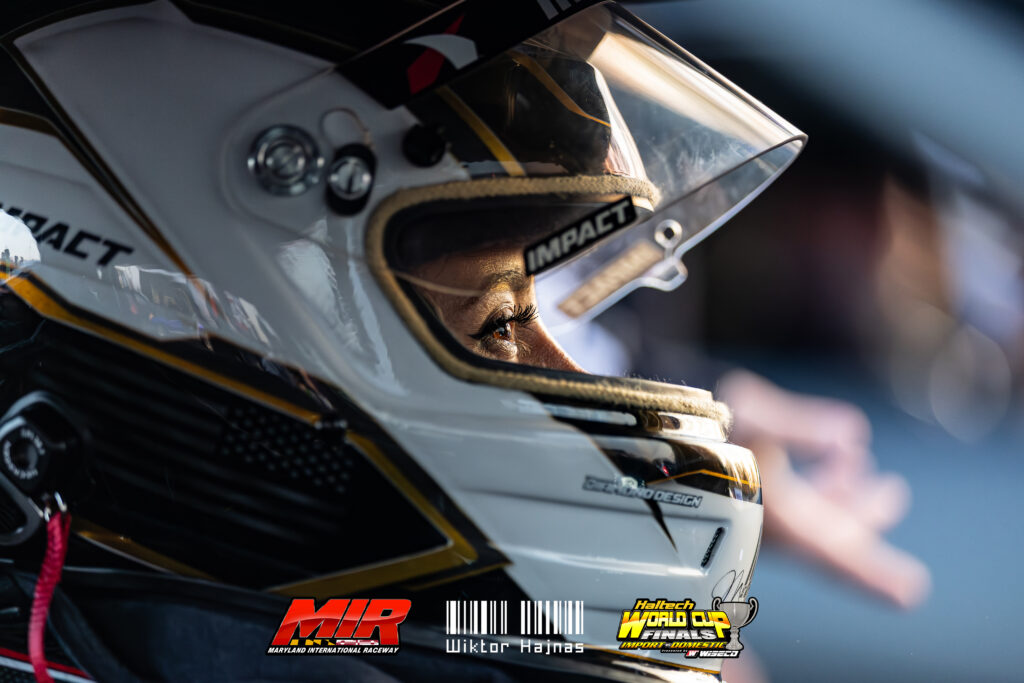
“I was never one of those individuals to sit back and watch the magic happen,” she said. “I wanted to be involved, to learn the hows and the whys.”
That curiosity became a foundation. Before Monique was trying to become a professional driver, she was learning the machinery. She was learning the details. She was learning what made a race car respond, what made it struggle, and what it took to keep it alive.
That matters because Monique’s story is not only about a driver chasing a seat. It is about a racer who understands the sport from the inside out.
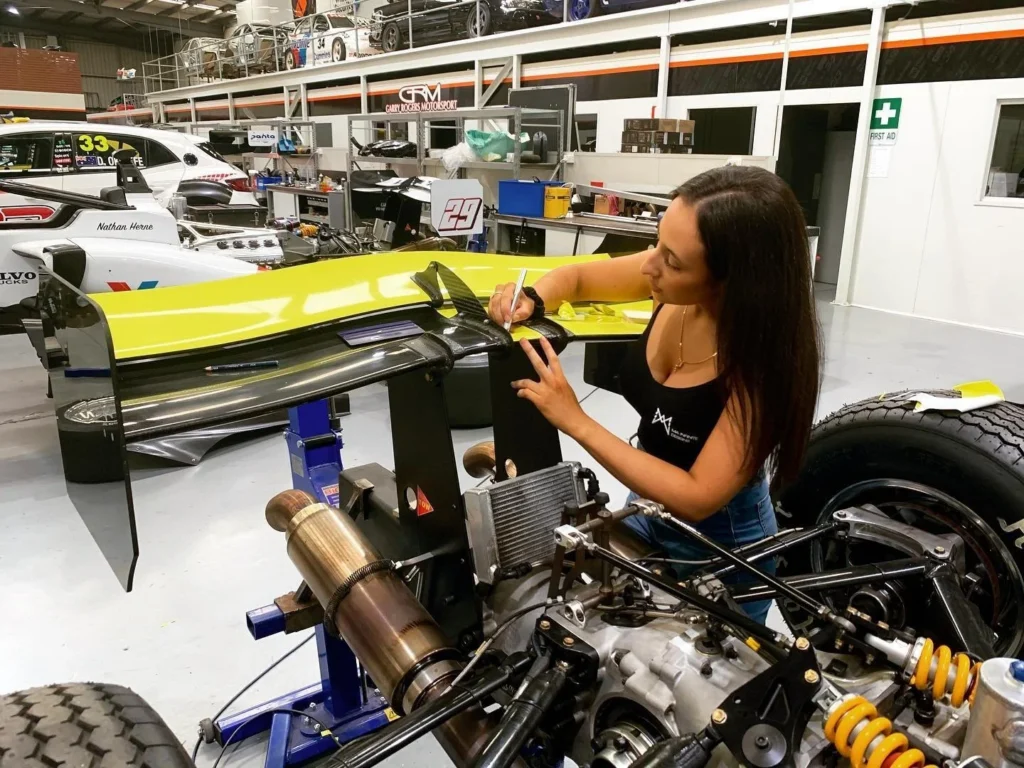
She has worked on cars. She has built parts. She has welded. She has fabricated. She has serviced engines. She has marketed teams. She has built her own identity. She has stood on the starting line, and she has sat behind the wheel.
She is not trying to enter drag racing.
She is trying to rise within the world that raised her.
The Moment It Became Clear
Monique began racing Junior Dragsters around age 13 or 14. Like so many young racers, juniors taught her the fundamentals: the tree, staging, nerves, race-day discipline, and sportsmanship when the day did not go as planned.
But after juniors, there was a gap before she returned to the seat.
During that time, she continued working on her father’s Funny Car program. She never left the sport, but she was no longer the one strapped in. She was crewing, learning, working, and watching from a different side of the starting line.
That time away changed her.
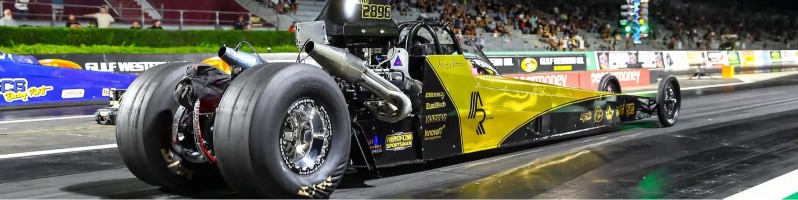
When she eventually returned to driving in a full-size dragster, the feeling was not simply excitement. It was recognition.
The car had been stripped down and rebuilt by Monique and her father to fit her as the driver and to better serve the team. When they fired it in the water box for the first time, she expected nerves. Instead, she felt calm.
She described it as a wave of tranquility.
She felt connected to the car. Like it was part of her. Like something that had always been waiting had finally returned.
That moment made everything clear.
“This is what I want to do for the rest of my life,” she said.
There are moments in life when a person realizes they are not simply interested in something. They are called to it. For Monique, that moment came in the water box, sitting in a car she had helped rebuild, after years of wondering what it would feel like to be back.
It felt like home.
Leaving Home to Chase Home
The hardest part of chasing a dream is that it often asks for something in return.
For Monique, it asked her to leave Australia.
It asked her to leave the family she describes as her best friends. Her mother. Her sister. Her father, the person who introduced her to the sport and helped her recognize the passion that now drives her life.
It asked her to leave the comfort of the race program she knew, the shop she worked in, the business she helped grow, and the life that made sense.
It asked her to move to another country with no guarantee that the dream would work.
Many people say they want something. Far fewer are willing to uproot their life for it.
Monique was.
The process itself was not simple. Her visa required months of preparation, a heavy workload, financial sacrifice, and uncertainty. When the approval finally came after months of waiting, the emotion caught up with her.
She cried.
Not because the dream had been completed, but because the door had finally opened.
“It felt like a ton of bricks had been lifted from my shoulders,” she said. “It felt like a chapter I have dreamed of my whole life was officially beginning.”
That is the part of Monique’s story that deserves to be understood.
The move to America was not a publicity moment. It was not a vacation. It was not a racer simply wanting to try something new.
It was the result of years of wanting, working, planning, networking, sacrificing, and refusing to let the dream die quietly.
More Than One Path Forward
Once in the United States, Monique did not sit around waiting for a perfect opportunity.
She went to work.
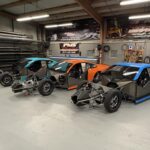
She moved to Indianapolis. She began doing welding and fabrication work. She continued building relationships. She launched Trackside Marketing, a business designed not only to support racers and teams, but also to keep herself active, visible, and connected within the sport.
That decision says a lot about how she thinks.
Monique understands that the road to becoming a professional driver may not be a straight line. So she has built multiple lanes.
She can weld. She can fabricate. She can work on cars. She can market. She can create graphics. She can produce video content. She can manage social media. She can help teams build their brands. She can move through the pits not just as someone hoping to be noticed, but as someone providing value.
Her marketing work has included teams and drivers such as JBS Motorsports, Justin Bond, Alex Laughlin, and others. Through Trackside Marketing, she creates content, graphics, photography, run recaps, and social coverage tailored to what each team needs.
She also has plans for a fabrication-based product company aimed at helping newcomers learn and practice welding. The concept centers around flat-pack welding coupons that can be assembled and welded, giving aspiring fabricators a more accessible way to develop skills.
Again, the theme is consistent.
Monique is not only trying to make it for herself. She wants to help others find their own way into the industry.
“I want to inspire the next generation of racers and fabricators and welders,” she said. “I want to help. It’s all I want to do.”
The Driver Still Comes First
For all the businesses, all the skills, and all the work around the sport, Monique’s central goal has never changed.
She wants to drive.
She wants to race professionally. She wants to become a champion. She wants to prove she belongs.
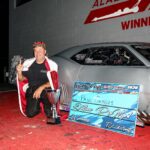
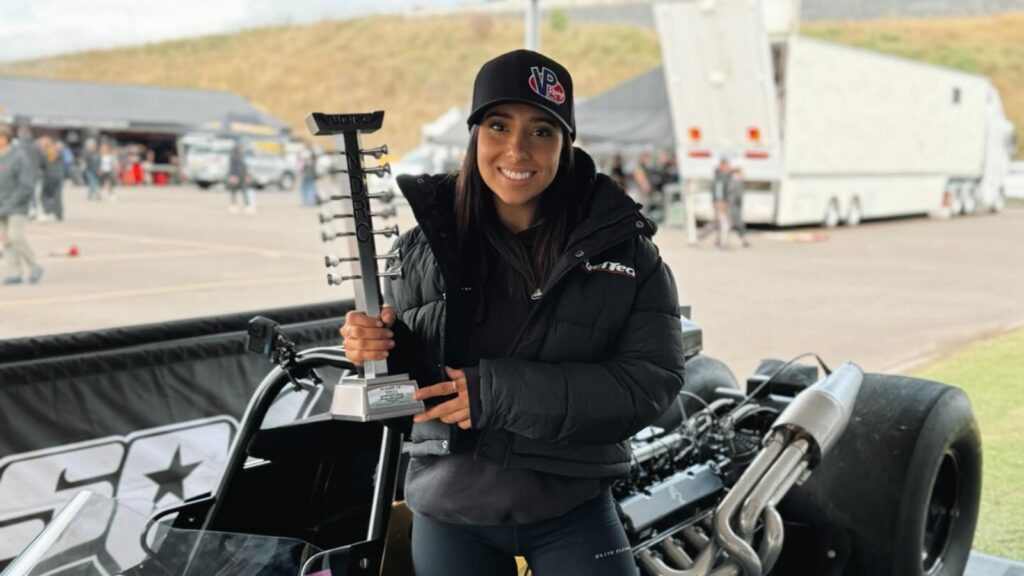
Her dream has long included Pro Mod, though she is also considering A/Fuel Dragster as another possible path. She has taken opportunities in the import racing world, including driving for Prayoonto Racing, where she made deep runs and was part of a world-record-setting effort in the class at the time.
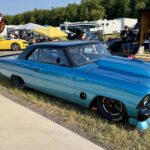
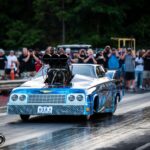
More recently, she has been driving under the JBS Motorsports banner, with a personal best of 6.90 at 193 mph.
Still, she is careful not to pretend the future is already written.
There are discussions. There are goals. There are possibilities. There is the desire to secure an A/Fuel license and build toward more in 2027. But Monique is not trying to rush into the wrong opportunity just to say she did it.
She wants to build something that lasts.
“I don’t want to just pop in and pop out,” she said. “I want to be in the sport. I want to stay in the sport and show people that I really am a racer through and through.”
That patience matters. So does the hunger behind it.
Monique is not asking the sport to believe in her because of where she came from, what she looks like, or the story surrounding her move. She wants the chance to earn it.
Seat time. Work ethic. Results. Relationships. Value.
That is the foundation she is trying to build.
The Weight Women Carry
Monique is also honest about the difficulty of being a woman in motorsports.
She knows there are benefits to standing out, but she also knows the criticism that comes with it. Women in racing are often judged through assumptions before their work is ever fully considered. Talent can be dismissed as luck. Opportunity can be reduced to appearance. Family support can be twisted into unfair accusation.
For Monique, that has been one of the harder realities to accept.
No matter how hard a woman works, there will always be someone willing to explain it away.
But she has learned how to keep moving.
She talks about taking the meaning out of hurtful words. Like hearing someone insult you in a language you do not understand — the sound may be there, but the power is gone. That is how she tries to process negativity.
Do not give the words value.
Do not let them decide your direction.
Keep going.
That mindset is not pretend toughness. It is survival. It is how someone keeps pursuing a dream while living far from family, building a new life, and trying to prove herself in an industry that can be brutally difficult.
Monique knows the emotional side of the journey is real. She knows being alone in another country can be hard. She knows the pressure, the comments, and the uncertainty can take a toll.
But she also knows she has one life.
And she does not intend to waste it wondering what might have happened if she had been brave enough to try.
The Difference Between Dreaming and Doing
There is a difference between having a dream and acting on one.
That may be the heart of Monique Ambruosi’s story.
Plenty of people have goals. Plenty of people talk about what they want to do. Plenty of people say they would chase something if the timing was better, if the money was easier, if the path was clearer, if the risk was lower.
Monique did not wait for perfect conditions.
She left home.
She left comfort.
She moved away from the people she loves most.
She stepped into uncertainty.
She built businesses around the life she wanted.
She took every skill she had — driving, welding, fabrication, marketing, design, communication, mechanical knowledge — and turned them into tools for survival.
She is not giving herself the option to quietly give up.
“I’m trying with everything I have,” she said. “I’ve got nothing to lose.”
That is not a slogan. That is a person who has already sacrificed too much to treat the dream casually.
And perhaps that is why her story carries weight.
It is not just about a racer from Australia coming to America. It is about what passion looks like when it becomes action. It is about what resilience looks like when the path is uncertain. It is about what perseverance looks like when home is on the other side of the world and the future still has to be earned.
It is about a woman who decided that the fear of never trying was greater than the fear of failing.
Making Her Family Proud
Through everything, Monique continues to point back to her family, especially her father.
He is still in Australia. He still cheers her on. He still misses her. And she knows the dream she is chasing began with him.
“If it wasn’t for him, I wouldn’t have been able to recognize the passion that gives me the will to live,” she said.
That line says more than any list of accomplishments could.
This is not simply about wanting to race cars. For Monique, drag racing is tied to family, identity, purpose, and belonging. It is the place where she learned to work. It is the place where she built memories. It is the place where she became herself.
Now, she is trying to carry that foundation into the next chapter.
She wants to become a champion. She wants to race professionally. She wants her businesses to thrive. She wants to inspire others. She wants young racers, young women, young welders, and young dreamers to see her story and believe that the impossible may only be impossible until someone commits fully enough to chase it.
Five years from now, Monique hopes people can look at her and say, “She made it happen.”
But in many ways, she already has.
Not because the final goal has been reached. Not because the championship has already been won. Not because the dream has become easy.
But because she acted.
She did the thing so many people never do.
She took the thought that would not leave her alone and built a life around it.
Monique Ambruosi is still chasing the dream, but she is not chasing it from a distance anymore. She is here. She is working. She is building. She is learning. She is sacrificing. She is betting on herself.
And she is not letting go.
“Never give up on something you can’t go a day without thinking about,” she said. “Life begins at the end of your comfort zone.”
For Monique Ambruosi, that comfort zone ended in Australia.
The dream continued in America.
And the story is only beginning.