
For decades, racers have watched the same story unfold.
A racetrack gets sold.
Developers arrive.

The grandstands come down.
The track disappears.
Warehouses go up.

Another piece of racing history becomes a memory.
That’s why the announcement surrounding Mooresville Dragway has grabbed so much attention throughout the motorsports world.
At first glance, it looks like another redevelopment story.
Look closer, though, and something very different emerges.
The vision unveiled by owner Matt Erich isn’t simply a new racetrack. It isn’t a housing development. It isn’t a country club.
It’s all three.
And if completed as proposed, Race City Motorpark + Social Club may become one of the most ambitious motorsports developments ever attempted in the United States.
Not A Racetrack. A Lifestyle.
The easiest way to understand Race City is to stop thinking about drag racing.
Instead, think about Augusta National.
Think about The Masters.
Think about an exclusive country club where members gather because they share a common obsession.
Now replace golf with horsepower.
That’s the concept.
The development is planned across roughly 270 acres in Mooresville, North Carolina — a town that has earned the nickname “Race City USA” thanks to its concentration of NASCAR teams, race shops, engine builders, and racing businesses. More than 200 motorsports-related companies operate within the region, creating arguably the most concentrated racing ecosystem in America outside Indianapolis.
Race City is designed around the idea that enthusiasts no longer want just a place to race.
They want a place to belong.
The Amenities Sound More Like A Resort Than A Racetrack
The proposed plans read less like a track brochure and more like a luxury resort.
Among the amenities being promoted:
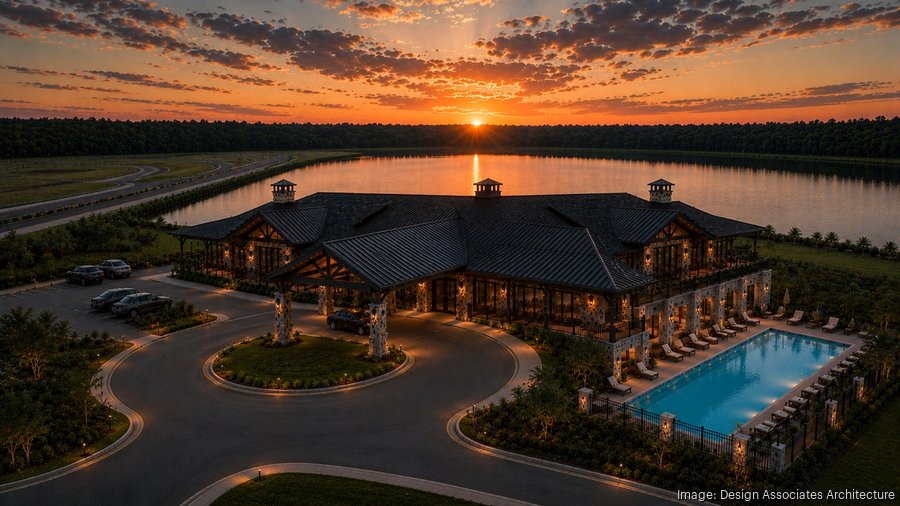
• Lakeside infinity pool
• Fine dining restaurant
• Private members club
• Whiskey library
• Cigar terrace
• Fitness center
• Recovery and wellness facilities
• Professional racing simulators
• Concierge vehicle services
• Gated access and private security
• Luxury villas
• Climate-controlled garage suites
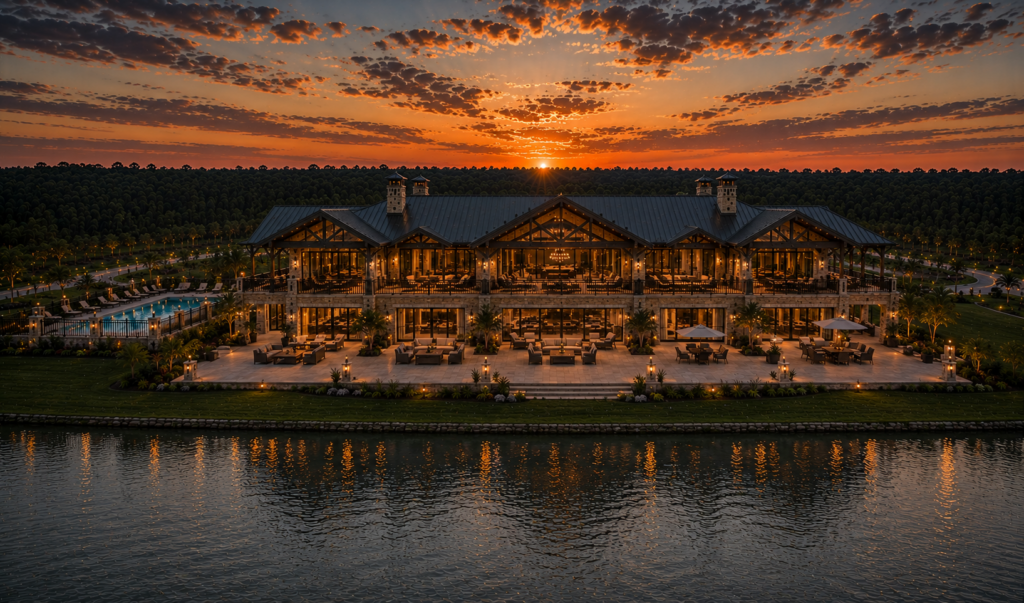
The centerpiece is a lakeside clubhouse overlooking the property. Ownership has repeatedly described the project as a “motorsports country club,” and the design language throughout the development reflects that philosophy.
For racers accustomed to folding chairs and concession-stand hamburgers, the concept feels almost foreign.
A whiskey library?
At a dragstrip?
Welcome to 2026.
The Garage Condos May Be The Real Business
Most racers immediately focus on the track.
Investors focus on something else.
The garages.
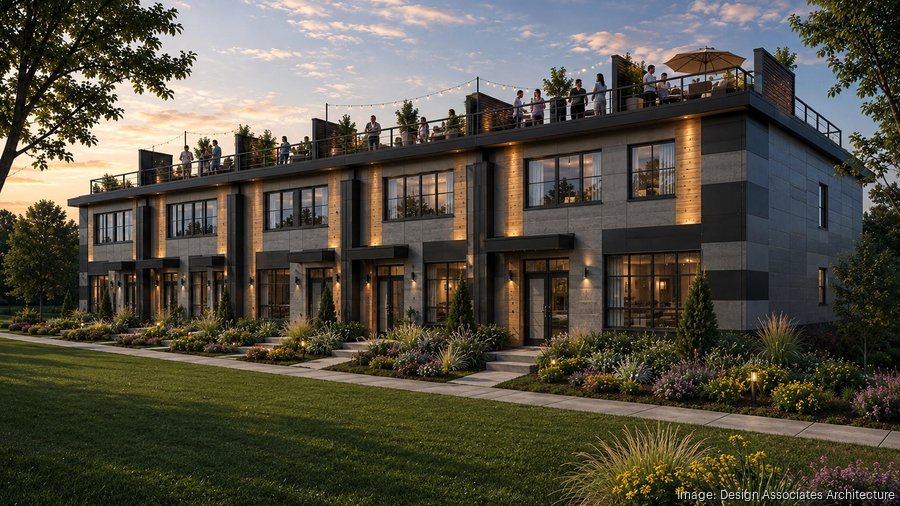
Plans call for approximately 70 private garage condominiums integrated into the facility. These aren’t storage buildings.
They’re automotive real estate.
Across the country, similar garage condo developments have exploded in popularity among collectors, exotic car owners, race teams, and enthusiasts who need secure climate-controlled storage combined with social space.
The garages at Race City are expected to overlook portions of the facility and provide members direct access to the track environment.
While official pricing has not been released, comparable luxury garage developments elsewhere routinely trade from six figures into the low seven figures depending on size, finishes, and location.
Given Mooresville’s proximity to NASCAR teams, Lake Norman wealth, and Charlotte’s growing population, industry observers expect demand to be significant once pricing becomes public.
The Villas Could Change Everything
Perhaps even more interesting than the garages are the approximately 70 planned villas and townhomes.
Think about that for a second.
Ownership is effectively trying to create a neighborhood where residents can wake up, walk outside, look across a lake, and watch race cars circulate a four-mile road course before heading to a clubhouse for dinner.
That type of motorsports-focused residential development has proven successful at places like Thermal Club and Monticello Motor Club.
The difference is that those facilities were built primarily around road racing.
Race City is attempting to incorporate drag racing into the equation.
Then There’s The Dragstrip
This is where racers get nervous.
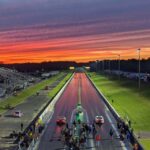
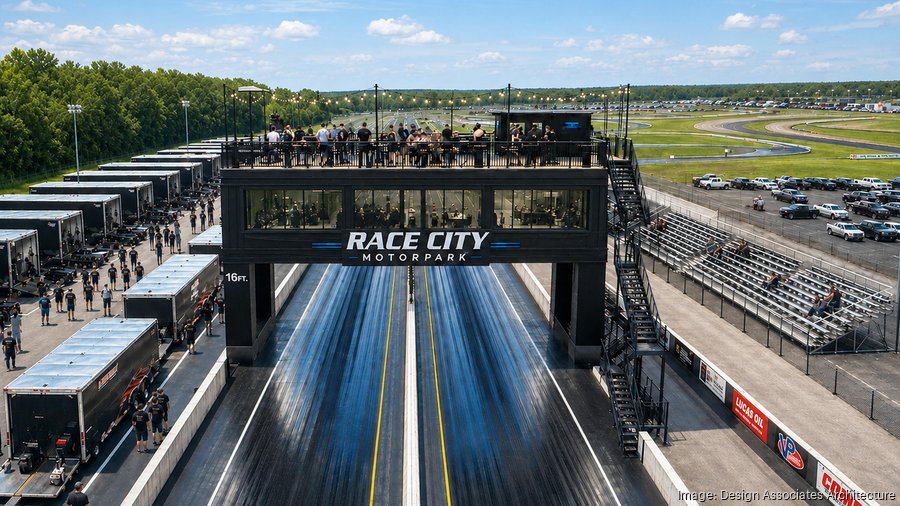
The proposed development includes a completely rebuilt eighth-mile dragstrip featuring:
• New racing surface
• New walls
• New tower
• New grandstands
• New restrooms
• New support facilities
• 60-foot-wide racing surface
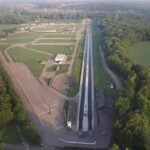
Ownership has repeatedly emphasized that drag racing remains central to the project and that the existing facility is being demolished specifically to build a better dragstrip.
That’s important because many racers initially feared Mooresville Dragway would simply disappear.
Instead, the stated plan is to rebuild it from the ground up.
The Question Nobody Can Yet Answer
Will racers actually be welcome?
That’s the question being asked throughout the pits.
The renderings are beautiful.
The clubhouse sounds incredible.
The villas and garages will likely sell.
But none of that matters to racers if the dragstrip becomes little more than a backdrop for luxury real estate.
Will there be bracket racing?
Will there be big-money races?
Will there be test-and-tunes?
Will there be racer-focused programs?
Or will the future revolve around private members enjoying exclusive track access?
At this point, nobody outside ownership knows.
The Timing Is Interesting
Race City isn’t being built in a vacuum.
Just 30 miles away, Charlotte Motor Speedway and Rick Hendrick recently announced Ten Tenths Motor Club, another luxury automotive club concept featuring private garages, a clubhouse, cigar lounges, bourbon bars, and exclusive driving experiences.
That means Mooresville isn’t just building a track.
It’s entering an emerging battle for affluent automotive enthusiasts.
The Southeast is quickly becoming ground zero for motorsports lifestyle developments.
A $50 Million Gamble
Ultimately, Race City Motorpark + Social Club represents a massive bet.
A bet that people want more than racing.
A bet that enthusiasts want community.
A bet that collectors want automotive real estate.
A bet that motorsports can become a lifestyle destination rather than simply a weekend activity.
And perhaps most importantly, a bet that drag racing can survive and thrive inside that model.
For now, bulldozers are moving, approvals are being pursued, and racers are watching closely. Construction activities began this summer, and ownership hopes to move toward opening phases of the project in the coming years.
Whether Race City becomes the future of motorsports facilities or simply an ambitious experiment remains to be seen.
But one thing is certain.
Nobody has ever tried to build something quite like this around a dragstrip before.