Some people find drag racing.
Alan Smith was practically born into it.
Long before he was known as “Mr. Fabulous,” before the pink shirts, the pink parachute, the camera lenses, the blue Monte Carlo, the track work, the social media duties, the cleanup days, the sponsor calls, and the endless miles spent helping other racers, Alan was just a little kid standing at Great Lakes Dragaway with a disposable camera in his hand.


He was three or four years old when his parents first took him to the track. That was all it took.
He was hooked.

By five, he had one of those old-school disposable cameras — crank it, point it, shoot it, hope you got something good. Most kids would have burned through the film and moved on to the next toy. Alan found something that would follow him for the rest of his life.
The cars got louder. The cameras got bigger. The lenses got longer. The little kid in the bleachers became a racer, a photographer, a crew guy, a volunteer, a promoter, a track voice, and now one of the people helping carry forward one of drag racing’s most historic facilities.
But the thing that makes Alan’s story special is not that he wears a lot of hats.
It is that none of them were handed to him.
He forged his way into this sport one step, one photo, one pass, one favor, and one relationship at a time.
Alan did not come from a family with endless racing money. There was no junior dragster waiting in the garage. No polished operation. No perfect path. He grew up wanting to be at the track, following the action from the bleachers, not even realizing there were places closer to the racing surface he might be allowed to go.
He simply loved it.
That kind of love is different. It is not built from winning. It is not built from trophies. It is not built from being the fastest guy on the property. It is built from wanting to be there so badly that just being near the noise, the people, and the starting line feels like enough.
Then came the car.
In high school, Alan bought an ’86 Monte Carlo for $100.
Not $10,000. Not $100,000.
One hundred dollars.
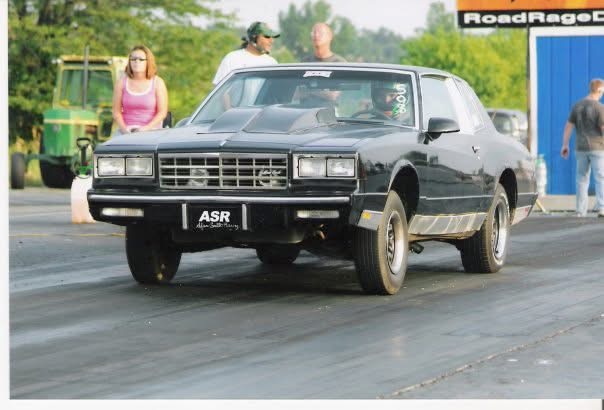
It was a beater. It was rusty. It was slow. It was imperfect in all the ways that make a first race car unforgettable. When he first started racing it, the car ran mid-17s with a 305. By the time he was done with it, after the basic hot rodder recipe of transmission work, rear end changes, headers, and determination, it had worked its way down to around 15-flat.
To some, that may not sound like much.
To the right people, it sounds like everything.
That Monte Carlo was not just a car. It was Alan’s way in. It was the bridge between the kid in the stands and the racer in the lanes. It was proof that you did not need a giant budget to belong. You just needed enough passion to show up, enough stubbornness to keep improving, and enough love for the sport to enjoy every second of it.
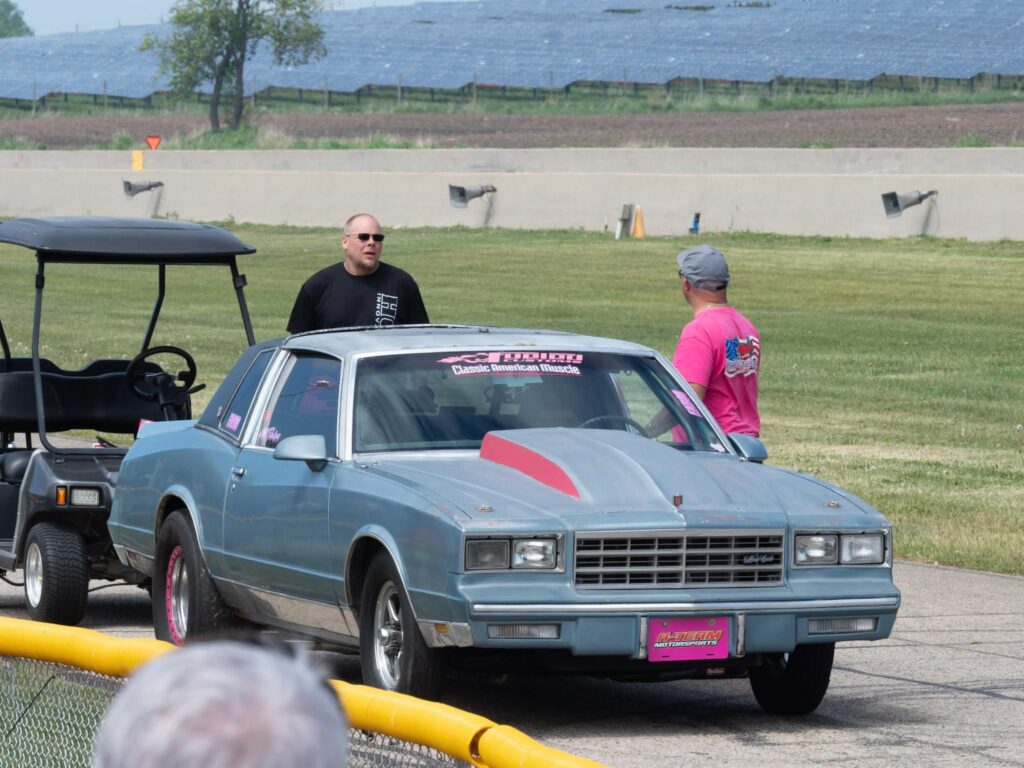
In 2009, Alan bought another Monte Carlo from his friend Tony. Same year. Same model. This one was blue. It was more race-ready, and by 2010, “the blue car” was on track.
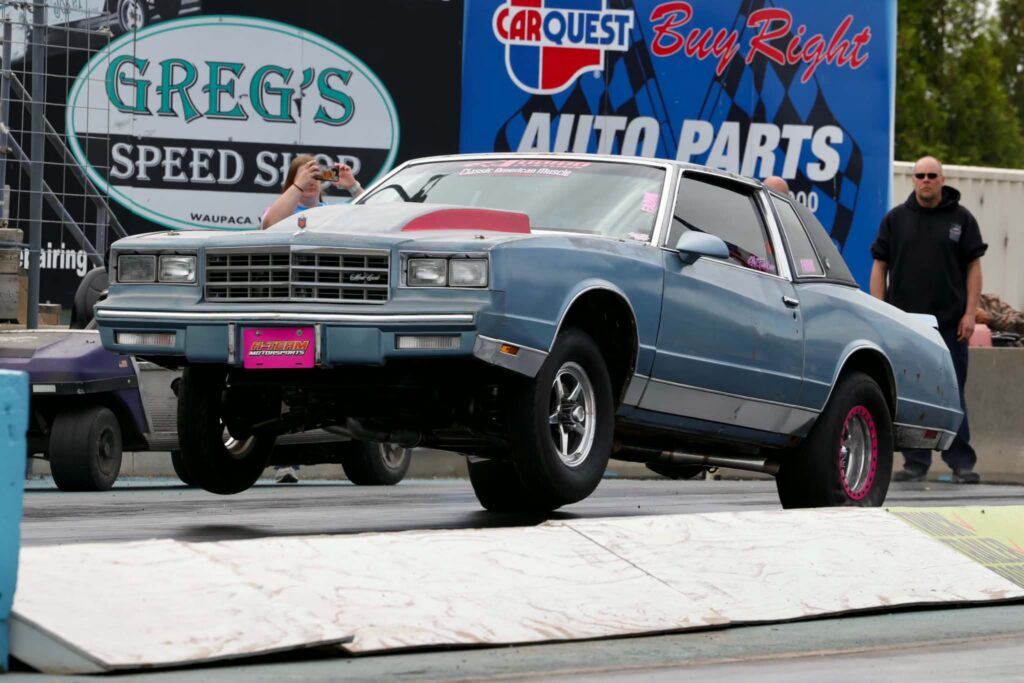
At first, it was a high-12-second small-block car.
Today, it is still Alan’s blue car — but it has become something much more.
Over the years, it evolved into a big-block, all-steel, low-10-second street car with the original back seat still in it, a full exhaust, and a personal best of 10.24. Alan believes the car has a nine-second pass in it, and when it does finally run that number, it will not be because he skipped the hard parts.
It will be because he lived through all of them.
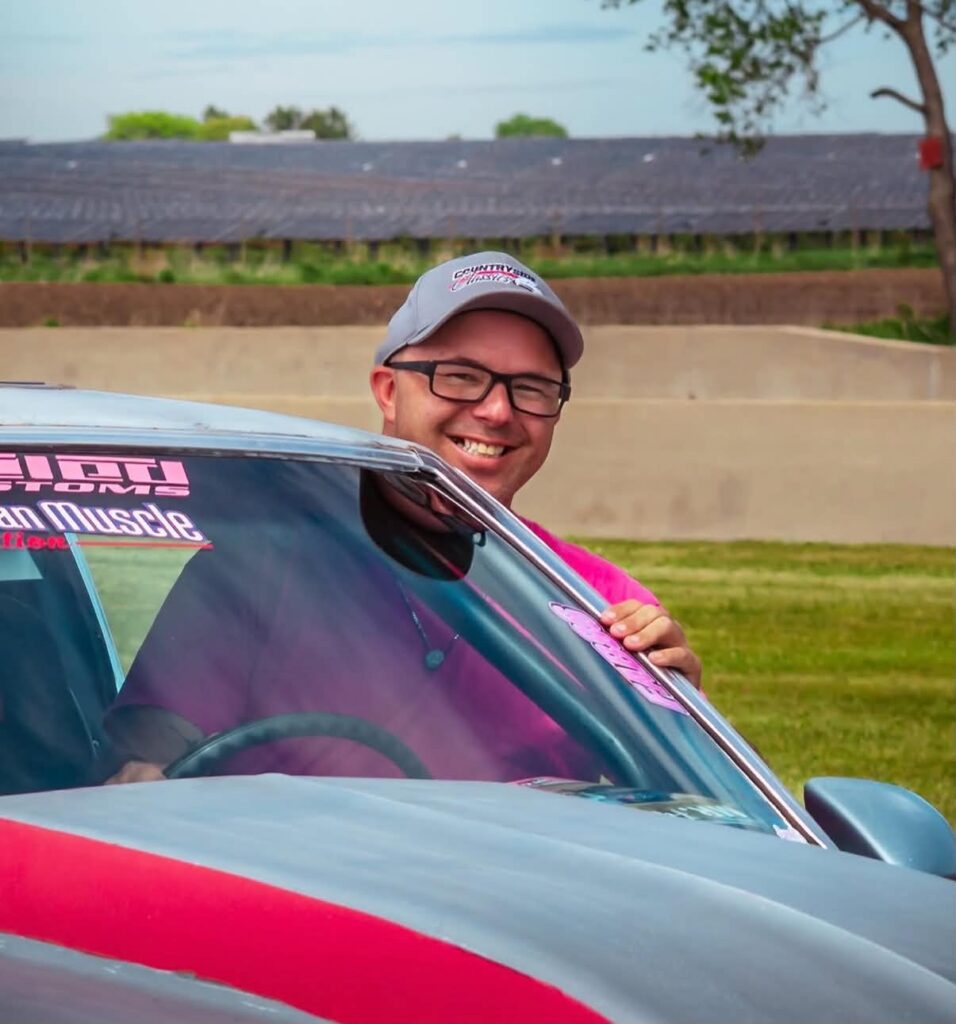
The blue Monte Carlo is not some lifeless build sheet. It is Alan’s personality on four wheels. Blue paint. Pink accents. Pink parachute. The kind of car you remember because it does not look like everything else in the staging lanes.
That is fitting, because neither does Alan.
The nickname came years ago, around 2006 to 2008, while Alan was racing and volunteering. He said the word “fabulous” a few times during an event, and the track staff stuck him with it.
For a while, he shrugged it off.
Then his mother gave him the kind of advice only a mother can give.
Why not take that name and run with it?
So he did.
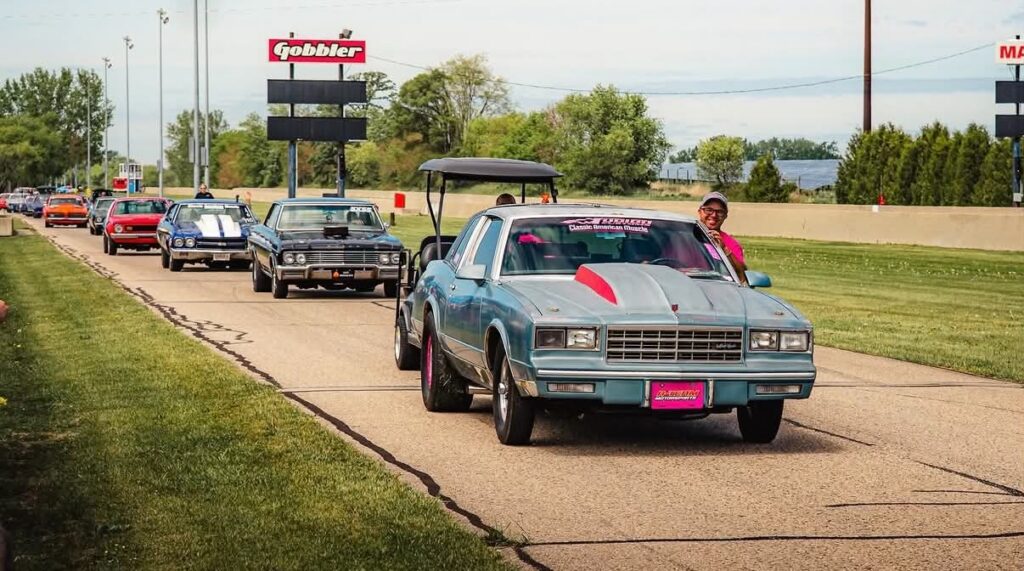
The blue car became more recognizable. The pink shirts became part of the identity. The photography became Mr. Fabulous Photography. The name became bigger than a joke. It became a brand, a calling card, and somehow, a perfect description of a guy who brings color, humor, work ethic, and heart into a sport that sometimes forgets how badly it needs all four.
Alan is quick to joke. Quick to laugh. Quick to deflect credit.
But ask around, and people know.
He is one of those people who makes racing better.
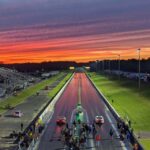
He has photographed countless racers. He has had his work appear in outlets like Drag Illustrated and LSX Magazine. He has traveled to events like Shakedown at M-Town, the Northern Nationals, the Byron Wheelstanding Championship, and the World Series of Pro Mod in Bradenton. At home, he is tied deeply to Great Lakes Dragaway’s biggest traditions — Memorial Day Classics, Night of Fire, and the Labor Day weekend Time Machine Nationals.
But photography is only part of it.
Alan crews. Alan helps. Alan volunteers. Alan jumps in.
He has worked with racers like Chris Conway, whose Cadillac CTS-V has been deep into the sixes with stock-style IRS suspension. He has helped with the Adler family and their Pro Street legacy. He has been around the cars and people he grew up reading about in magazines, the ones that fueled his imagination as a kid who was obsessed with NMCA Pro Street, Hot Rod Magazine, Popular Hot Rodding, and the great personalities of that era.
Alan also gives a shout out to Annette Summer, a hero of his.
That is one of the beautiful things about drag racing.
Sometimes your heroes become your friends.
Sometimes the people you once read about end up building your engines.
Sometimes the kid who watched from the stands ends up standing beside the cars, wrench in hand, camera over his shoulder, helping keep the whole thing alive.
That is Alan’s story.
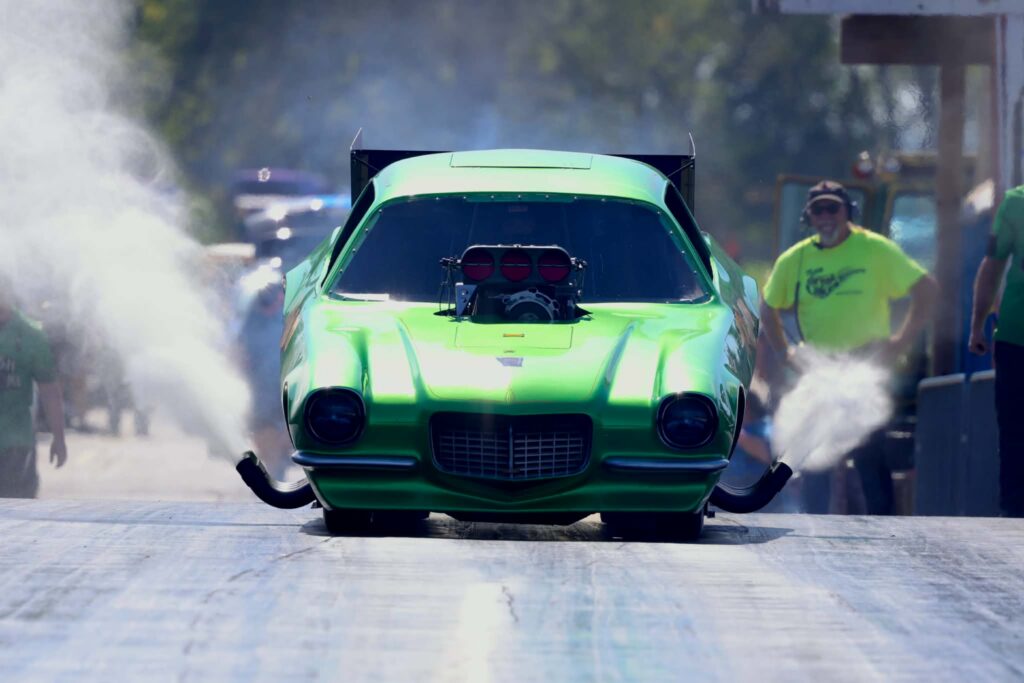
And now, in another full-circle turn, he is helping shape the future of the very place that shaped him.
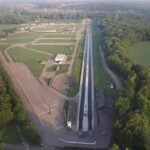
Great Lakes Dragaway is not just another racetrack. Located in Union Grove, Wisconsin, it opened in 1955 and is widely recognized as one of the oldest continuously operating dragstrips in the country. The track itself calls it “The Oldest Continuously Operating Dragstrip in the World” and “The Biggest Little Track in the World.” Its own history describes a place built during the rise of grassroots drag racing, a place where car clubs, racers, fans, and future legends all helped create something that has lasted for generations.
Alan grew up 15 minutes from that place.
Now he works for it.
After Great Lakes Dragaway was sold to new owner Tim Cullinan, Alan was approached at PRI and asked to come aboard as the track’s social media and marketing manager. He started after photographing the World Series of Pro Mod in Bradenton, and since then, he has been doing what he has always done — working.
Posting. Promoting. Answering questions. Sending sponsor emails. Updating racers. Talking to fans. Helping organize events. Trying to get information out early enough that people can actually plan their lives around racing.
It sounds simple, but anyone who has been around the sport knows how badly that matters.
Drag racing does not just need good tracks. It needs communication. It needs energy. It needs people who understand that fans cannot show up to an event they do not know about. Racers cannot support a program they hear about too late. Sponsors cannot invest if they do not understand the value.
Alan sees that clearly.
His philosophy is simple: positivity, happiness, friendliness, and communication.
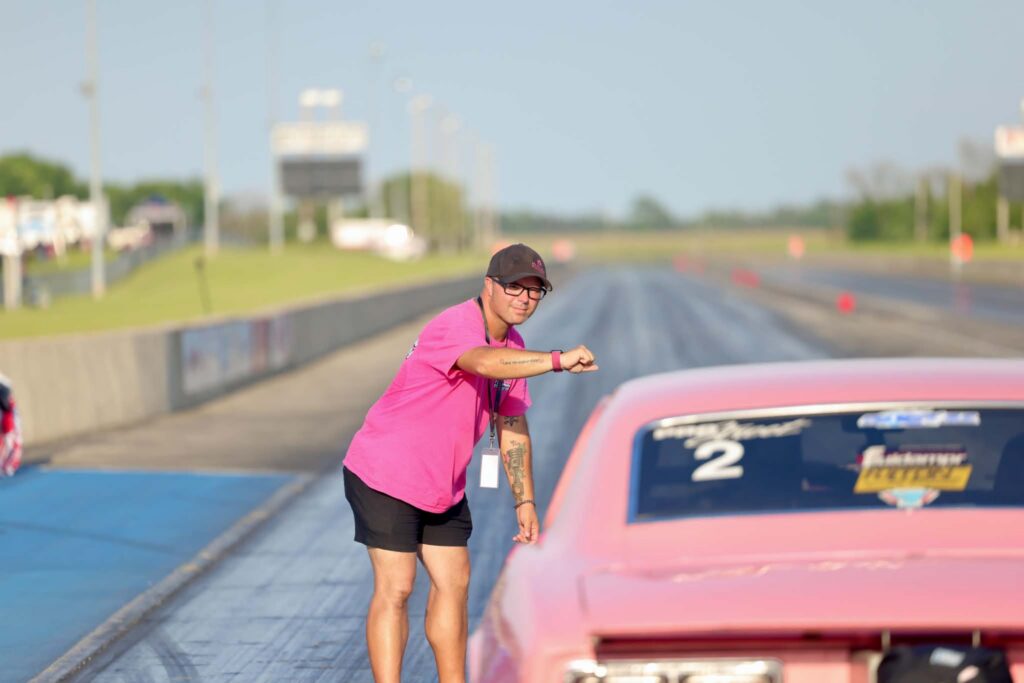
That may sound soft until you realize those are the exact things grassroots racing needs to survive.
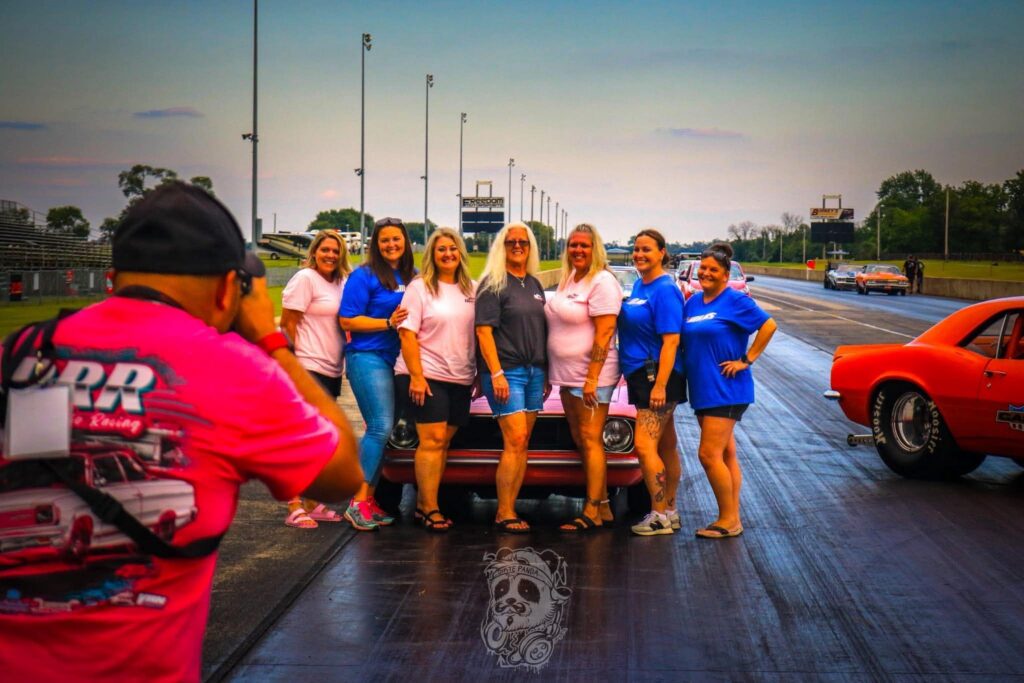
At Great Lakes, the schedule itself is almost unbelievable by modern track standards. The facility operates Tuesday through Sunday. Street tire nights. Ladies night. Sticky Thursday. Test and tunes. Bracket racing. Special events. Bike days. Vintage races. Night of Fire. Truck events. Holiday classics. A designated RC drag racing track. Ideas for more ways to use the facility. Plans to modernize. Plans to improve the surface. Plans to upgrade buildings, safety equipment, and the overall experience.
This is not a track trying to fade quietly into history.
It is a track trying to prove history still has a future.
One of the clearest signs came when Alan helped organize a cleanup day.
He expected maybe 30 to 50 people.
More than 150 showed up.
That tells you everything.
It tells you people still care. It tells you racers still believe in places like Great Lakes Dragaway. It tells you that when a track reaches out to the community the right way, the community will reach back.
Alan did not just see a cleanup day.
He saw proof of life.
He saw proof that grassroots drag racing is not dead. It is just waiting for people willing to put in the work, make the phone calls, post the flyers, answer the messages, and give people a reason to believe again.
That is why his role matters.
Because Alan understands the sport from every angle.
He knows what it is like to race a slow car and love it anyway. He knows what it is like to build something over decades instead of buying it overnight. He knows what it is like to take photos from the outside looking in. He knows what it is like to wrench on someone else’s dream. He knows what it is like to work a normal 9-to-5 job, then pour the rest of himself into racing because that is simply who he is.
Away from the track, Alan works as a service advisor at Countryside Classics, a restoration shop. Then he fits in the track work, the photography, the racing, the helping, the traveling, the posting, the planning, and whatever else needs doing.
At one point during the conversation, after listing all the things he does, Alan laughed and admitted he was starting to understand why everyone had tagged him in a DragCoverage post about who should be interviewed.
That is the thing about people like Alan.
They often do not see themselves the way everyone else does.
They are too busy doing the work.
He does not seem interested in being treated like a big deal. He would rather hide in the background, say thank you, crack a joke, and keep moving. But grassroots racing is held together by exactly that kind of person — the one who does not need a spotlight to make an impact.
Still, Alan deserves his flowers.
Because stories like his are the stories drag racing was built on.
Not everyone starts with a Pro Mod. Not everyone gets the perfect trailer, the perfect engine, the perfect crew, or the perfect opportunity. Most start with a dream, a cheap car, and a place that lets them try.
Alan started with a disposable camera and a $100 Monte Carlo.
Now he is part of the future of one of America’s most historic dragstrips.
That is not luck.
That is resilience.
That is grassroots racing.
That is what happens when someone refuses to leave the sport they love, even when the path is not obvious, even when the money is not easy, even when the hours are long, and even when doing “too much” becomes the only way to do it right.
Alan still has goals. He wants the blue car in the nines. He wants to possibly take on Sick Summer or a similar drag-and-drive challenge someday. He dreams about a back-halved version of the car with a Lenco, a clutch, and a 10-71 blower. He wants to keep growing the photography. He wants to keep helping Great Lakes Dragaway build momentum. He wants to keep the legacy alive.
That word — legacy — matters.
Because tracks like Great Lakes Dragaway do not survive on pavement alone.
They survive because people care.
They survive because parents bring their kids. Because a five-year-old gets handed a camera. Because a teenager races a $100 Monte Carlo. Because volunteers show up. Because racers help each other. Because photographers document the moments. Because someone answers the messages. Because someone still believes flyers matter. Because someone looks at a historic dragstrip and does not just see what it was.
They see what it can still become.
Alan Smith is one of those people.
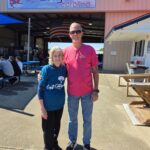
He is a racer. A photographer. A crewman. A track worker. A promoter. A helper. A student of the sport. A keeper of the old-school flame. A guy with a blue Monte Carlo, pink accents, a pink parachute, and a nickname that somehow fits better every year.
They call him Mr. Fabulous.
And after hearing his story, one thing is pretty clear.
They don’t call him fabulous for nothing.