Most racers, track owners, promoters, etc. do not want to meet a lawyer because of something that happened at the racetrack.
A contract has gone bad. A business relationship has fallen apart. Someone has been injured. An insurance company has become involved. A waiver is being challenged. A new race team is being formed, and suddenly the conversations are no longer about cylinder heads, reaction times or the next event on the schedule.
Edward “Edd” Harney Jr. is different. Harney was a racer long before he was a lawyer

Harney does not have to be taught what happens inside the gates. He understands the financial strain, the late nights, the family involvement and the decisions racers make because he has spent nearly four decades making those same decisions himself.
Long before he represented championship-winning professional teams, Harney was building race cars with his father in a machine shop.
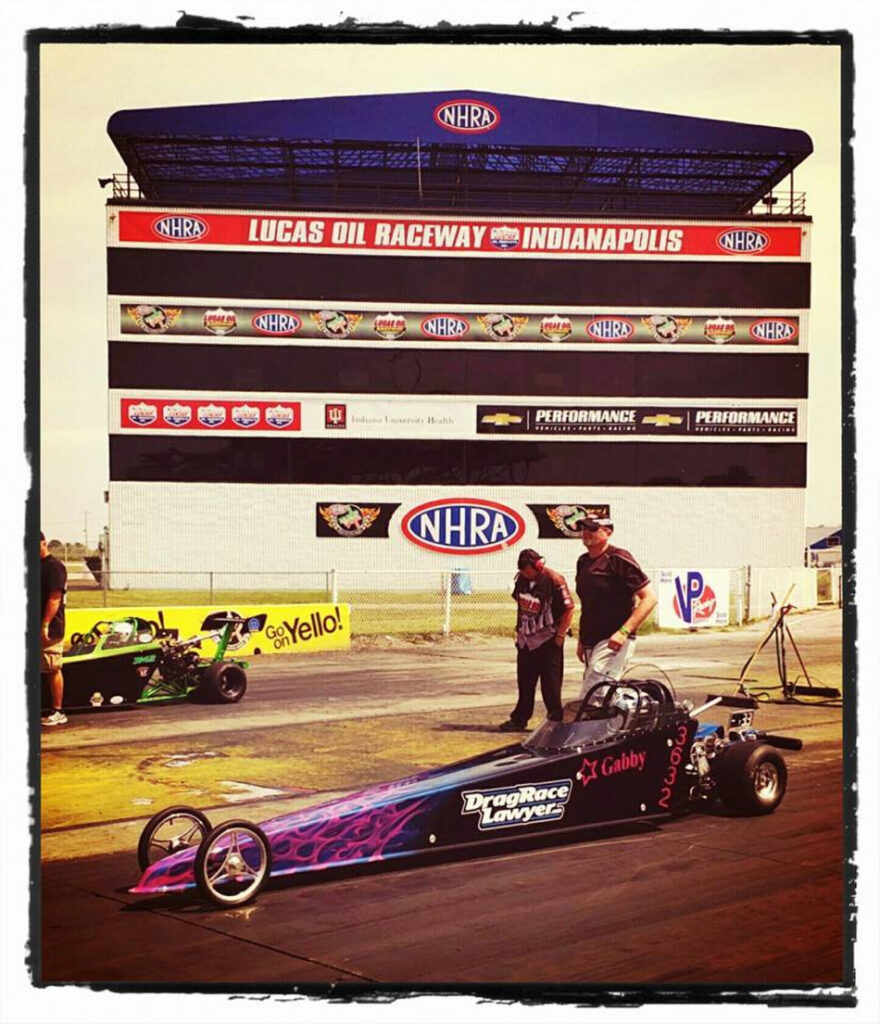
Long before DragRaceLawyer.com became an accurate description of his practice, it was simply a name he hoped people could remember.

“I used to always have the name of my law firm on the race car because, frankly, I would use it to attract new clients,” Harney said. “Even though our law firm name, Hume Smith, is relatively simple, nobody could remember it.”
Then, while driving to work one morning roughly a decade ago, a thought crossed his mind.
“I wonder if DragRaceLawyer.com is taken?”
Harney called the person who handled his firm’s information technology. The domain was available.
“Okay, cool,” Harney told him. “Register it.”
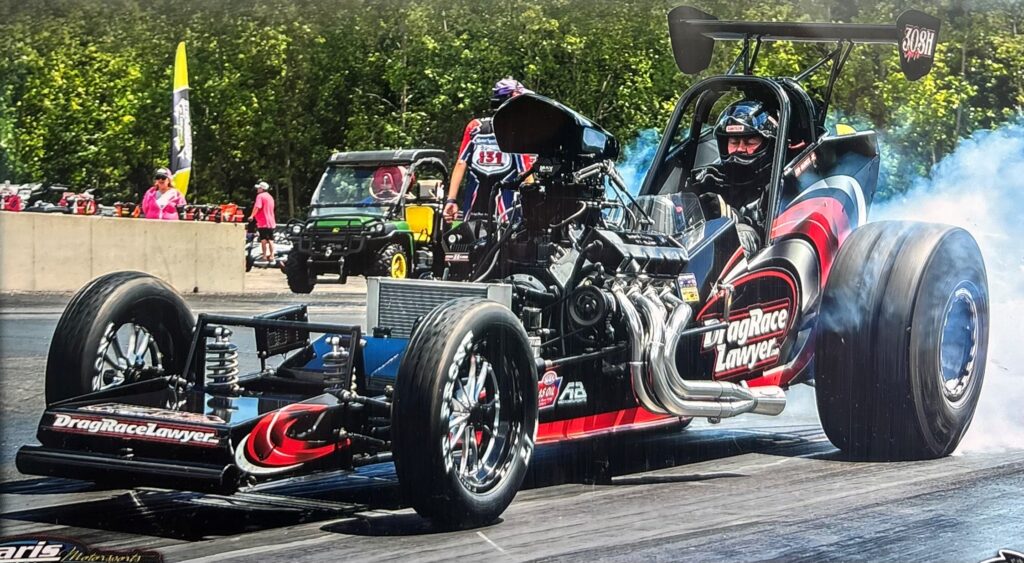
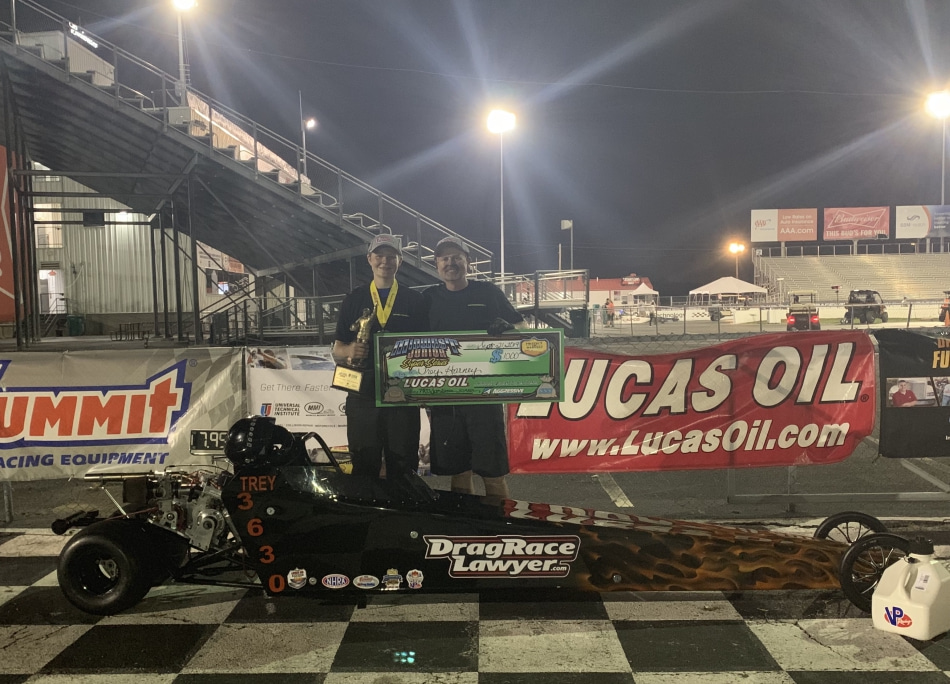
At first, the address simply forwarded visitors to his law firm. It was placed on Harney’s race car and later on the Junior Dragsters driven by his children. Racers may not have remembered the full name of an Indianapolis law firm, but they remembered the Drag Race Lawyer.
What started as effective advertising eventually became something much more literal.
Today, Harney is the managing partner of Hume, Smith, Geddes, Green & Simmons, LLP, an Indianapolis firm founded in 1951. His practice encompasses civil litigation, insurance matters and business law. He earned his undergraduate degree from Purdue University before graduating magna cum laude from Valparaiso University School of Law in 1993. He joined the firm that year, became a partner in 1998 and its managing partner in 2014.
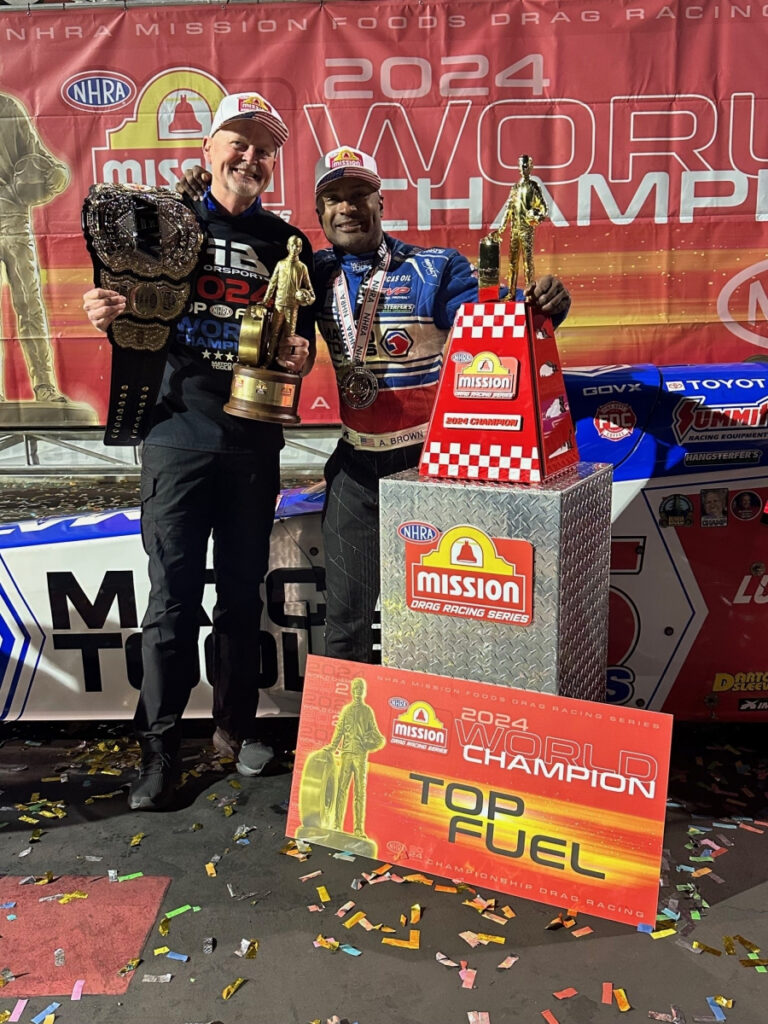
The firm also publicly identifies Harney as legal counsel for Antron Brown and AB Motorsports, as well as Ron Capps and Ron Capps Motorsports.
That side of his practice did not come from a calculated attempt to enter professional motorsports. It grew naturally from a life already spent in the staging lanes.
Harney’s father originally competed in four-wheel-drive enduro events held on motocross-style courses. He raced a 1953 Willys that he built himself in the garage, but the family’s blue-collar operation eventually found itself competing against teams arriving with tractor-trailers and substantially larger budgets.
Looking for a more economical place to race, the elder Harney moved into sand drags.
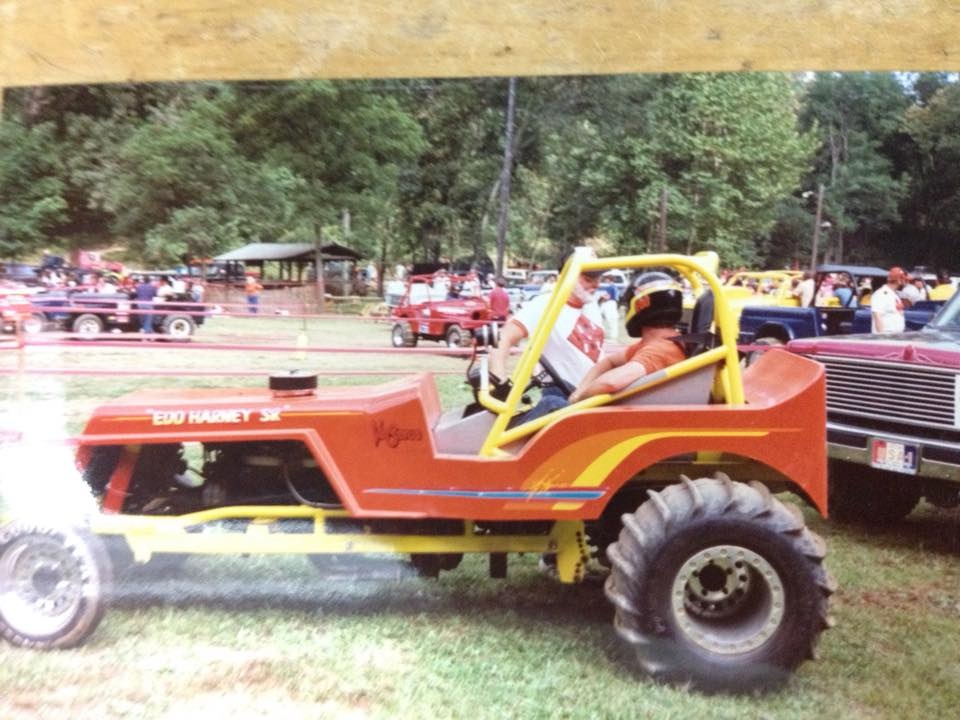
Edd was not immediately consumed by it. He did not race throughout high school, and it was not until college that his interest began to grow. His father eventually allowed him to drive the family’s four-wheel-drive CJ-2A Jeep at Silver Lake Dragway in Michigan.
Harney entered the experience with the confidence of someone who had not yet learned how difficult drag racing could be.
“I thought drag racing was incredibly simple,” he said. “You just hit the gas and go straight.”
The sand course was 100 yards long.
“I think I traveled about 120 yards in the 100-yard distance because it was a lot harder than it looked,” Harney said. “I was hooked. That’s pretty much what it took.”
Approximately one month later, his father came home and told him they were going back to the machine shop to cut frame rails for a new car. Together, they built a mild-steel, four-wheel-drive Jeep Funny Car that both could race.
They competed with it from approximately 1987 through the mid-1990s.
Eventually, Harney’s father decided he wanted to build one more race car—and this time, he wanted to construct it from chromoly tubing.
Edd gave him a TIG welder for Christmas and told him to teach himself how to use it.
He did.
Using a Mark Williams Funny Car chassis blueprint as a starting point, the family constructed the car Harney continues to race today. It was stretched to accommodate the inline six-cylinder engine they ran at the time and debuted around 1996.
The car won an overall championship during its first season in the sand.
That success prompted another decision.
“Hey, let’s go asphalt racing.”
Harney made the transition in 1997, and the car has continued evolving ever since. It no longer looks like the machine that first moved from sand to pavement, but the foundation—and the connection to his father—remain.
The official biography maintained by Harney’s firm describes his current combination as a nitrous-assisted big-block front-engine dragster competing in the NHRA Super Pro class. It also notes that, after spending 2012 through 2024 serving as crew chief for his children Trey and Gabrielle in Junior Dragsters, Harney has returned to the driver’s seat.
That family connection is also what eventually brought Harney into the professional racing business.
Harney became friends with Antron Brown while their sons were racing Junior Dragsters. The children were the same age, became friends at the track and naturally brought their families together.
“If you have kids, that’s how you get new friends,” Harney said.
By 2020, Brown was preparing to separate from Don Schumacher Racing and establish AB Motorsports. He knew Harney was an attorney, but he did not necessarily know the full scope of his practice.
Brown asked whether Harney could handle the type of work required to establish and operate a professional race team.
Harney could.
“That’s contracts and leasing and employment and HR,” Harney explained. “Kind of outside general counsel.”
After years of putting DragRaceLawyer.com on race cars, Harney was finally performing what could reasonably be described as drag racing law.
“Now I kind of do Drag Race law,” he said.
Brown later connected Harney with Ron Capps as Capps prepared to establish his own operation. Capps has publicly said Brown introduced him to Harney and described Harney as both “a racer at heart” and “a great attorney.”
That shared language matters.
Harney understands that a professional race team is not simply a car and a group of people trying to win races. It is a business with contracts, employees, leases, sponsorship obligations, corporate records and potential liability.
He also understands the culture surrounding it.
He knows why something that looks insignificant on paper may matter deeply to a racer. He understands the pressure of reaching the starting line, the expense of maintaining equipment and the unusual relationships that develop when business partners spend weeks traveling and working together under intense conditions.
His racing background has also placed him in a unique position when discussing one of the sport’s most uncomfortable subjects: safety and liability.
At many independent events, particularly large bracket races with hundreds of entries, formal technical inspection may be limited or absent. That creates a continuing debate between personal responsibility, racer autonomy and the obligations of tracks and promoters.
Harney cautioned against assuming there is one universal answer.
“The first thing you always have to think about is every single state has different laws,” he said. “A waiver that might be enforced in Indiana may not be enforced in Georgia.”
The same is true of how states allocate responsibility between an injured person and other parties. Indiana, for example, generally prevents a claimant from recovering when that claimant is determined to be more than 50 percent responsible for the incident.
That does not mean a track should rely on a racer’s responsibility as its only defense.
“In a perfect world, if I’m representing a drag strip, I prefer tech,” Harney said.
He also prefers waivers designed as more than a signature line hurriedly presented at the gate.
Harney recommends individual documents that require participants to acknowledge what they are reading. Boxes may require the signer to confirm that the document has been read, that its meaning is understood and that legal rights are being waived.
The purpose is not simply to collect a signature. It is to create evidence that the participant understood the agreement.
Harney recalled defending a circle-track speedway in a case where an injured person claimed he had not read the waiver. The person testified that track personnel told him the document was “for insurance,” leading him to believe he was purchasing insurance coverage rather than surrendering certain legal rights.
The track’s staff likely meant that its insurance carrier required the waiver, but the imprecise explanation created a factual dispute that complicated enforcement.
In response to situations like that, Harney has prepared laminated instructions that employees can read when presenting a waiver. Everyone receives the same clear explanation, and the track can later demonstrate the procedure it followed.
“Every layer you can have to give you a better defense is really what you want to do,” Harney said.
Insurance remains another critical layer. Even when a track or promoter successfully defends a lawsuit, the cost of reaching that result can be substantial. Appropriate insurance provides more than money for a settlement or judgment; it can also provide and pay for the legal defense itself.
A strong waiver, consistent procedures, appropriate technical inspection and adequate insurance do not eliminate every possibility of litigation. Together, however, they can place a track in a far stronger position than a signature scribbled at the gate under the vague explanation that the form is “just for insurance.”
Harney recognizes the logistical reality. Conducting an extensive inspection on 300 entries is not easy, and a promoter cannot require every participant to spend 20 minutes reading paperwork while being recorded on video.
But difficulty does not make preparation unnecessary.
The same practical thinking appears throughout Harney’s racing career. He believes preparation matters, but he also understands that no amount of preparation guarantees a win.
He compares big-money bracket racing to tournament poker. The same highly skilled competitors seem to appear near the final table again and again, proving that ability matters. Yet even the best player can lose the first hand, just as an exceptional racer can post a .006 package and still lose the round.
Harney has worked to develop the mental side of his racing through Luke Bogacki’s instructional programs. His relationship with Bogacki stretches back roughly two decades, when Harney organized a live school at Bunker Hill Dragstrip with Bogacki and Jason Lynch as instructors. Bogacki later wrote publicly about being invited by Harney to teach the DragRaceLawyer.com Driving School at the Indiana track.
For Harney, the lesson applies beyond racing.
“If you think you can’t, you’re probably right,” he said.
It is something he has told young baseball players, including those he coached while following his son through the sport. It is something he thinks about while approaching the starting line.
“Give yourself a chance to be great,” Harney said. “Go up there and attack it.”
That mindset has carried him from a fourth-grade mock trial in a school cafeteria to appellate arguments and the management of a long-established Indianapolis law firm. It has taken him from overshooting a 100-yard sand drag course in a CJ-2A Jeep to representing some of the most recognizable team owners in professional drag racing.
But the law did not replace racing, and racing was never merely a marketing expense.
Harney stepped away from his own driving for approximately 13 years so his children could race. With Trey and Gabrielle now in college, he has returned to competition in the car his father built—still carrying the name that began as a memorable web address.
DragRaceLawyer.com worked because racers remembered it.
It endured because it was authentic.
Edward Harney is not an attorney who discovered drag racing and identified an underserved market. He was a racer first. He grew up cutting frame rails, traveling with his family, learning the cruelty of the finish line and understanding that even a nearly perfect run can end with the wrong win light.
The legal practice came later.
Eventually, the two sides of his life simply became impossible to separate.